
Diamond shapes
The elongated cushion engagement ring
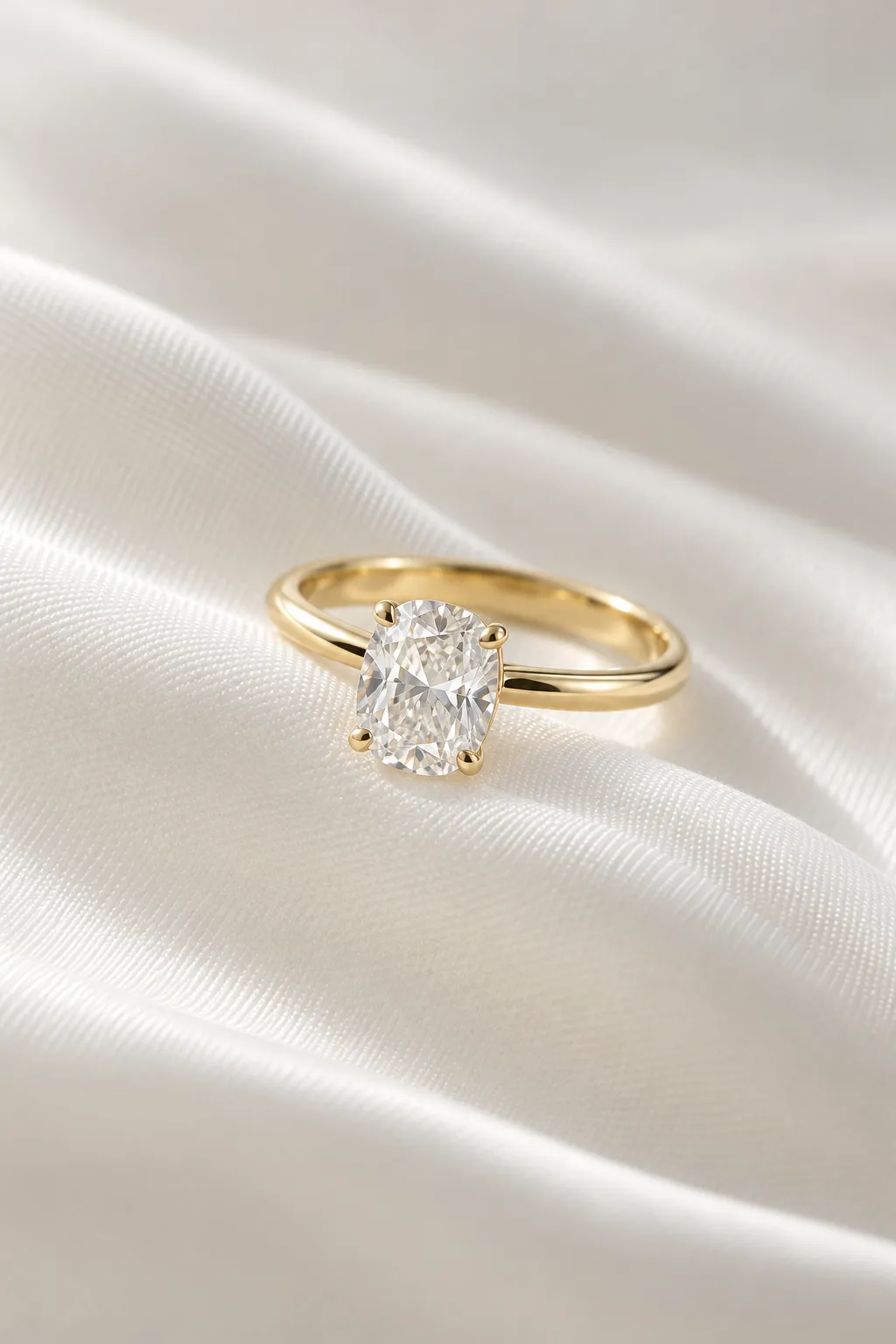
An elongated cushion engagement ring combines two things that rarely come together: the soft, pillow-like outline of the cushion cut and a stretched shape that makes the finger look longer. The stone is slightly rectangular, with rounded corners and gently curved sides.
At our atelier in Zurich we show you how different length-to-width ratios feel on your hand, how the faceting styles differ and when a radiant or an oval might be the better choice. No jargon and no pressure.
Why the elongated cushion is so popular
Lengthens the finger
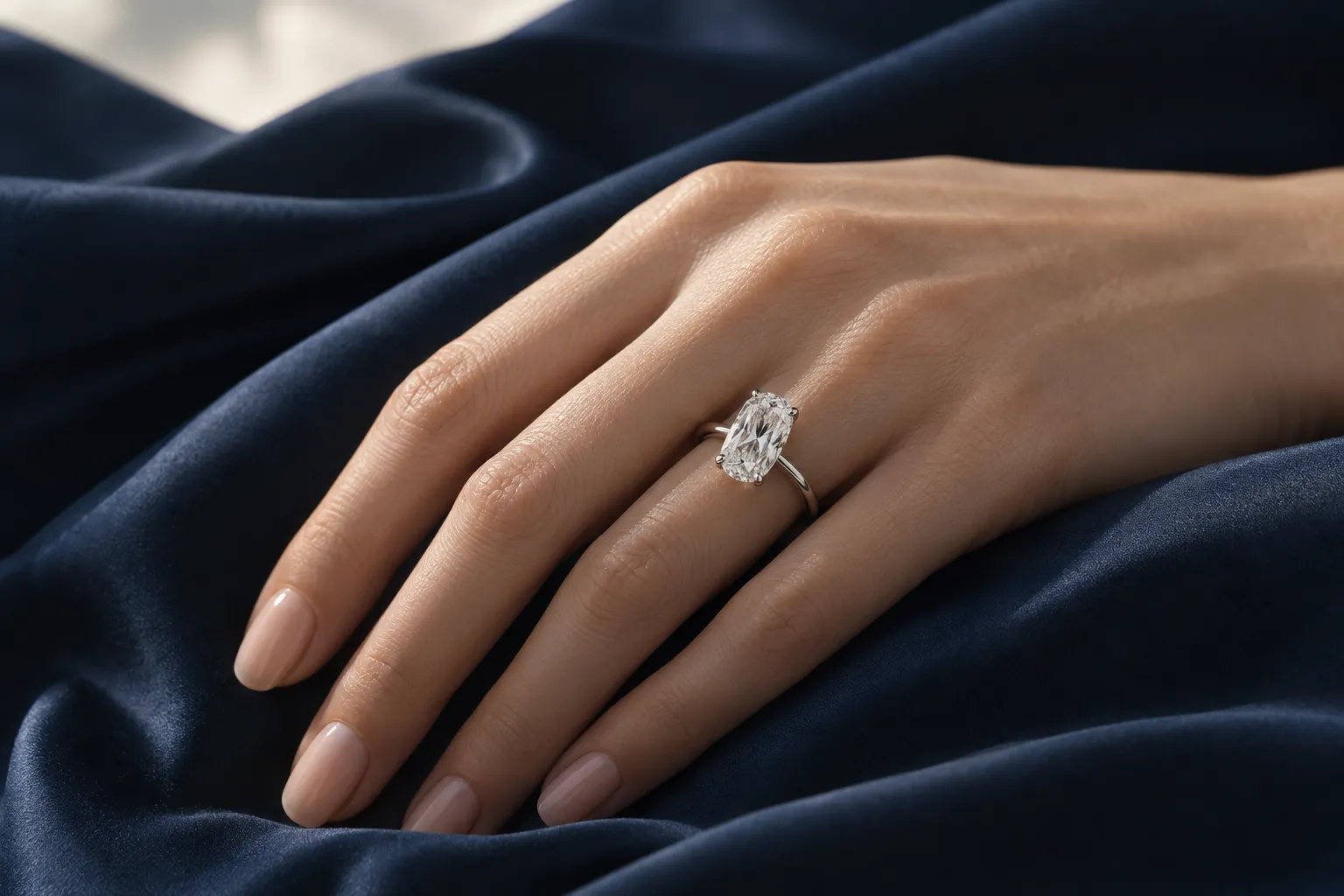
Worn lengthwise, the rectangular shape draws the eye along the finger. Shorter or wider fingers look slimmer, slender fingers gain an elegant line.
Soft instead of sharp
The rounded corners take all the hardness out of the rectangular shape. Next to a radiant with its straight edges, the elongated cushion looks more romantic and a little more classic.
Plenty of sparkle
Like the square cushion, the elongated version has large facets that show strong fire. Depending on the faceting, in clear flashes or in fine glitter.
What the length-to-width ratio means
A classic cushion is almost square, roughly as long as it is wide. People usually speak of an elongated cushion from a ratio of about 1.15. The most popular stones sit between 1.15 and 1.30: clearly stretched, but still with the typical pillow character. There are also slimmer stones up to around 1.5 that already look almost like a rounded rectangle.
Which ratio you like is purely a matter of taste and is best decided on the finger. We lay stones with different proportions side by side so you can see when the shape becomes too narrow or too round for you. How to find the right diamond shape in general, we explain in our guide.
Brilliant or crushed ice: two ways to sparkle
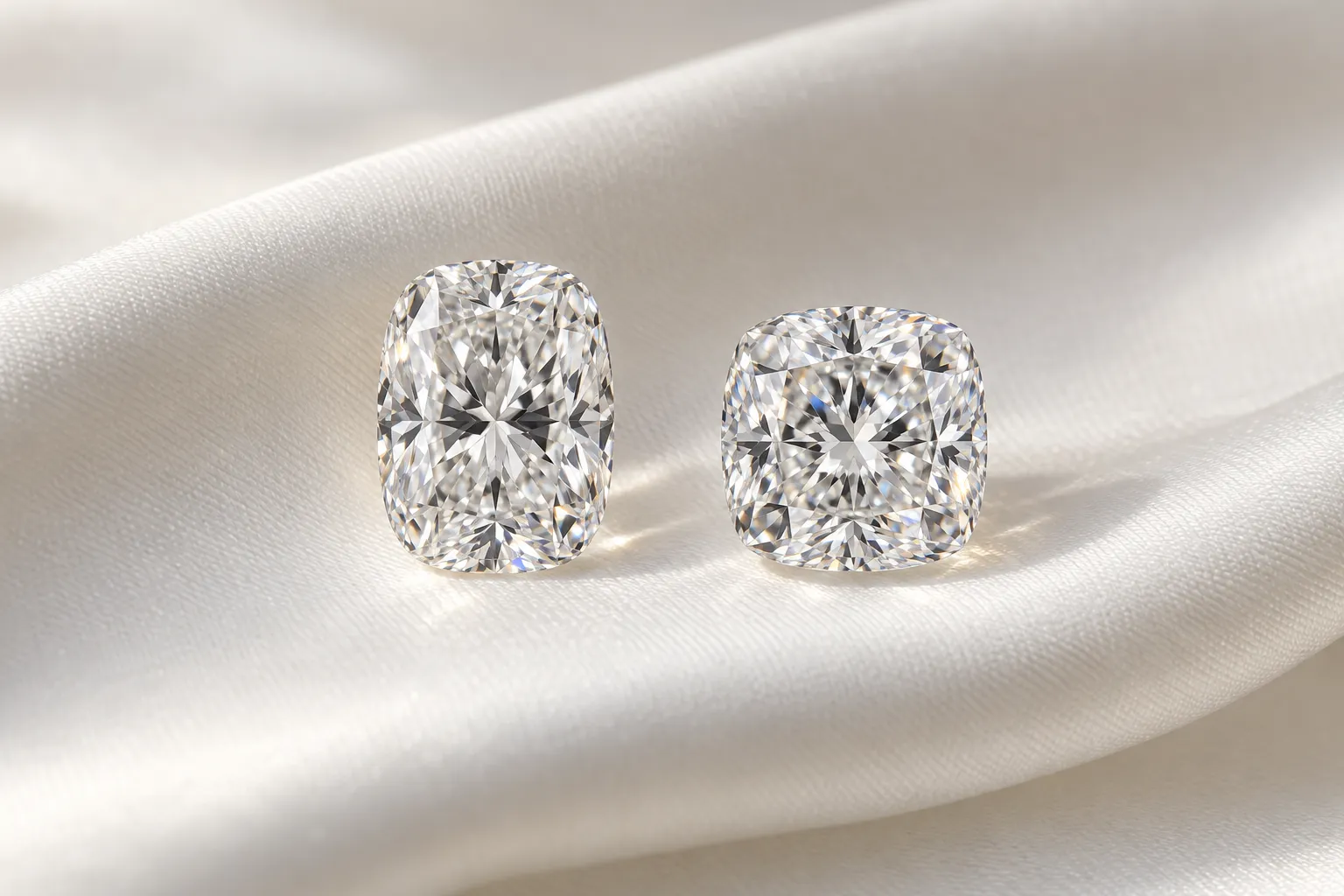
Cushion diamonds are faceted in two styles. In the brilliant style, often called classic or antique cushion, you see larger, clearly defined facets. Light flashes in distinct areas, and the stone looks calmer and more structured, similar to older cuts.
In the crushed ice style the facets are smaller and more irregular. That creates a fine glitter reminiscent of crushed ice, similar to a radiant. Crushed ice hides small inclusions a little better, but can look slightly busy depending on the stone. The style usually isn't stated on the certificate, so we show you both in the light.
Elongated cushion, radiant or oval?
Three elongated shapes that are often compared. The differences lie mainly in the corners and the outline.
| Feature | Elongated cushion | Radiant | Oval |
|---|---|---|---|
| Outline | Rectangular, rounded corners, curved sides | Rectangular, bevelled corners, straight edges | Fully rounded, no corners |
| Look | Soft, romantic, classic | Angular, modern, crisp | Flowing, elegant |
| Sparkle | Strong, flashes or glitter by style | Very lively, more glitter | Lively, like a brilliant |
| Bow-tie | Rarely pronounced | Rarely pronounced | More common, stone choice matters |
| Typical ratio | About 1.15 to 1.30 | About 1.20 to 1.40 | About 1.35 to 1.50 |
Cushion in our collection
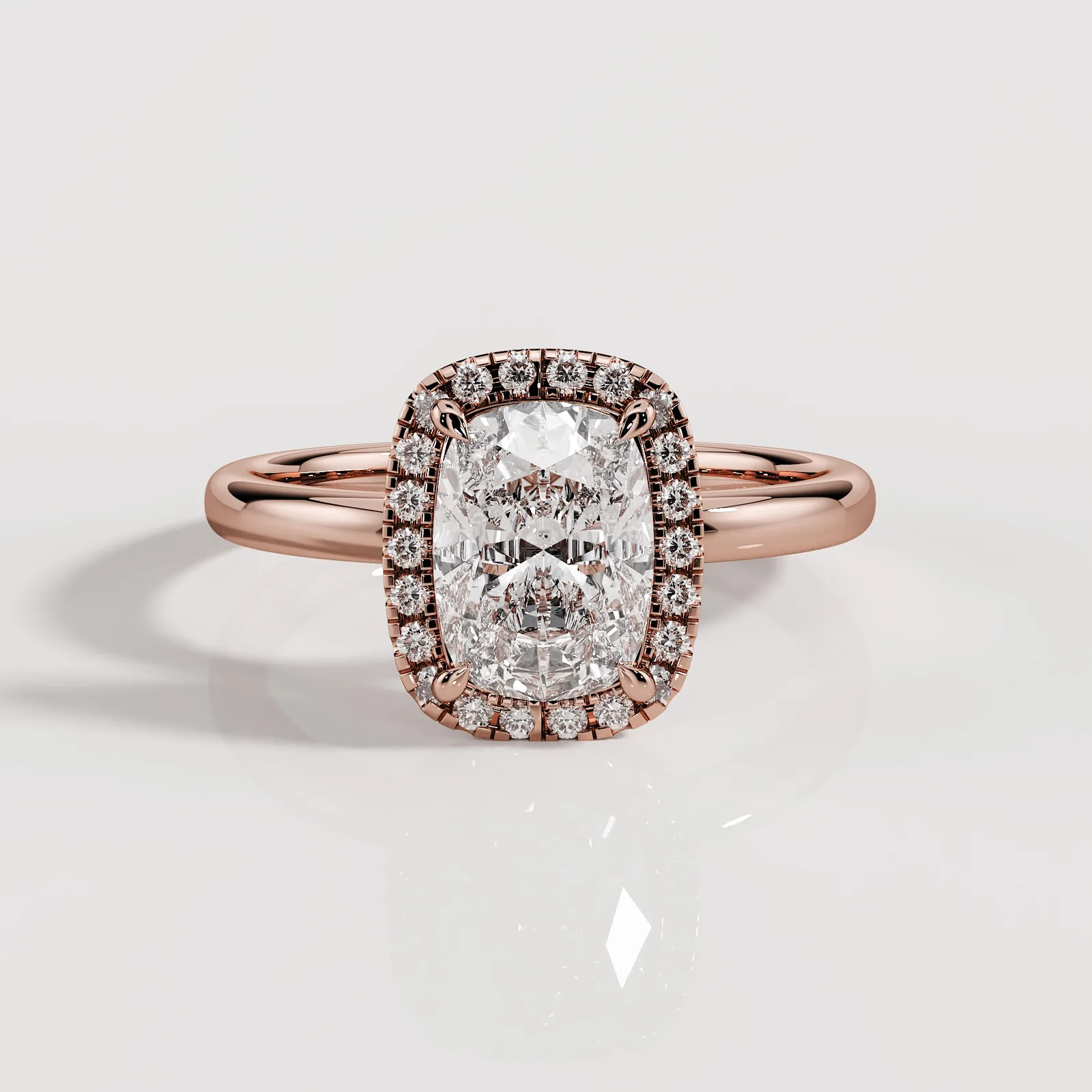
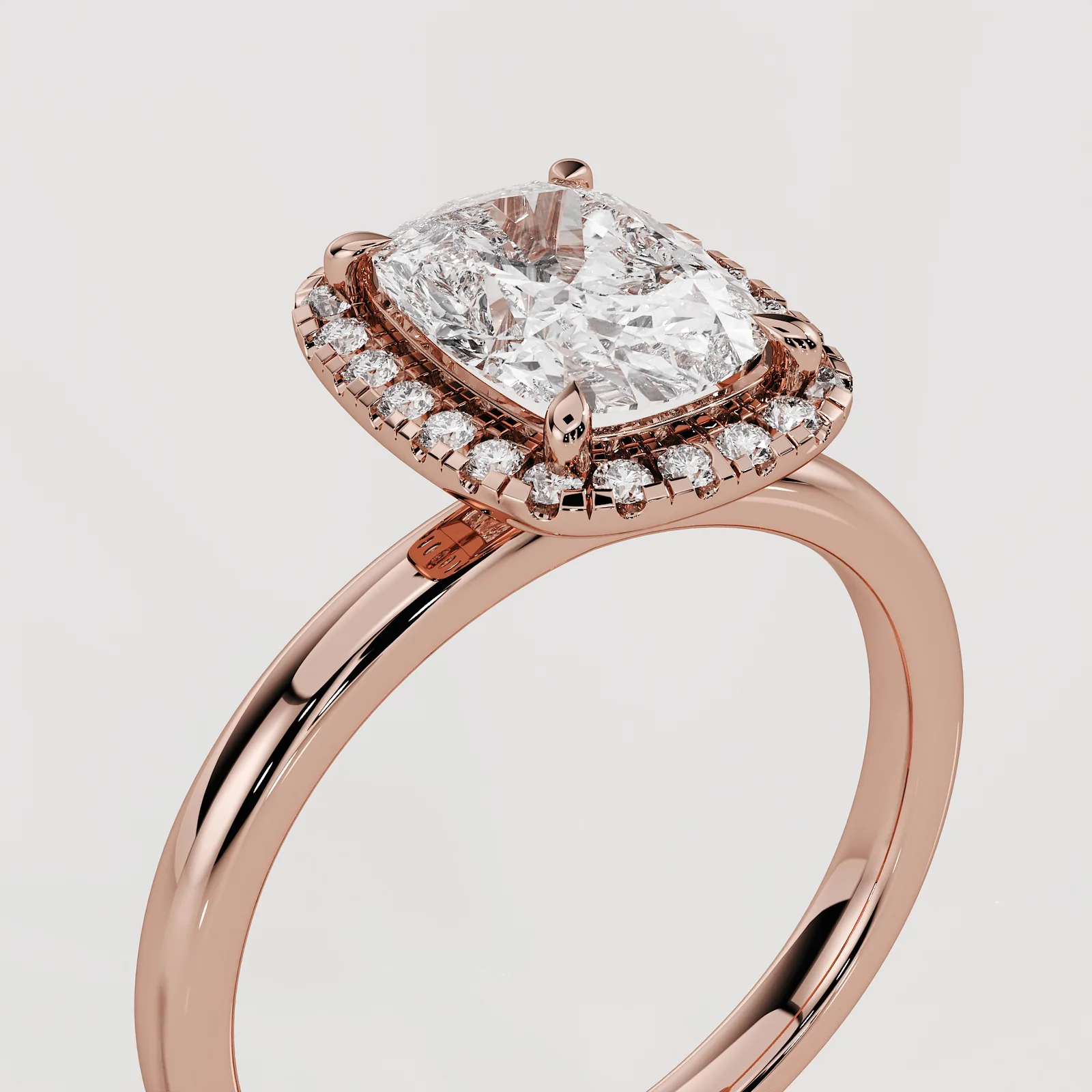
Rima shows a cushion with a halo in rose gold. On request we build any model with an elongated cushion and adapt metal, size and setting.
Related cuts
Anyone interested in the elongated cushion often compares it with these shapes.
What an elongated cushion engagement ring costs
A guide price like for the solitaire: from CHF 1'900 for a complete ring with a 1 ct lab-grown round brilliant. The elongated cushion can shift the price slightly, and we break down every stone openly.
Slightly different with an elongated cushion, depending on the stone
Price depends on the work involved. We calculate openly, no surprises.
Guide prices, as of 2026, incl. VAT. The exact price depends on stone, metal and work.
Frequently asked questions
Both have the soft pillow shape with rounded corners. The classic cushion is almost square, the elongated cushion is stretched, usually with a ratio of 1.15 to 1.30. That makes it look longer and slimmer on the finger while keeping its gentle character. You see the difference best when both lie side by side.
There's no ideal ratio, it's a matter of taste. Between 1.15 and 1.20 the stone looks subtly stretched, around 1.25 to 1.30 clearly oblong. Beyond that it becomes slim and almost rectangular. We recommend looking at different proportions on your own finger before you commit.
Both are rectangular and sparkle strongly. The radiant has bevelled corners and straight edges, so it looks more angular and modern. The elongated cushion has rounded corners and slightly curved sides, so it looks softer and more romantic. If you like clean lines, go radiant, if you like it gentler, go cushion.
Crushed ice describes faceting with many small, irregular facets that create a fine glitter, a bit like crushed ice. The counterpart is the brilliant style with larger, clearly defined facets and distinct flashes of light. Neither is better, they simply look different. We show you both in the light.
From above it often looks about the same size or slightly larger, because the stretched shape shows more length. An oval looks a little larger per carat still, since cushions tend to carry more weight in the depth. We show you how each carat size looks right on your hand at the atelier.
Four prongs are very popular, holding the stone securely and emphasising the soft corners. A hidden halo beneath the stone adds sparkle from the side without changing the outline. A slim band underlines the elongated effect. We show you options as renderings before anything is made.
Quick enquiry
Curious about the elongated cushion?
Tell us which ratio and metal you have in mind. We'll find suitable stones, show you brilliant and crushed ice versions and suggest an appointment, in Zurich or by video.