
Lab-grown diamonds
Lab-grown diamond prices: what you actually pay
The price of a lab-grown diamond is not one single number, it's the result of carat, colour, clarity and cut, the so-called 4Cs. Still, you want a sense of scale before you sit down for a consultation, so here you'll find honest guide values instead of vague marketing promises.
We show you how the price develops by carat, how it compares to a natural diamond, and what émin actually charges you in the end: stone, setting and work, calculated openly, with no hidden markups.
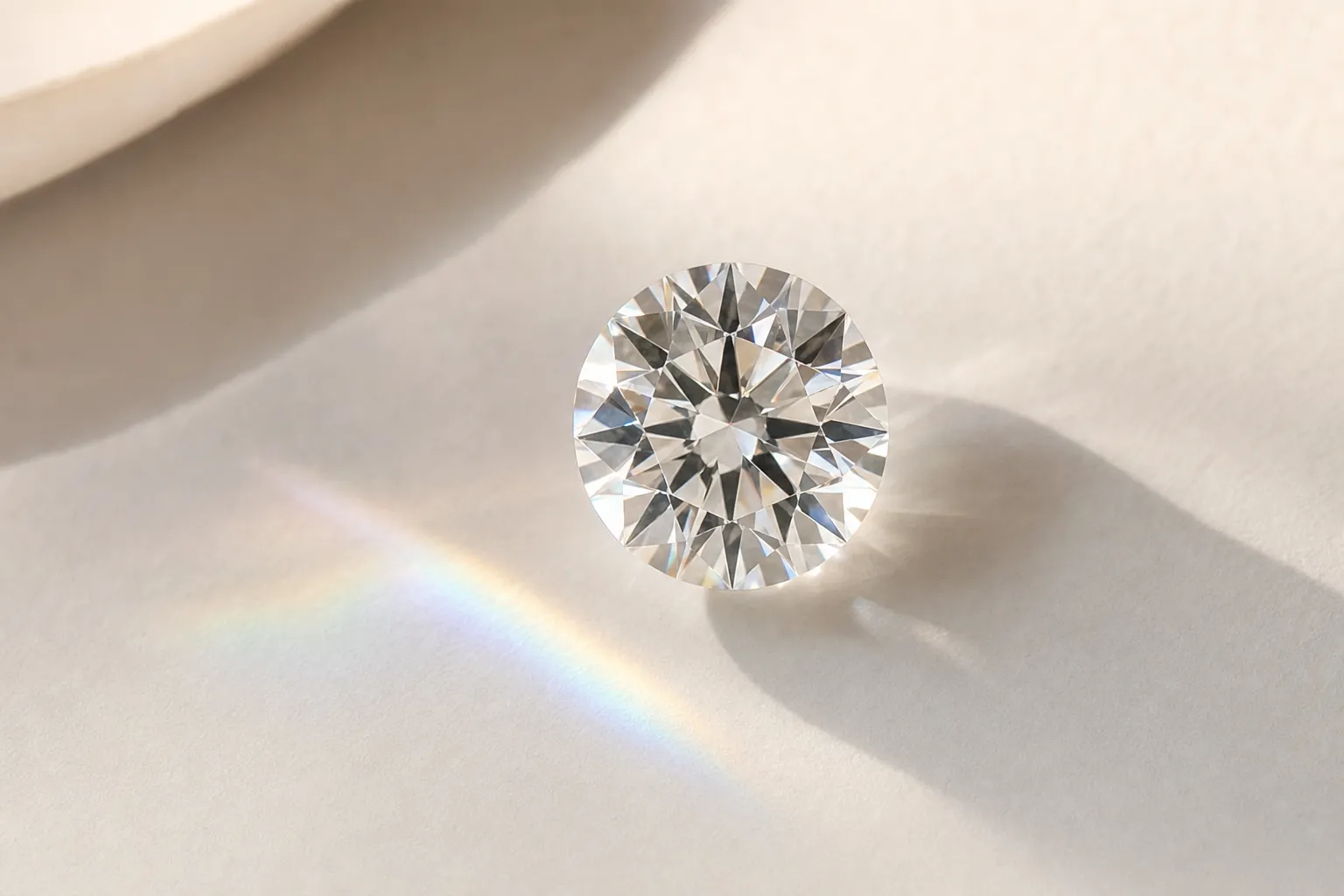
What really determines the price of a lab-grown diamond
Carat
The stone's weight is the biggest price driver. Going from 1 to 2 carats costs disproportionately more, because larger flawless rough stones are rarer even in production.
Colour
The more colourless a diamond, the more expensive. Even one step on the colour scale can shift the price noticeably, often without you seeing it with the naked eye.
Clarity
Tiny inclusions lower the price without being visible to the naked eye. This is usually where you can save the most without the ring looking any different later.
Cut
An excellent cut brings out the stone's fire fully and costs more than a mediocre one. This is the one point we'd advise you not to cut corners on.
Why carat drives the price so strongly
Diamonds don't get more expensive in a straight line, they get disproportionately more expensive with every carat. A 2-carat stone costs well over double a 1-carat stone, because large, flawless rough stones are rarer, even in a lab. This applies even more to natural diamonds than to lab-grown ones, one reason many couples deliberately choose lab-grown for larger stones.
That's exactly why it's worth looking at the actual carat tiers before deciding. During your consultation we show you how the price shifts between 0.5 and 3 carats, and where the best compromise lies for your budget.
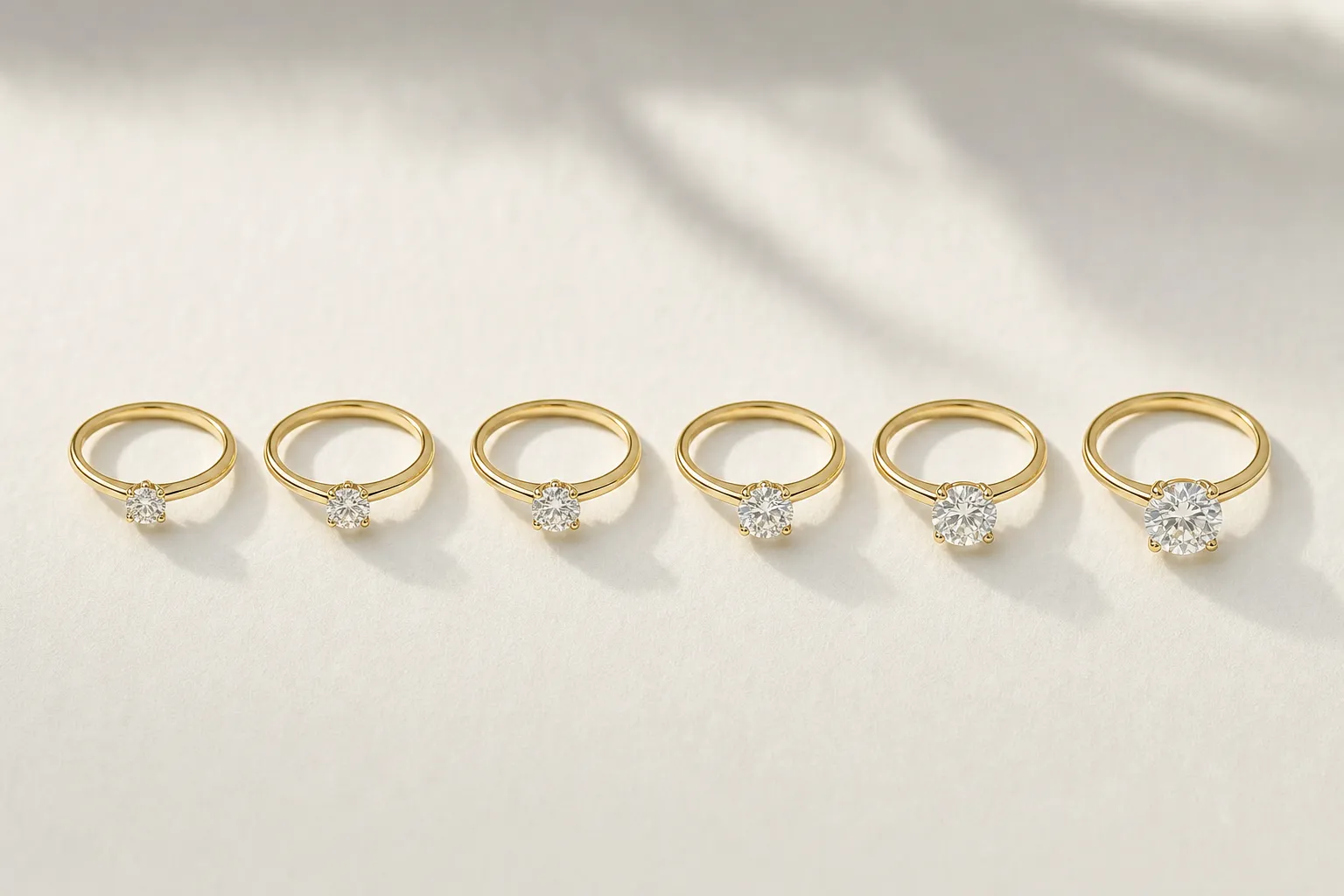
Lab-grown versus natural diamond: price comparison
The exact price depends on the colour, clarity and cut of the individual stone. These guide values help with a first orientation, you'll get the precise figure during your consultation.
For comparison
For comparison
For comparison
Price depends on the work involved. We calculate openly, no surprises.
Guide prices, as of 2026, incl. VAT. The exact price depends on stone, metal and work.
Honest about the price trend
Lab-grown diamond prices have dropped noticeably in the last few years, as more producers entered the market and the growing methods became more efficient. That's good news for you as a buyer, but it also means a lab-grown diamond barely holds its value on resale. We tell you that openly before you decide, not after.
What you actually pay at émin
There are no inflated prices here, set artificially high just so a later discount looks generous. We break down three items openly for you: the stone at market price, the setting based on effort and material, and the work for fitting, polishing and handover.
That way you see exactly what you're paying for, and can decide yourself where to go bigger and where to save on purpose. Bring the stone you're picturing, or let us advise you during the consultation, we'll work out live with you what it actually costs.
Frequently asked questions
Because the price depends on four factors at once: carat, colour, clarity and cut. A single number would be either too low or too high for your specific stone. That's why we show guide values and work out the exact figure openly during your consultation, with the stone you're picturing.
At the same size and clarity, a lab-grown diamond is usually noticeably below the price of a comparable natural diamond, and the gap widens with the size of the stone. For very large stones from around 2 carats up, the difference is especially clear, since natural diamonds get disproportionately more expensive at that size.
Because more and more producers keep entering the market and the growing methods keep getting more efficient. What was rare and expensive a few years ago is standard today. That's good for you when buying, but it also means a lab-grown diamond barely holds its value on resale, and we say that honestly.
Both matter, but colour usually has a stronger effect on how the stone looks to the eye, and therefore on price, while smaller clarity differences often stay invisible. That's why we often suggest going one clarity grade lower and putting the saved budget toward colour or carat instead.
No, the stone and the setting are two separate items. As a complete ring, a solitaire with a 1-carat lab-grown diamond starts from CHF 1'900 with us, with a 2-carat stone and a hidden halo from CHF 2'500, stone and setting together. If you buy the stone loose, we quote the price on request, and add the setting separately, so you see exactly what you're paying for.
Yes, usually more noticeably than a natural diamond, because production keeps getting cheaper and the market keeps growing. A diamond is not an investment, natural or lab-grown, buy it because you love it, not as a financial asset for later.
Quick enquiry
Want the exact price for your stone?
Send us a short message with the size and budget you have in mind. We'll work out openly what your lab-grown diamond costs, and suggest an appointment.