
Moissanite
Moissanite engagement rings: an honest breakdown
Moissanite looks like a diamond at first glance, but it's a completely different stone. Chemically it's silicon carbide, not carbon, and it behaves differently in the light than a diamond does. At émin you get an honest breakdown, not a sales pitch.
We recommend lab-grown diamond as our default, because it's closer to a natural diamond in hardness, value and certification. If you still want moissanite, we design your ring just as carefully, only with clear eyes about what the stone is and isn't.
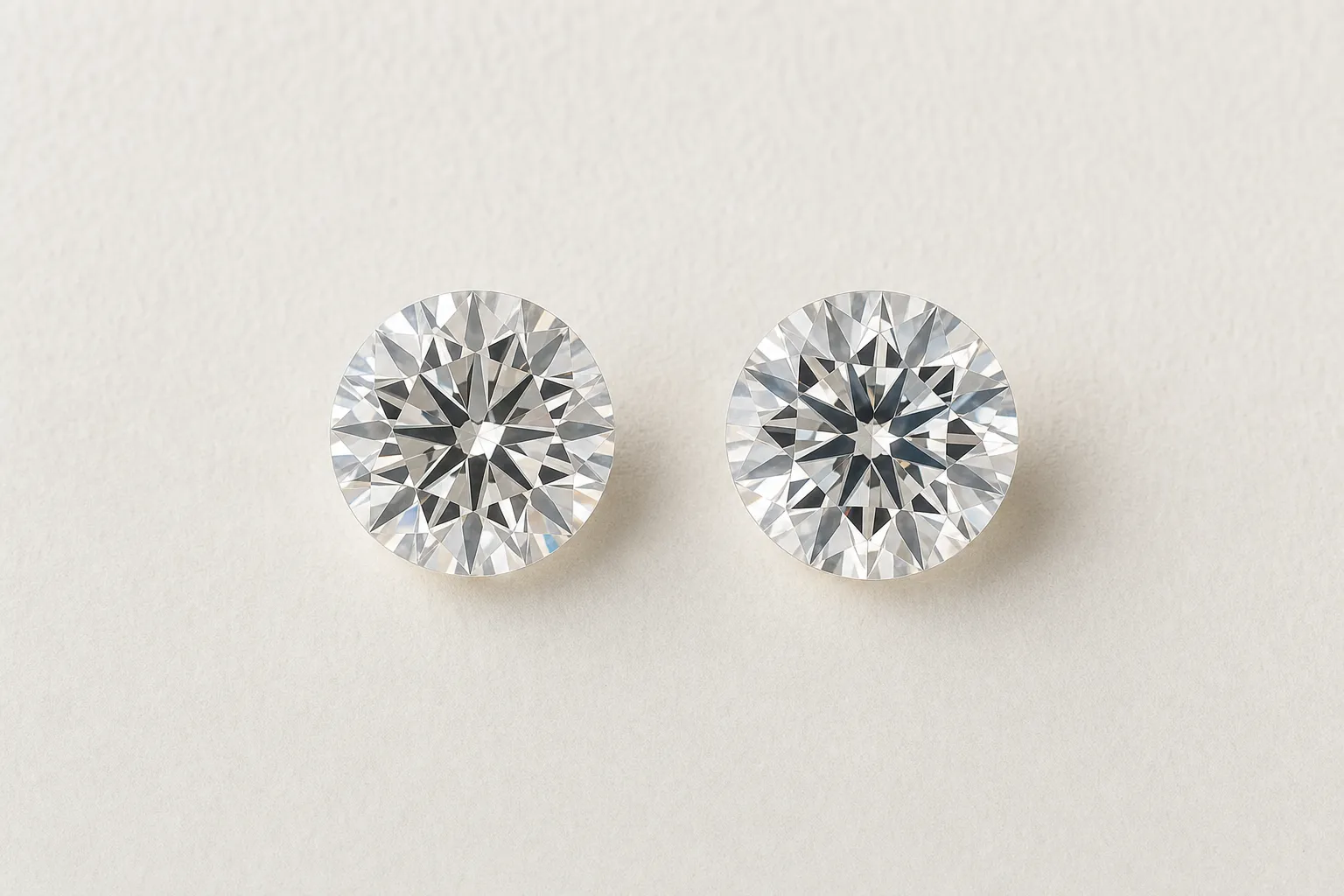
What you should know about moissanite
Not a diamond, explained honestly
Moissanite is silicon carbide, not carbon like a diamond. We never call it a "diamond substitute", it's its own stone with its own properties.
More fire, a different look
Moissanite bends light more strongly than a diamond, giving it more rainbow flashes when it moves. Some people love that, others find it too busy, we show you both side by side.
Cheaper, but with no resale value
A moissanite costs noticeably less than a lab-grown or natural diamond. On resale it's practically worthless, and we tell you that clearly before you decide.
What sets moissanite apart from a diamond
Diamond is pure carbon, moissanite is silicon carbide, originally an extremely rare mineral that's now produced in a lab. At 9.25 on the Mohs scale, moissanite is nearly as hard as a diamond and holds up well to everyday wear.
The big optical difference is refractive index: moissanite sits around 2.65 to 2.69, a diamond at 2.42. That means moissanite scatters light more strongly and shows noticeably more rainbow colour, its so-called fire, when it moves. Some people love this effect, others find it too flashy for a quiet setting.
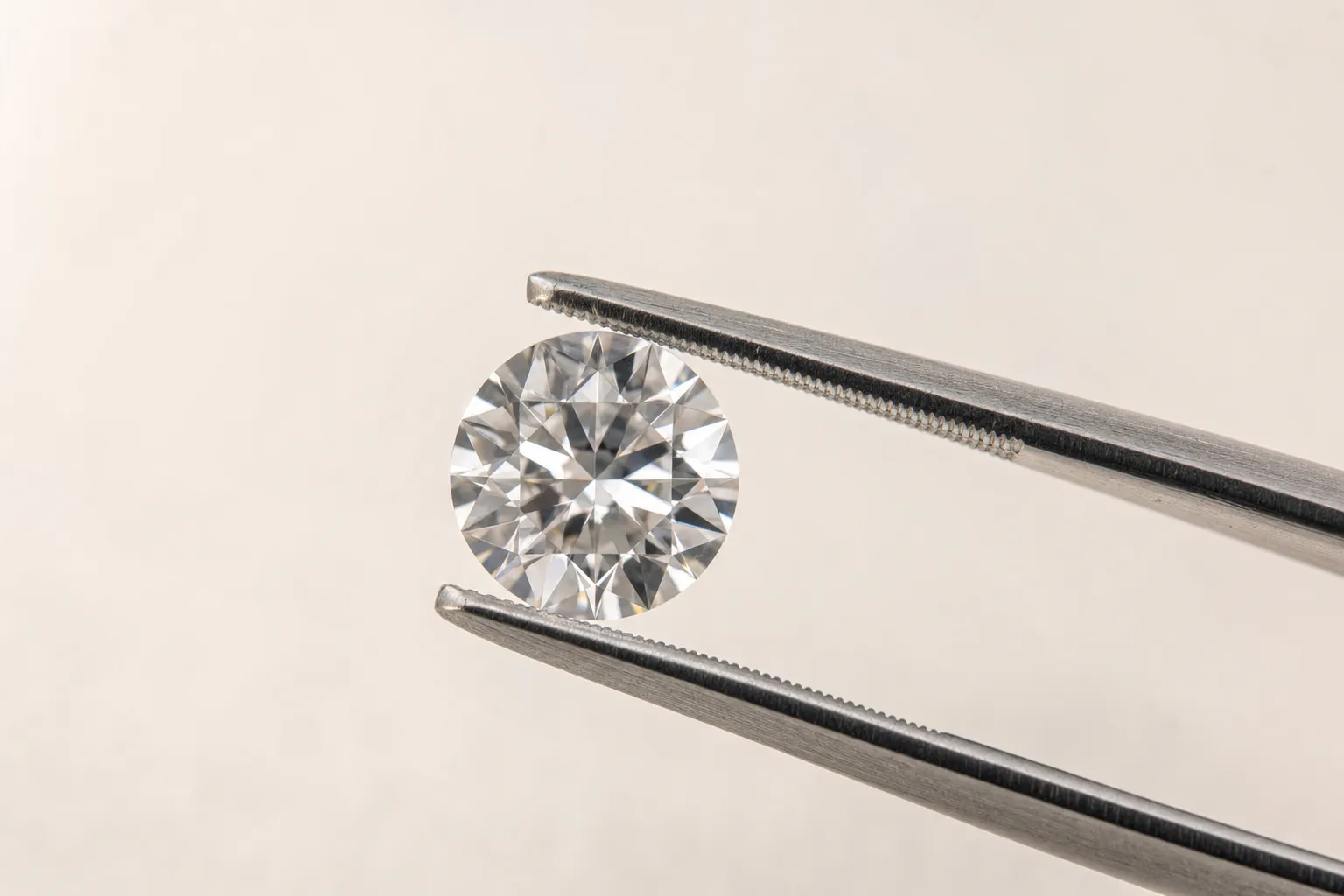
Moissanite, lab-grown and natural diamond compared
Three different stones, three different price levels. Here's an honest breakdown.
| Feature | Moissanite | Lab-grown diamond | Natural diamond |
|---|---|---|---|
| Material | Silicon carbide | Carbon | Carbon |
| Hardness (Mohs) | 9.25 | 10 | 10 |
| Optics | A lot of rainbow fire, eye-catching | Fire and sparkle as expected | Fire and sparkle as expected |
| Price | Noticeably lower | Lower than natural | The most expensive |
| Resale | Practically worthless | Well below purchase price | Usually below purchase price |
Guide values for orientation, we discuss the exact assessment in person.
Why we recommend lab-grown diamond as standard
Moissanite isn't a bad stone, but it's not a diamond, even though it's often marketed that way. We recommend a lab-grown diamond as our default, because it's closer to a natural diamond in hardness, optics and above all certification, and holds up somewhat better on resale too. If you still want moissanite, we're happy to make that ring, you'll always get an honest assessment from us, never a sales trick.
Settings that also work with moissanite
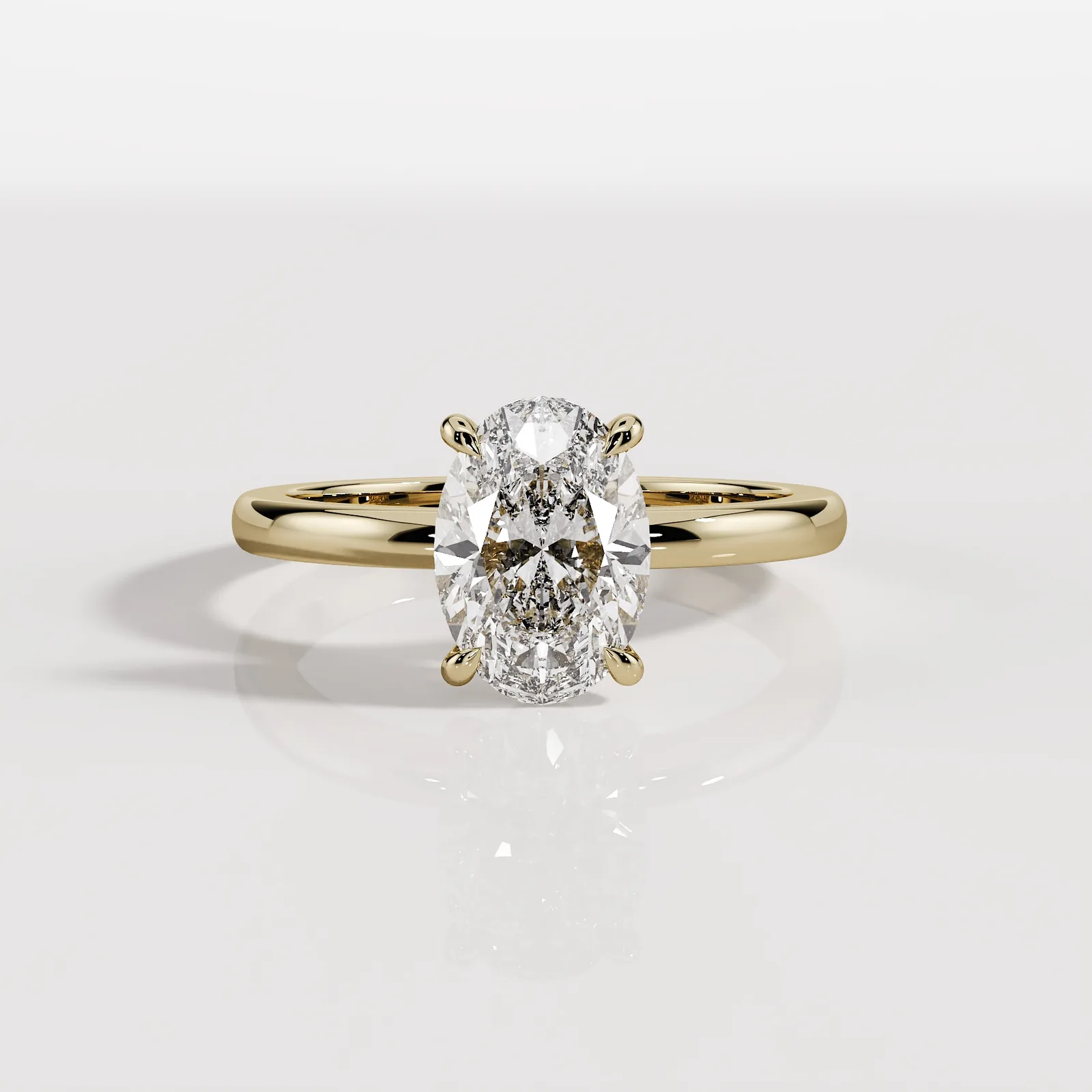
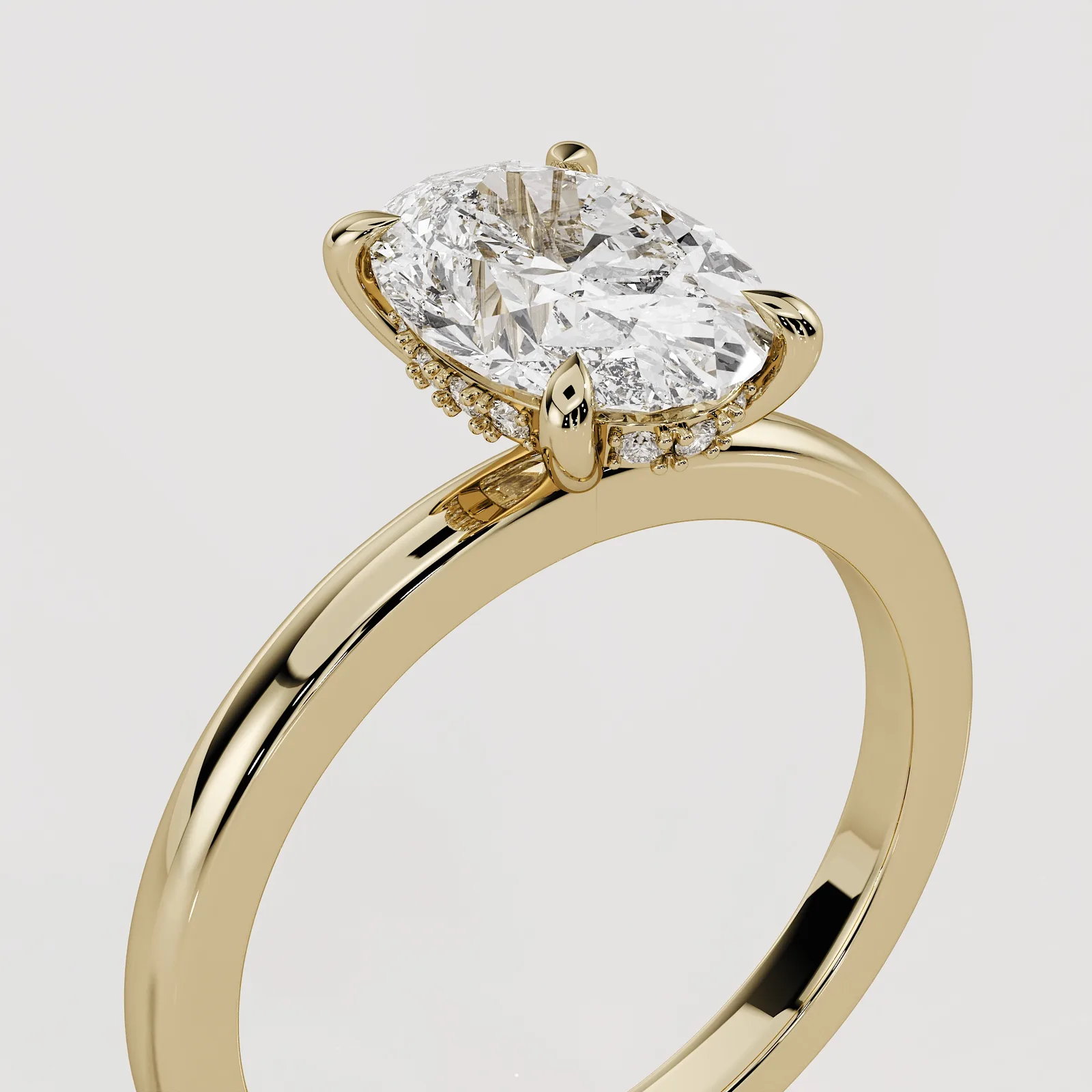
Every one of our models can be made with moissanite instead of diamond. A small selection for orientation.
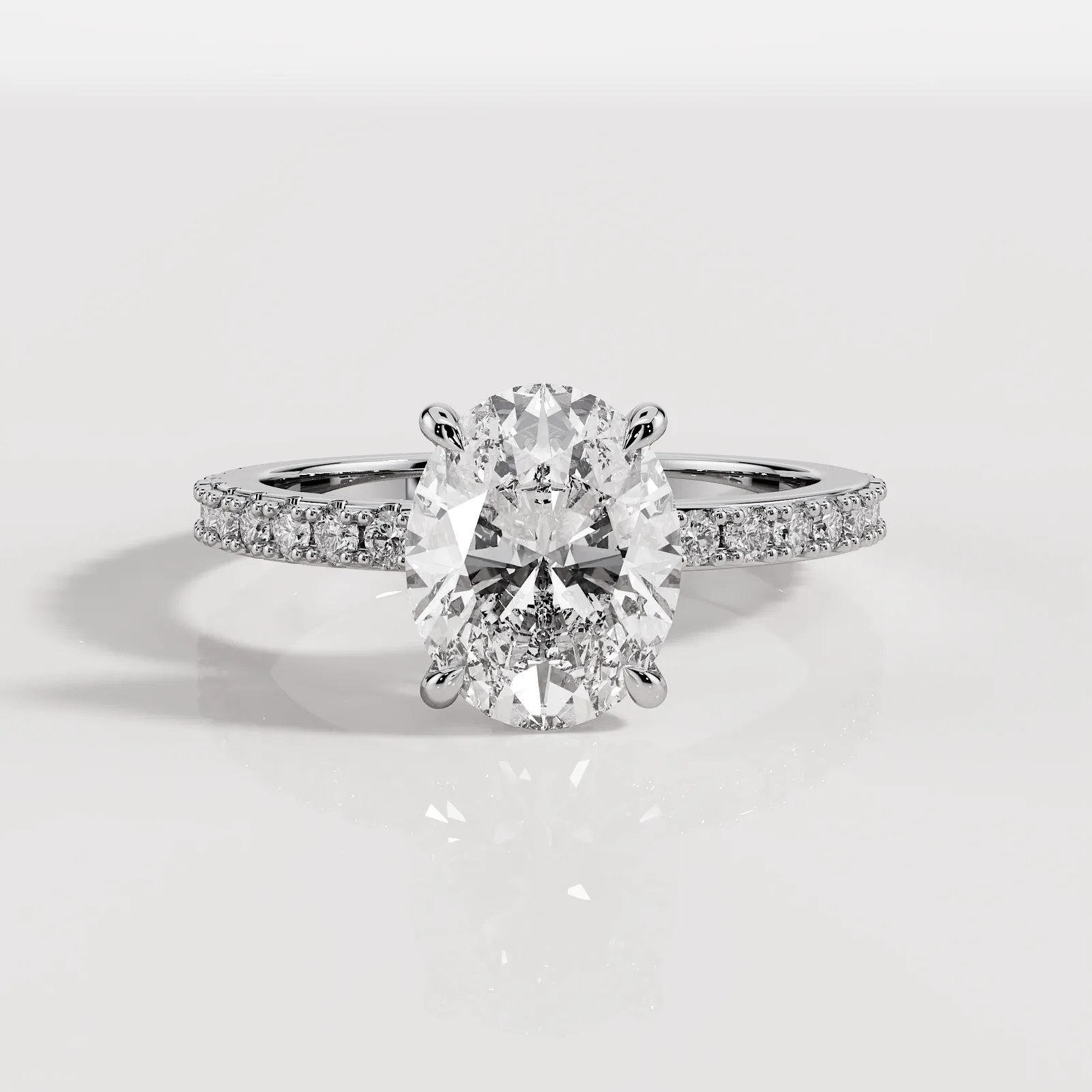
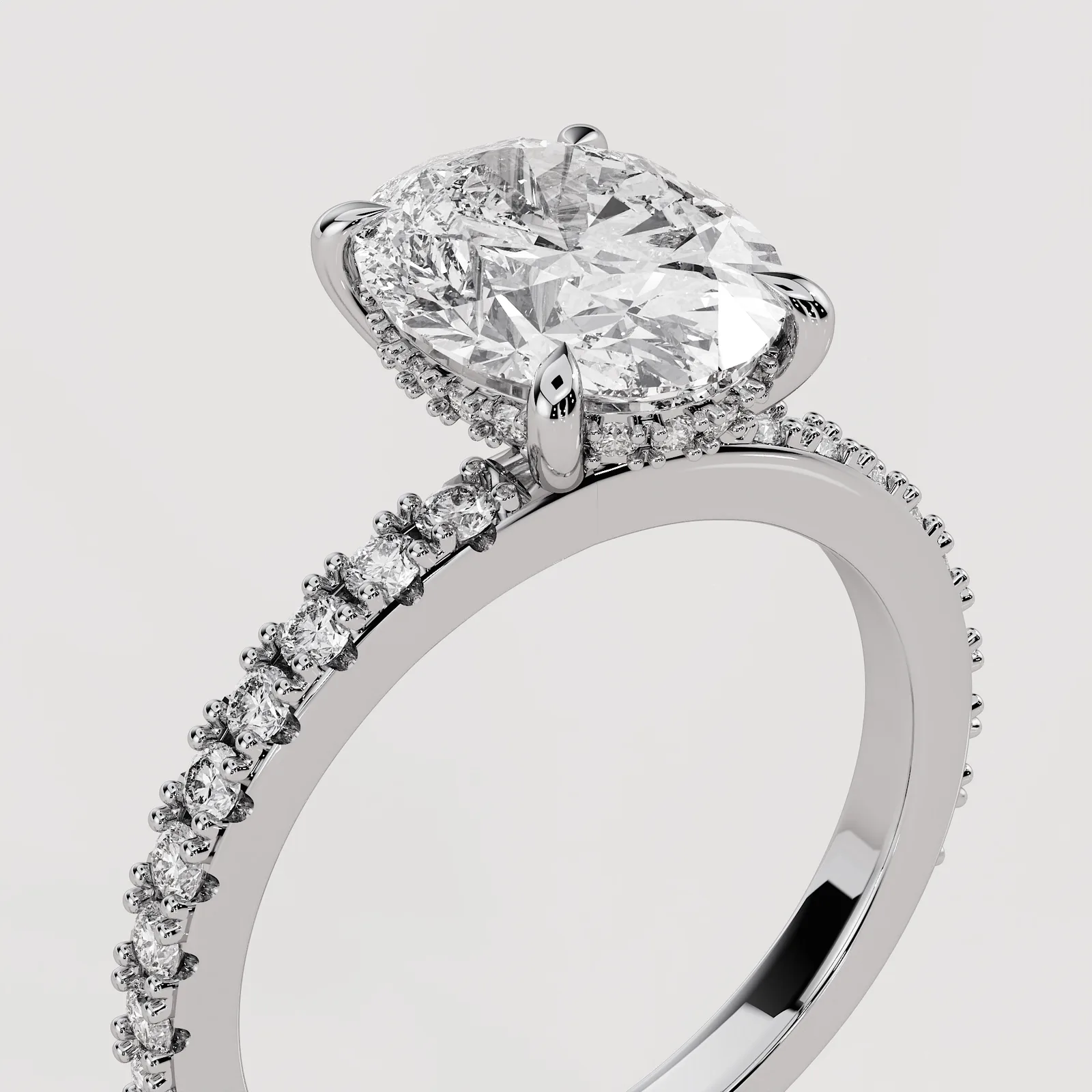
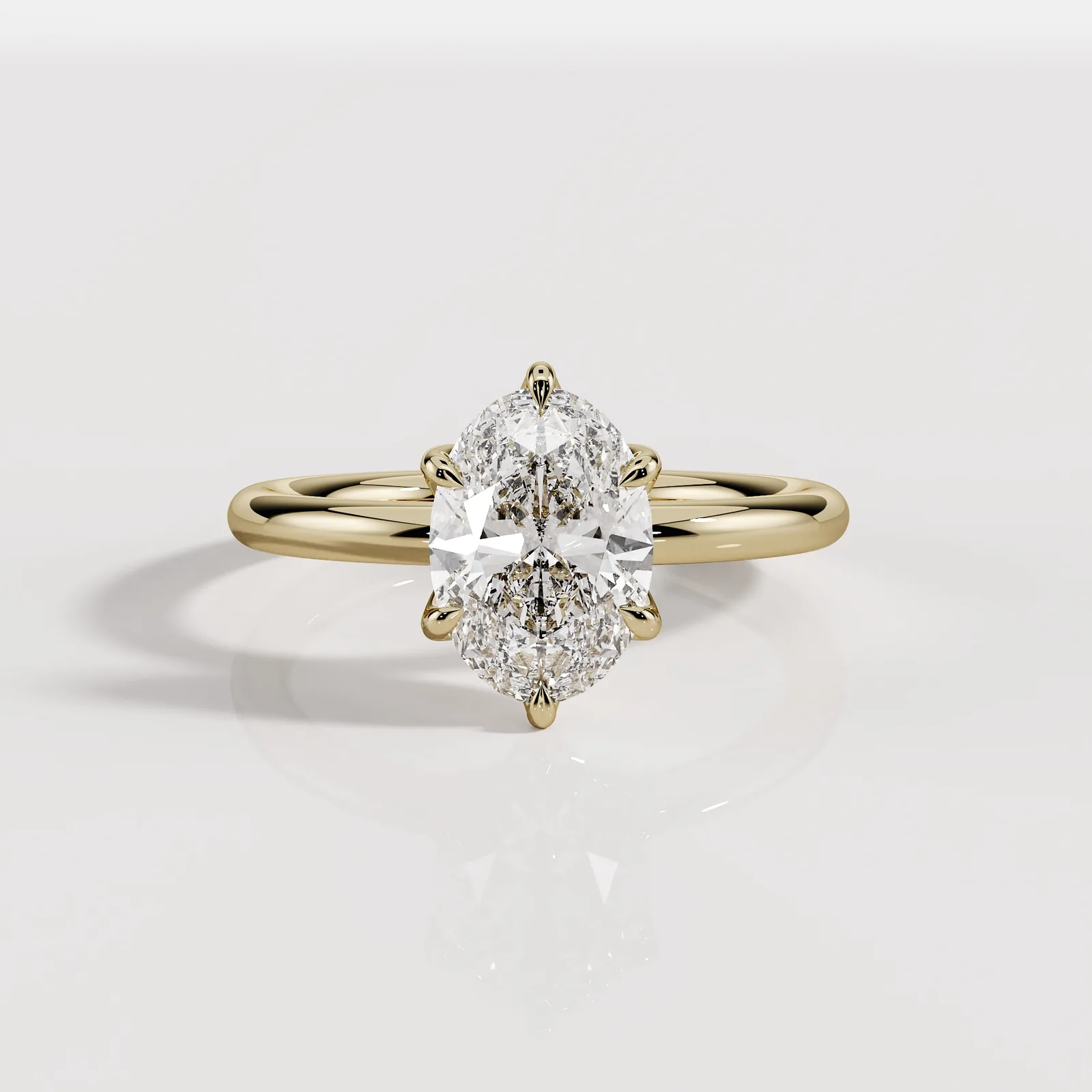
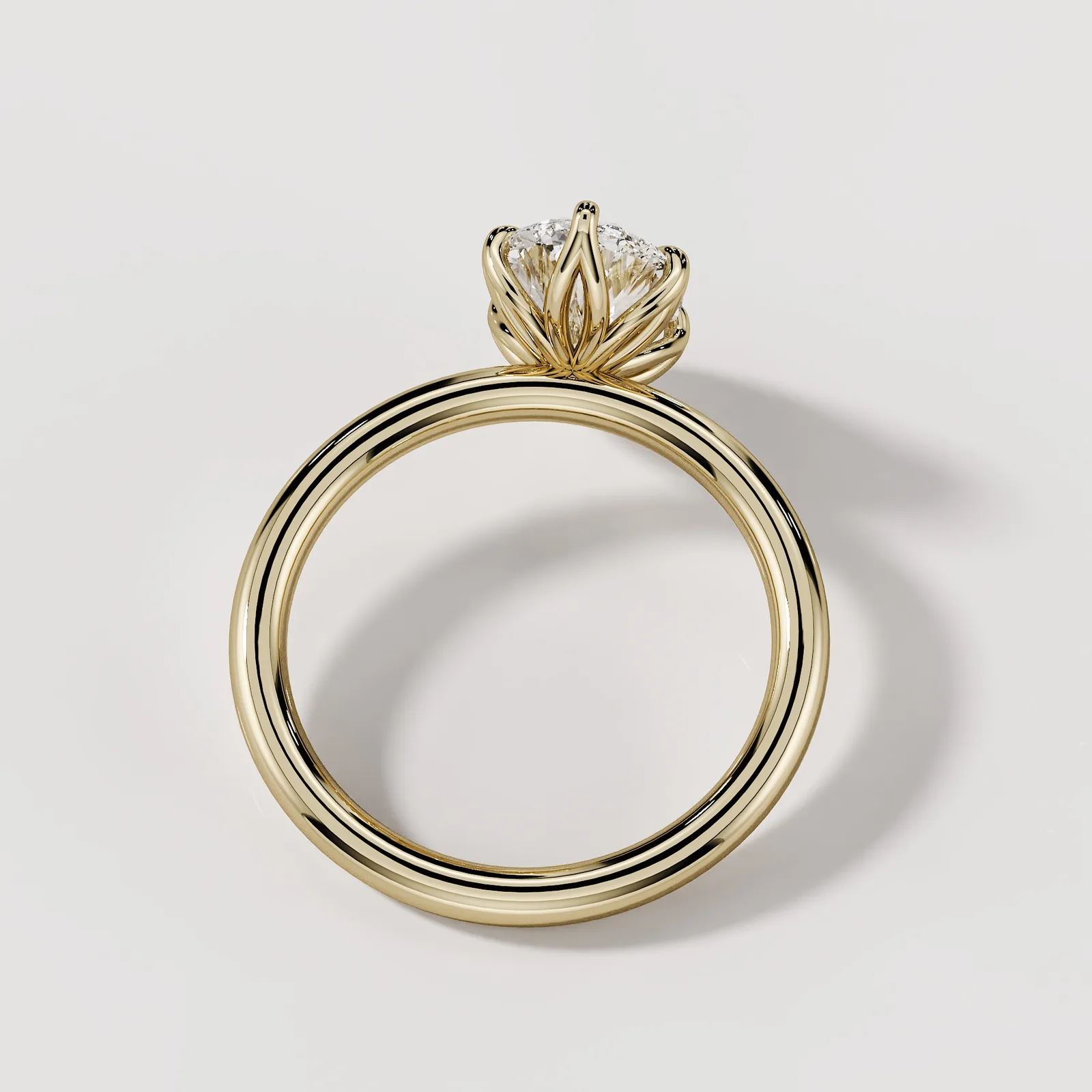
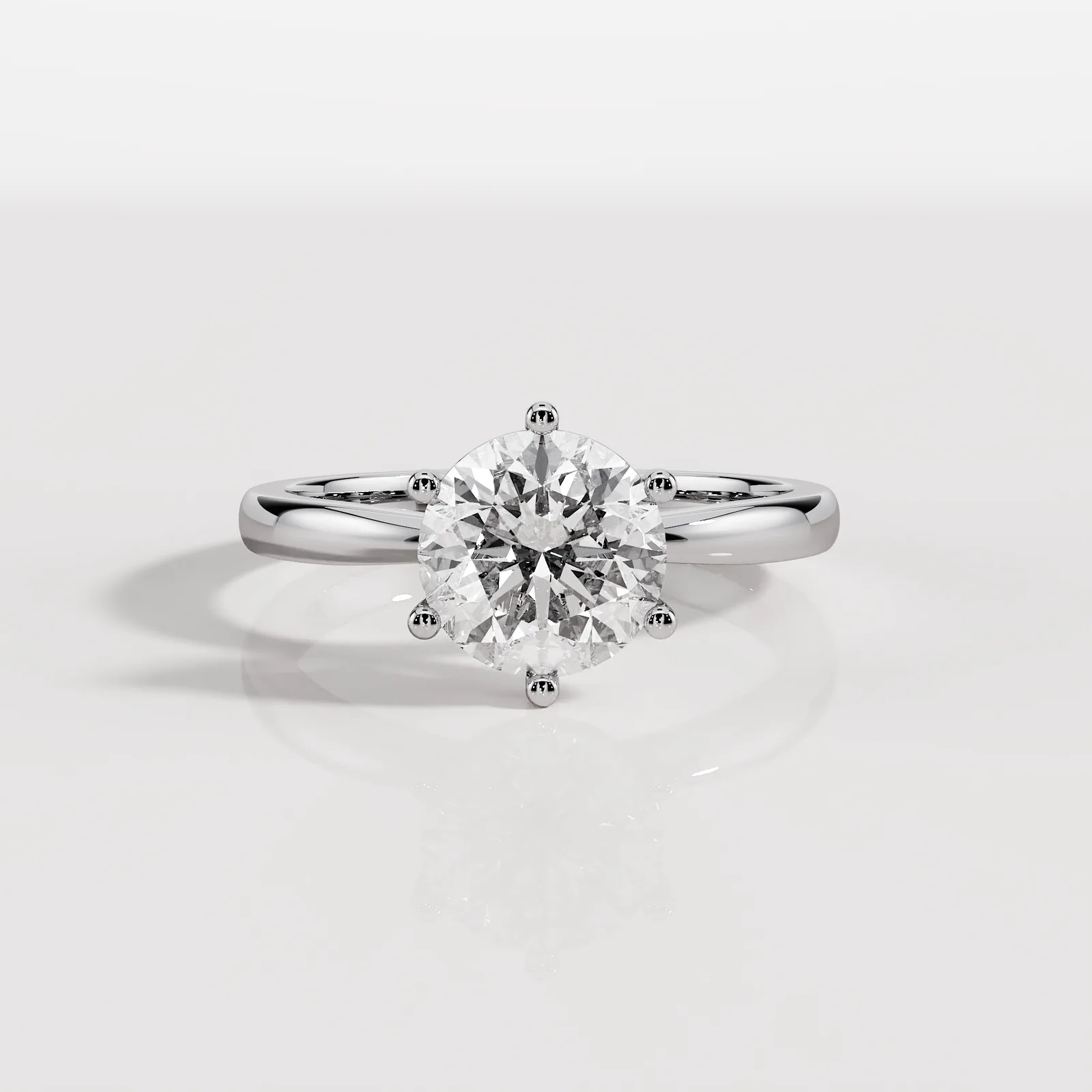
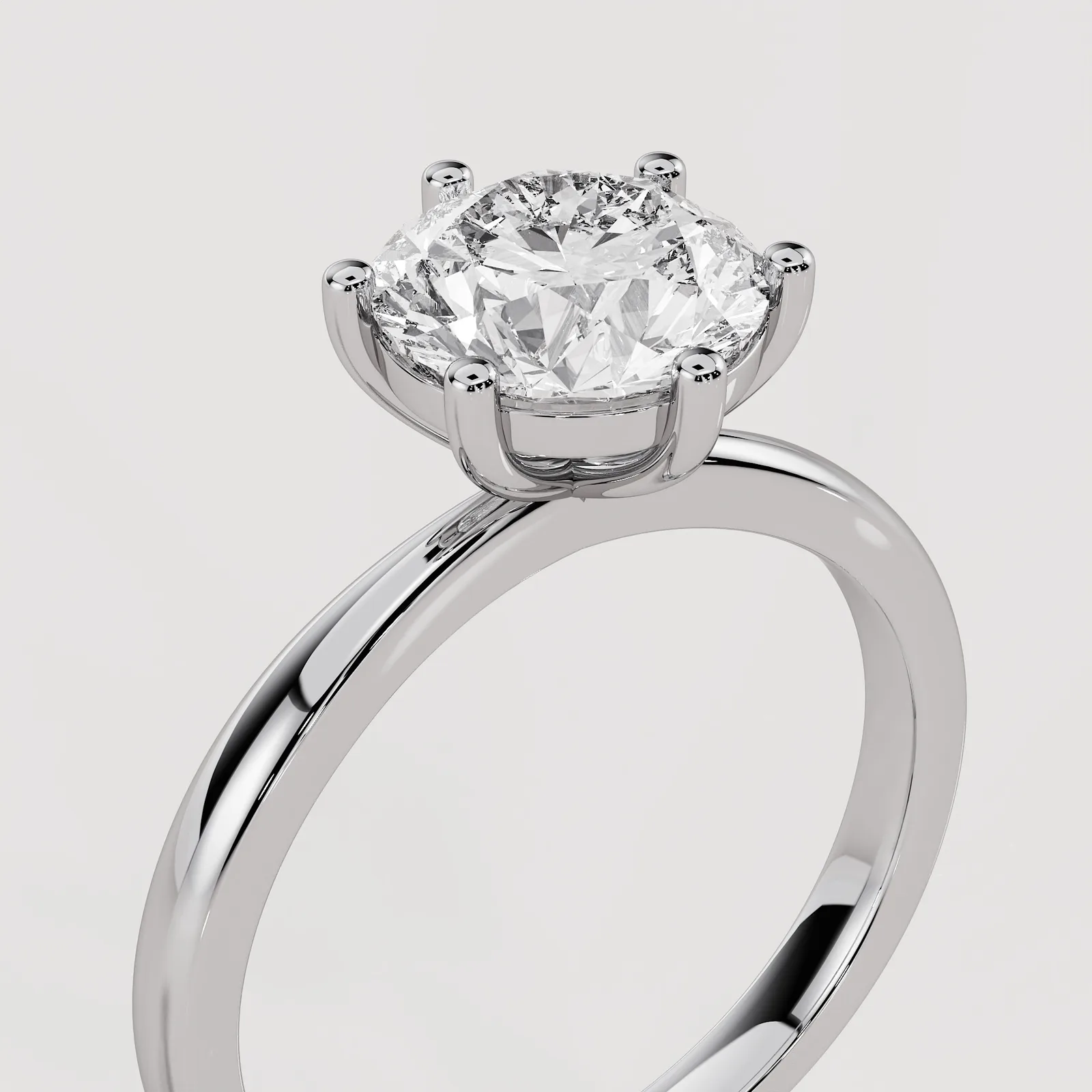
What a moissanite engagement ring costs
A guide value for your first orientation. We discuss the exact price for your chosen stone in person.
Price depends on the work involved. We calculate openly, no surprises.
Guide prices, as of 2026, incl. VAT. The exact price depends on stone, metal and work.
Frequently asked questions
No. Moissanite is its own mineral made of silicon carbide, chemically completely different from a diamond, which is pure carbon. The term "diamond alternative" is misleading, so we deliberately talk about moissanite as its own stone with its own properties, not a cheaper diamond copy.
Moissanite has a higher refractive index than a diamond, around 2.65 to 2.69 compared to 2.42. That makes it bend light more strongly and show noticeably more rainbow colour when it moves. Some people love this strong fire, others find it too busy for a quiet setting.
Yes, at 9.25 on the Mohs scale moissanite is nearly as hard as a diamond and noticeably harder than most coloured gemstones. It holds up well to daily wear on your hand, scratches or damage are rare.
Because a lab-grown diamond is chemically a real diamond, with the same hardness, the same certification standard and a better resale value than moissanite. We say that honestly, though we're happy to craft a moissanite ring if you consciously choose one.
Practically nothing on resale, and we say that openly. Moissanite has no established secondary market like diamonds do, resale value sits close to zero. Buy it because you love the look, not as a financial asset.
Yes, moissanite stones are also graded by independent institutes and sold with a report. The certificate confirms material and quality, but it doesn't replace the value growth or rarity of a real diamond.
Yes, that can be arranged, for example a moissanite centre stone with small diamonds in a halo or the setting. We'll advise you openly on what makes the most sense visually and financially for your idea.
Quick enquiry
Questions about moissanite?
Send us a short message about what you have in mind. We'll give you honest advice on moissanite, lab-grown and natural diamonds and suggest an appointment, in Zurich or by video.