
Diamond shapes
The pear-shaped engagement ring
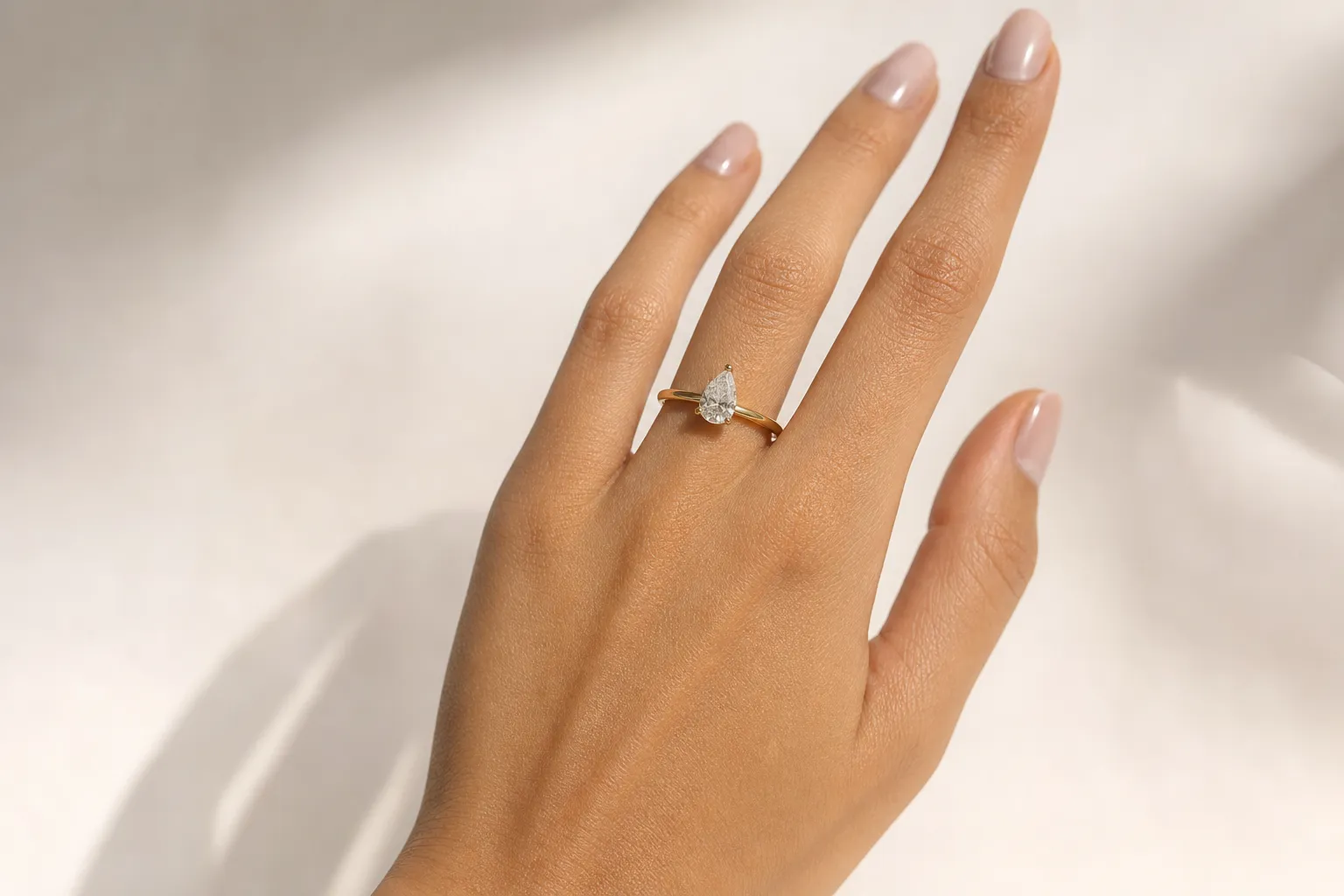
A pear-shaped diamond combines two shapes in one stone: rounded at one end like a brilliant, pointed at the other like a marquise. Worn with the point towards the fingernail, it visibly elongates the hand while never looking restless.
At émin we show you how a pear cut sparkles in daylight, what to watch for in proportions so no so-called bow-tie shadow appears, and how we protect the delicate point in the setting.
Why couples choose a pear shape
Elongates the hand
Worn with the point towards the fingernail, a pear cut makes the hand look longer and slimmer than many other shapes. A small optical effect with a big impact.
Lively sparkle
A pear cut is usually faceted like a brilliant, so it sparkles almost as vividly. You get the unusual shape without compromising on fire.
Wearable your way
Some couples wear the pear with the point outward, others turned sideways across the finger, known as east-west. We show you both directions so you can find the one that feels right for you.
What a loose pear-cut diamond looks like
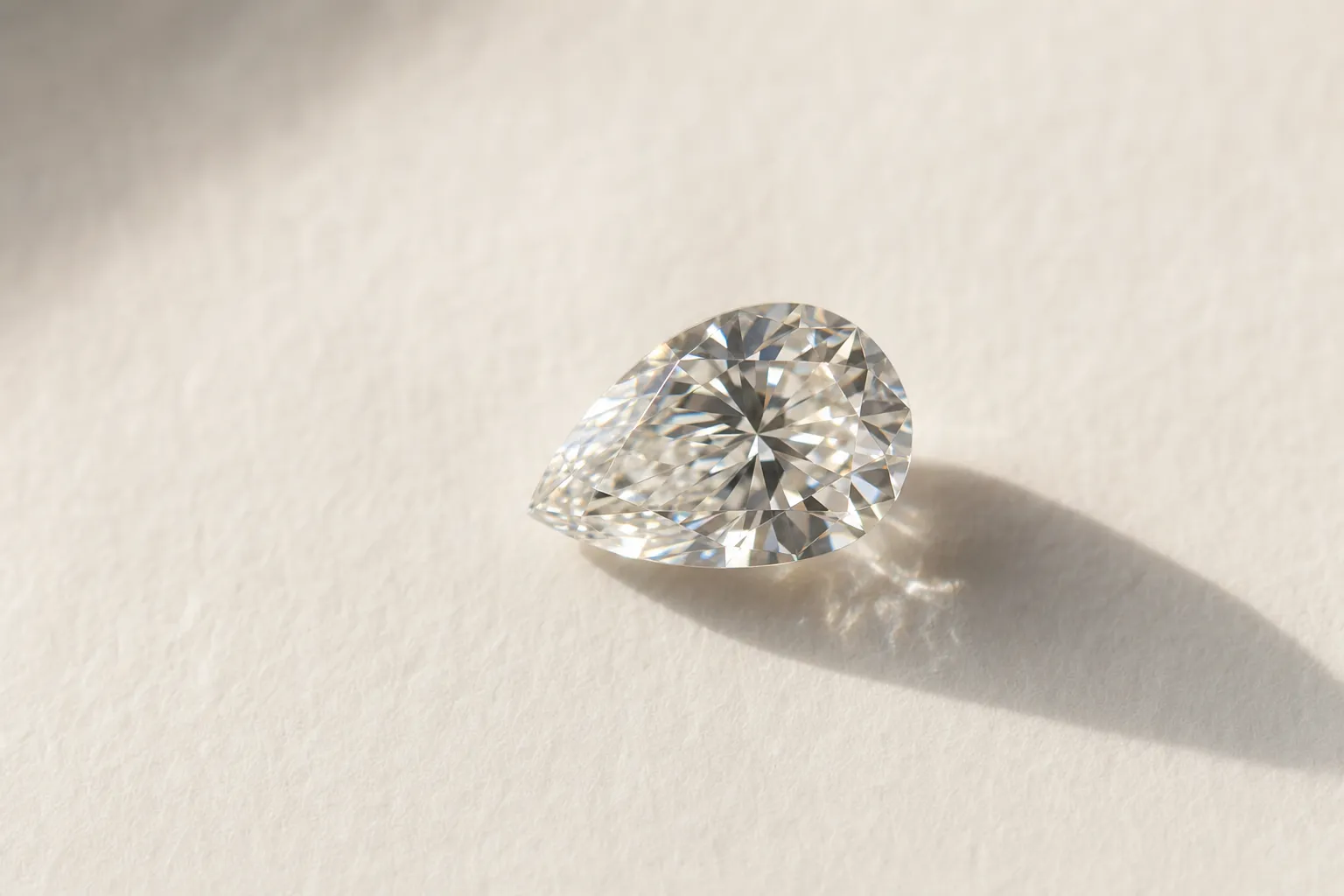
A loose pear-cut diamond shows its shape most clearly from above: a rounded side flows gently into a fine point, and in between sit the same brilliant-style facets that give a round cut its fire. That exact combination creates the appeal, without the stone looking restless or overworked.
What we pay particular attention to is symmetry: an off-centre point or a body that's too narrow stands out immediately in this shape. That's why we always choose your stone in direct comparison with several candidates, so the proportions are genuinely right.
Pear cut or brilliant: the differences at a glance
Both sparkle strongly. The main differences lie in the shape and in the delicate point.
| Feature | Pear cut | Brilliant (round) |
|---|---|---|
| Sparkle | Lively sparkle, almost as strong as a brilliant | The strongest sparkle of all shapes |
| Size effect per carat | Elongates the finger, looks larger thanks to its length | Looks compact and round |
| Price level | Usually a little lower than a brilliant at the same carat weight | Reference price, usually traded highest |
| Visible inclusions | Partly, especially near the point | No, the many facets hide small inclusions well |
| Distinctive feature | Possible bow-tie effect, the fine point needs a protective setting | 57 facets, the classic round cut |
Pear cut in our Zurich collection
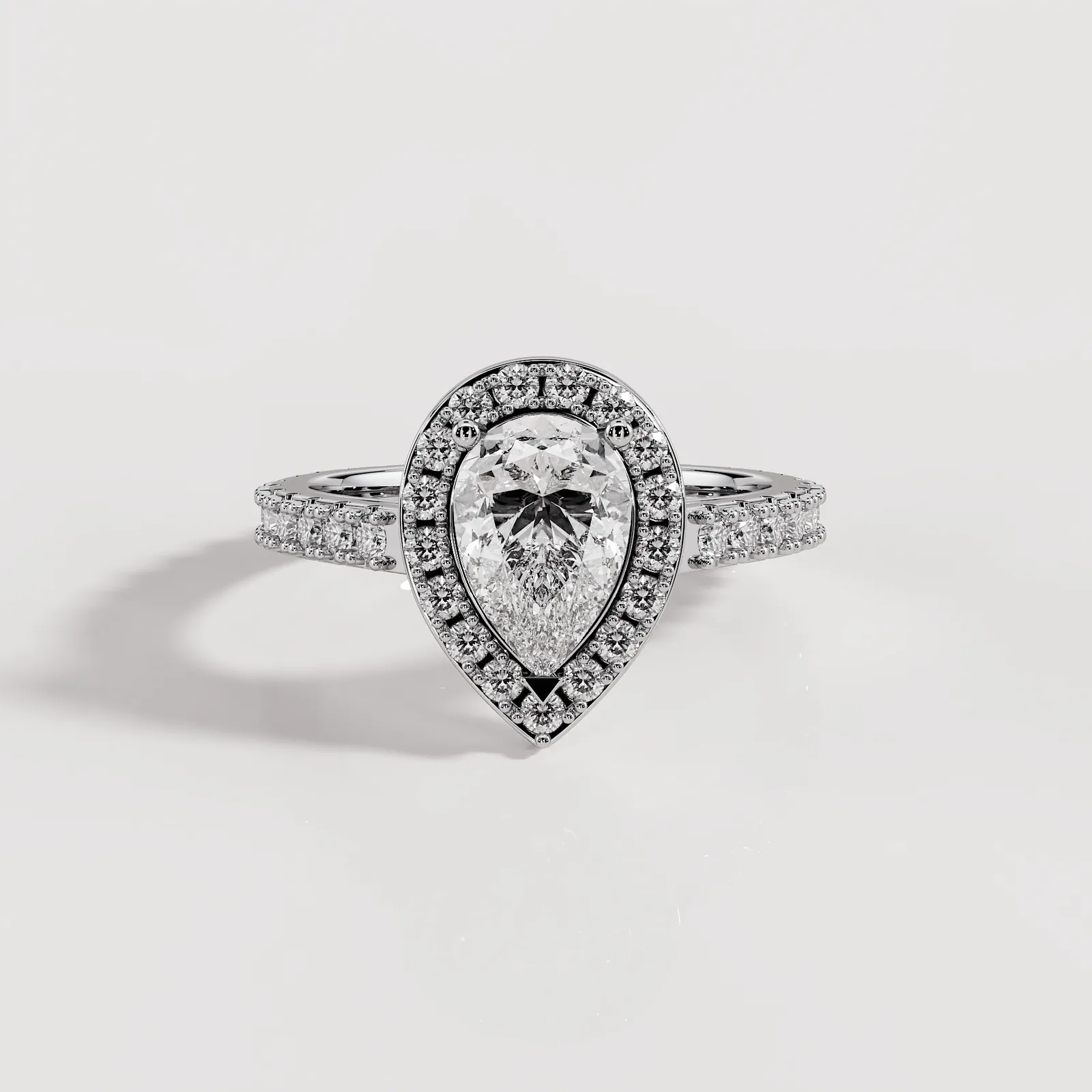
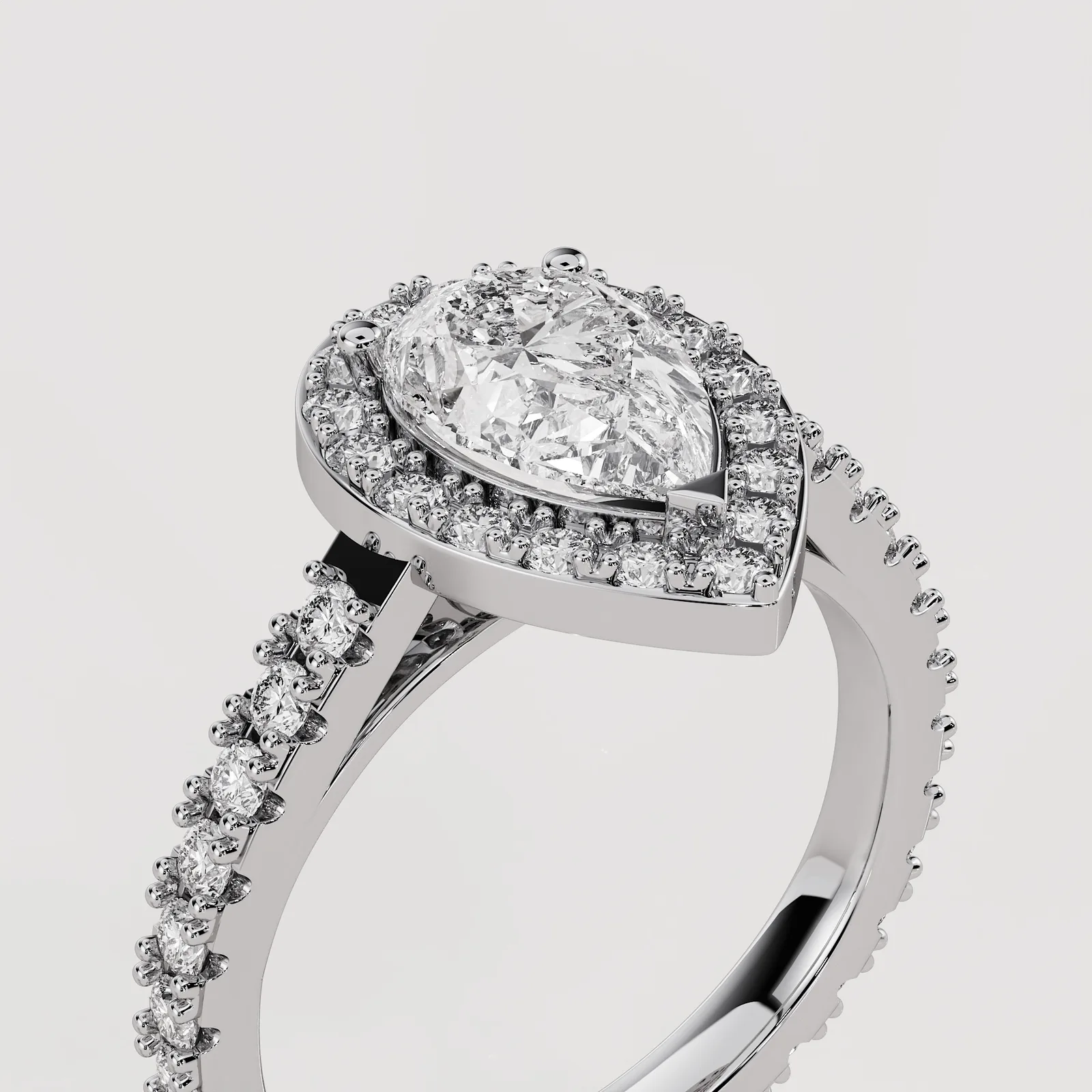
Nora shows a pear cut in platinum with a halo. On request we build any model in our collection with this cut.
What a pear-shaped engagement ring costs
Guide prices for a first orientation. We always discuss the exact figure in your personal consultation.
Price depends on the work involved. We calculate openly, no surprises.
Guide prices, as of 2026, incl. VAT. The exact price depends on stone, metal and work.
Frequently asked questions
A bow-tie is a dark, ribbon-shaped shadow across the centre of the stone that can appear on elongated shapes like pear, oval or marquise when the proportions aren't right. A well-cut stone with balanced depth reduces the effect noticeably, which is exactly why we choose your stones through direct side-by-side comparison.
The classic direction has the point facing the fingernail, which elongates the hand the most. Some couples prefer it turned sideways across the finger, known as east-west, for a more modern look. In the end what matters is what you like, we're happy to show you both directions side by side.
Somewhat, yes, the fine point is the most vulnerable part of the stone. A good prong setting protects exactly this spot with an extra, discreet prong. That keeps the stone secure in everyday wear without the setting hiding the shape.
Usually a little, yes, because less rough weight is lost during cutting compared to a round cut. The exact difference always depends on colour, clarity and the quality of the individual stone. We show you several stones side by side in your consultation and break down the prices openly.
Yes, that's exactly what the atelier appointment is for. You see the stone under a loupe, in daylight and right next to other shapes for comparison. For a video consultation we show you stones on camera and send close-up photos and the certificate as well.
Both work equally well, the difference lies only in price and origin. A lab-grown diamond often allows for a larger carat weight at the same budget, which shows especially well in the elongated pear shape. We explain both sides honestly, the decision is yours.
Quick enquiry
Ready for your pear-shaped ring?
Send us a short message about what you're looking for. We'll give you honest advice on shape, setting and price, and suggest an appointment, in Zurich or by video.