
2026-09-03 · 4 min.
Fejesa dhe unaza: Albanian engagement customs
Fejesa dhe unaza, literally "the engagement and the ring", describes a moment that carries real weight in Albanian-speaking families, whether from Kosovo, Albania or North Macedonia. We regularly advise couples with Albanian roots in the atelier, mostly from Kosovo, and we notice time and again that customs differ from family to family, from village to city, from more religious to entirely secular. What follows is the common outline, not a fixed rulebook that applies exactly to every family.
What Fejesa means
Fejesa denotes the engagement itself, the official moment when two families publicly declare that their children will marry. Traditionally this is not a purely private act between two people, but a matter for both families, who get to know and respect one another and set out together on the path to the wedding. In many Kosovo-Albanian families, the future husband's family travels to the bride's family, often with a small gift basket and, of course, the ring, to formally ask for her hand and seal the engagement.
How a Fejesa usually unfolds
The exact sequence varies a great deal, but a few elements recur often, especially in more traditionally minded families.
- The visit: the man's family visits the woman's family, often with close relatives, sometimes with gifts for the family.
- The ring: the engagement ring is presented during the visit, often directly by the person asking for her hand, or by the future groom's mother.
- The celebration: for many families, a larger celebration follows, either the same day or on a separate occasion, with extended family and friends, music, food and often traditional dancing.
- The announcement: from the Fejesa onward the couple is officially considered engaged, an important social milestone in many communities, regardless of the exact wedding date.
Why the customs vary so much
One reason we are deliberately careful with generalisations here: Albanian-speaking families are anything but a single, uniform group. In Kosovo, mostly Muslim families live alongside Catholic Albanian families, and there are big differences between rural and urban regions, as well as between families who have lived in Switzerland for generations and those who arrived more recently. Some families keep the Fejesa full of ritual and grand celebration, others deliberately keep it small and simple, entirely according to what matters to the two families. In the atelier, we prefer to listen rather than assume, and we're glad to hear any detail you share about your own family tradition.
Which hand, and what happens afterwards
As with Turkish engagements, there is no single binding rule about which hand the ring goes on, and we see both variants in the atelier. Some couples follow the habit common in Switzerland and wear the ring on the left, others follow a practice where the ring is worn on the right first and only moves to the left hand at the wedding, alongside the wedding band. In the end, what matters is what feels right for you as a couple and your families, not a supposedly single correct tradition. We give a broader, general overview of the ring hand in Switzerland in our article on the ring hand.
Which ring suits a Fejesa
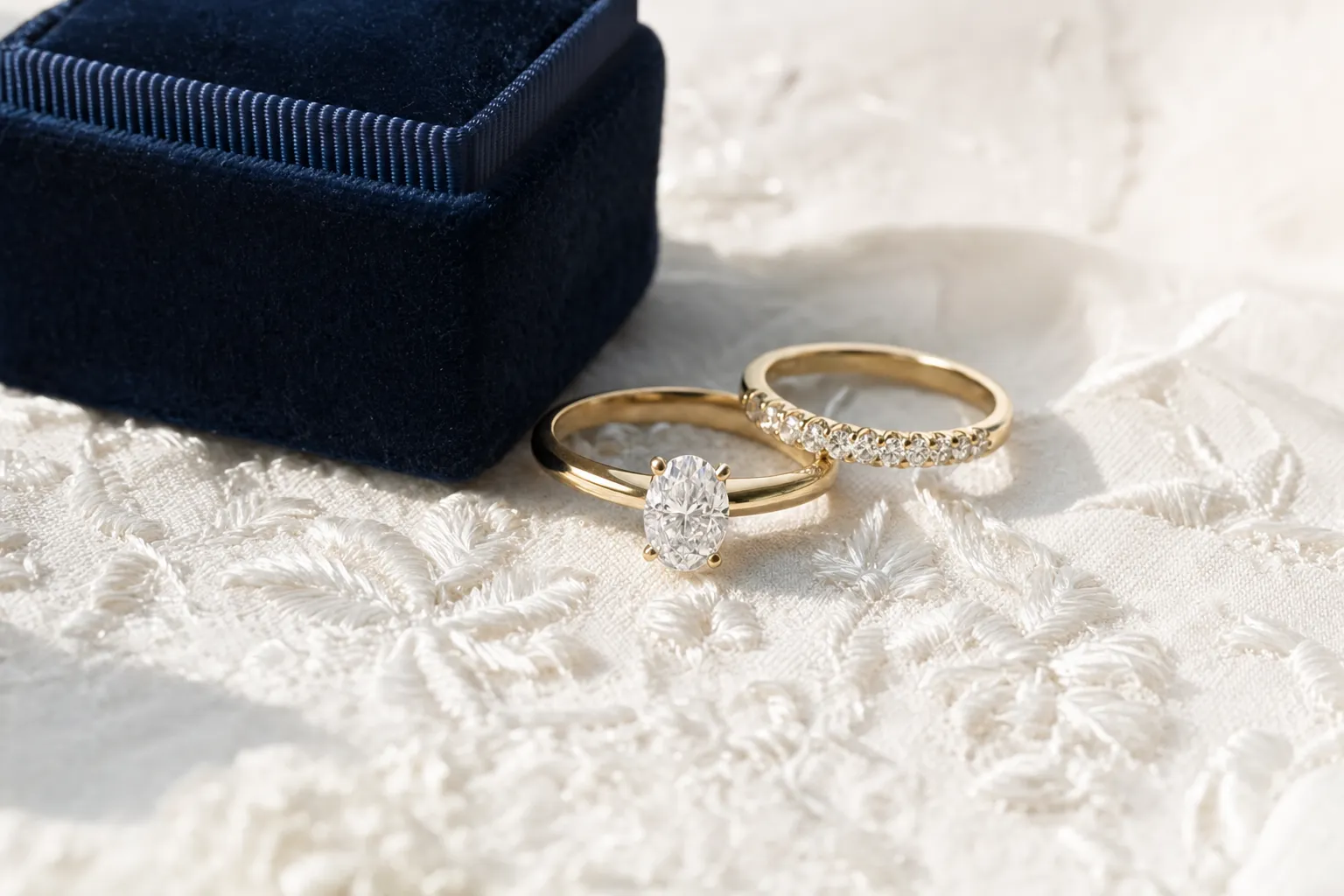
For the Fejesa, many couples choose a solitaire ring with a clearly visible stone, because it stands out well when presented in front of the family and looks timeless in photos. Yellow gold still holds a firm place in many more traditionally minded families, while younger couples increasingly choose white gold, rose gold, or their own, more personal designs. What matters most to us is that the ring suits the person wearing it, not an expectation from the outside. We advise you without assuming what an "Albanian" engagement ring should look like, and we listen first to what matters to you and your family.
What émin does not offer, and what we do instead
In many Albanian families, particularly in Kosovo, bridal gold is also part of the Fejesa and the wedding, usually gifted as gold bracelets or coins in 22 carat gold. We do not carry this classic bridal gold at émin, because it is its own craft with its own alloys, requiring its own expertise that we don't want to fake. Instead we focus on engagement and wedding rings in 18 carat (750) gold, with natural or lab-grown diamonds, individually designed and honestly priced, starting at CHF 1,900. For your Fejesa we are happy to advise you together, at our atelier in Zurich district 4 or by video, in German, English and Albanian. More on our advice for Albanian-speaking families in Zurich is on our page for Albanian families, and a first look at the classic solitaire style is on our solitaire ring page.
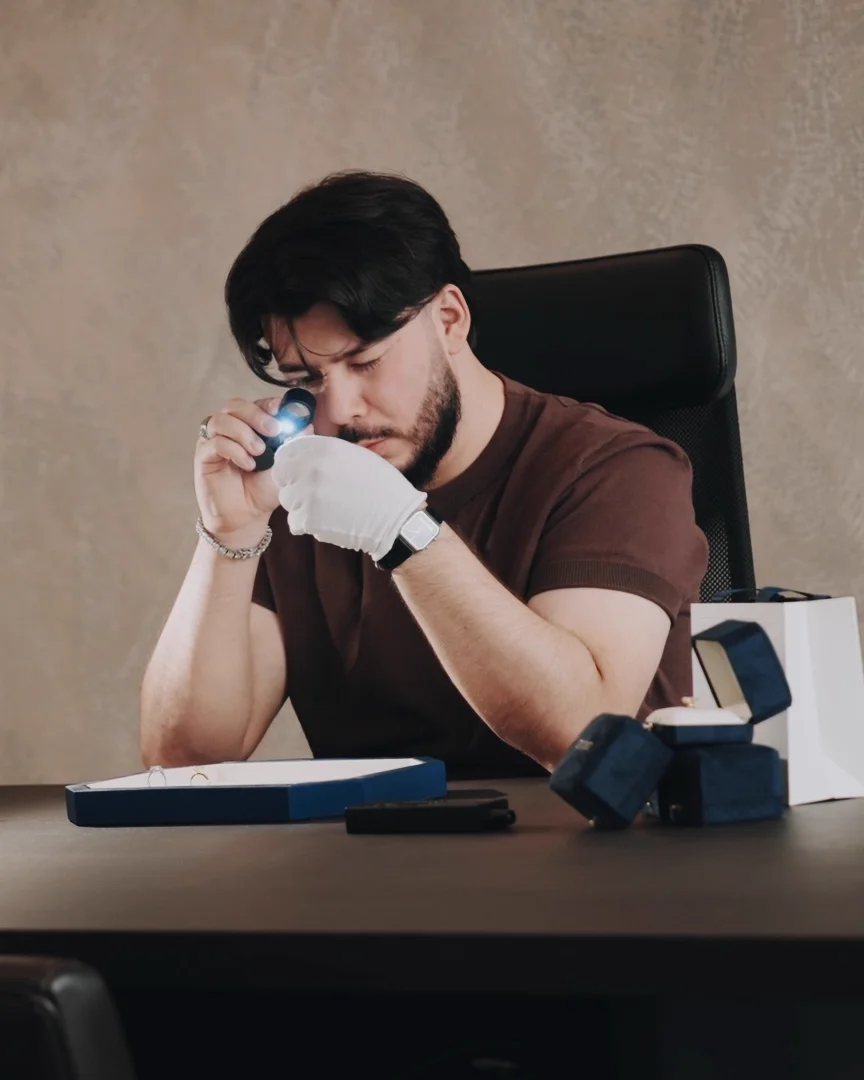
Founder of émin, jeweller in Zurich
Have questions about your ring? Talk to us directly.
Book an AppointmentRelated pages
Quick enquiry
Let's talk about your ring.
A free, no-obligation consultation at the atelier in Zurich or by video. Honest answers, no sales show.