
Gold colours
Champagne gold engagement rings: the quiet gold
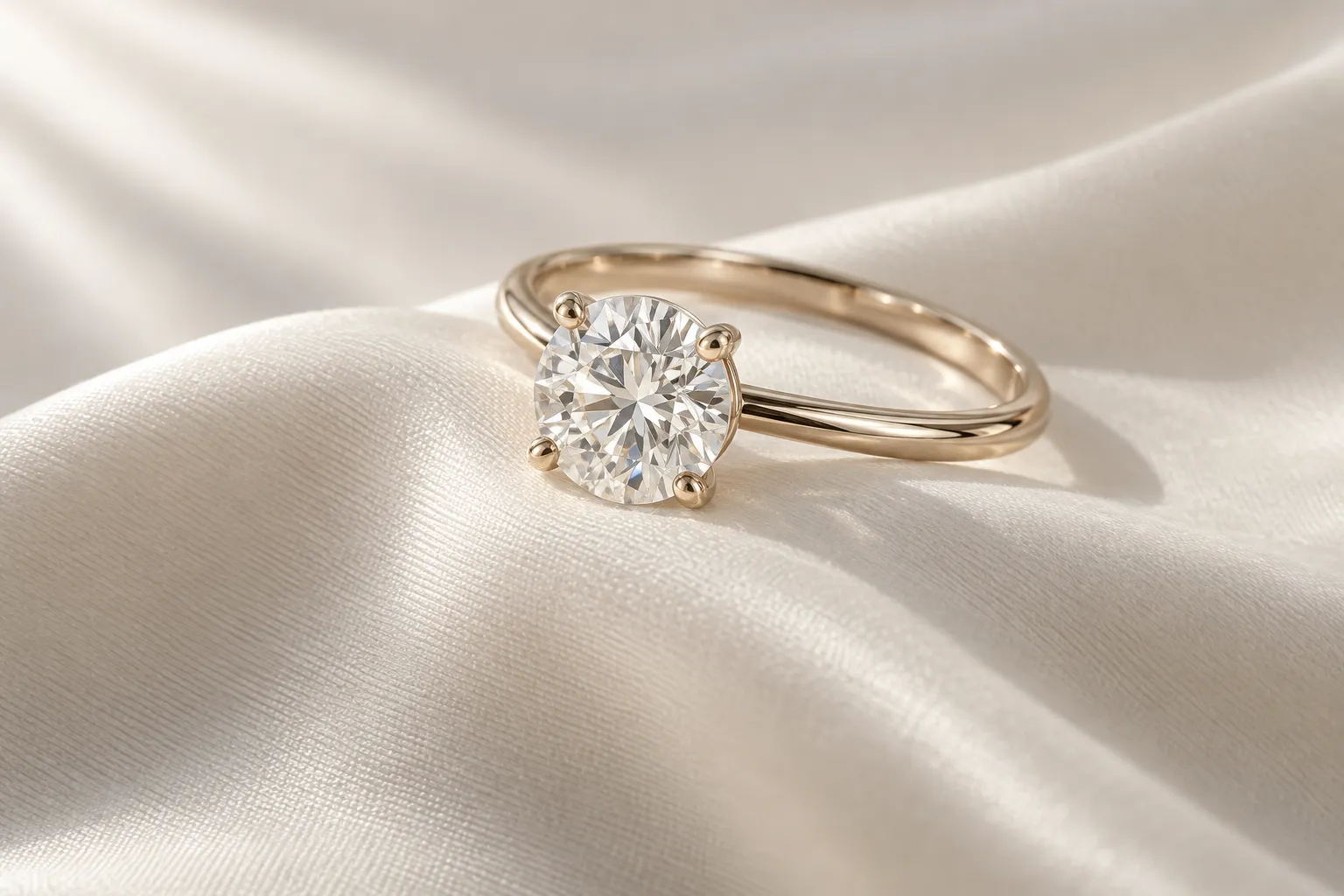
A champagne gold engagement ring is for anyone who finds yellow gold too strong and rose gold too pink. Champagne gold sits right in between: light, warm and slightly muted, with a fine beige glow that recalls a glass of champagne in evening light. At émin we design your ring in 18k gold (750), including this tone.
On this page we explain what champagne gold actually is, how it looks next to yellow, rose and white gold, which skin tones and stones it suits, and what the ring costs.
Why couples choose champagne gold
Warm, not loud
Champagne gold has the warmth of gold but feels calmer than classic yellow gold. The tone stays in the background and lets the stone speak.
Suits many skin tones
Because it is neither strongly yellow nor pink, it flatters both fair and darker skin. Many people torn between yellow and rose gold find their tone here.
Real 18k gold
Champagne gold is not a plating but a gold alloy with 75 percent fine gold. The colour runs through the whole metal and does not wear off.
What champagne gold actually is
Pure gold is too soft for a ring, so it is alloyed with other metals. 18k gold contains 75 percent fine gold, the rest is mostly silver and copper, sometimes a little palladium or zinc. The ratio decides the colour: lots of copper gives rose gold, more silver a paler tone. Champagne gold is a finely balanced mix that results in a light, warm, slightly beige shade.
Worth knowing: champagne gold is not a standardised term. Every supplier mixes it a little differently, so it doesn't look exactly the same everywhere. In our Zurich atelier we show you real samples in daylight, so you see the tone itself and not just a photo on a screen.
Champagne gold compared with the other gold colours
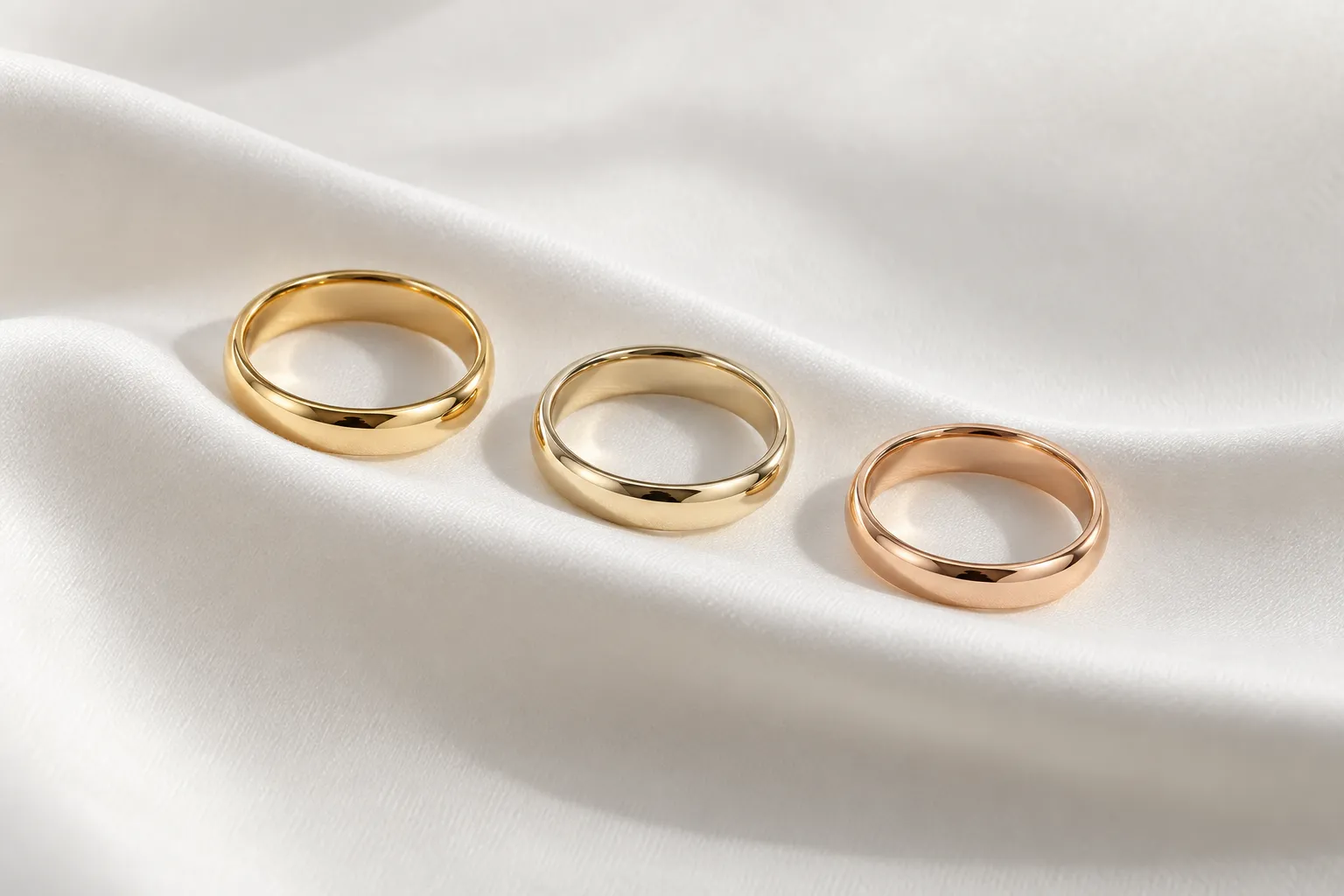
All four are 18k gold. The difference lies in the alloy, which changes colour, effect and care.
| Feature | Yellow gold | Champagne gold | Rose gold | White gold |
|---|---|---|---|---|
| Tone | Rich, warm, sunny | Light, warm, slightly beige | Warm with a pink glow | Cool, light, silvery |
| Effect | Classic, present | Calm, understated | Romantic, soft | Modern, crisp |
| Especially suits | Warm skin tones | Almost all skin tones | Fair and warm skin tones | Cool skin tones |
| Care | Polish when needed | Polish when needed | Polish when needed | Re-plate rhodium every 1 to 2 years |
Skin tones are only a guide. What counts is how it looks on your finger, so you can try every colour with us.
Which stones suit champagne gold
A white diamond looks especially calm and refined in champagne gold, because the warm tone frames it softly without making it look yellowish the way a very strong yellow gold can. If you want the stone to look as white as possible, choose prongs in white gold or platinum and keep only the band in champagne gold.
Coloured stones work well too: a deep green emerald, a blue sapphire or a diamond in warm champagne or cognac shades all feel right in this gold. For the centre stone we usually recommend a lab-grown diamond with an IGI certificate or a natural diamond with a GIA certificate.
Champagne gold for wedding rings too
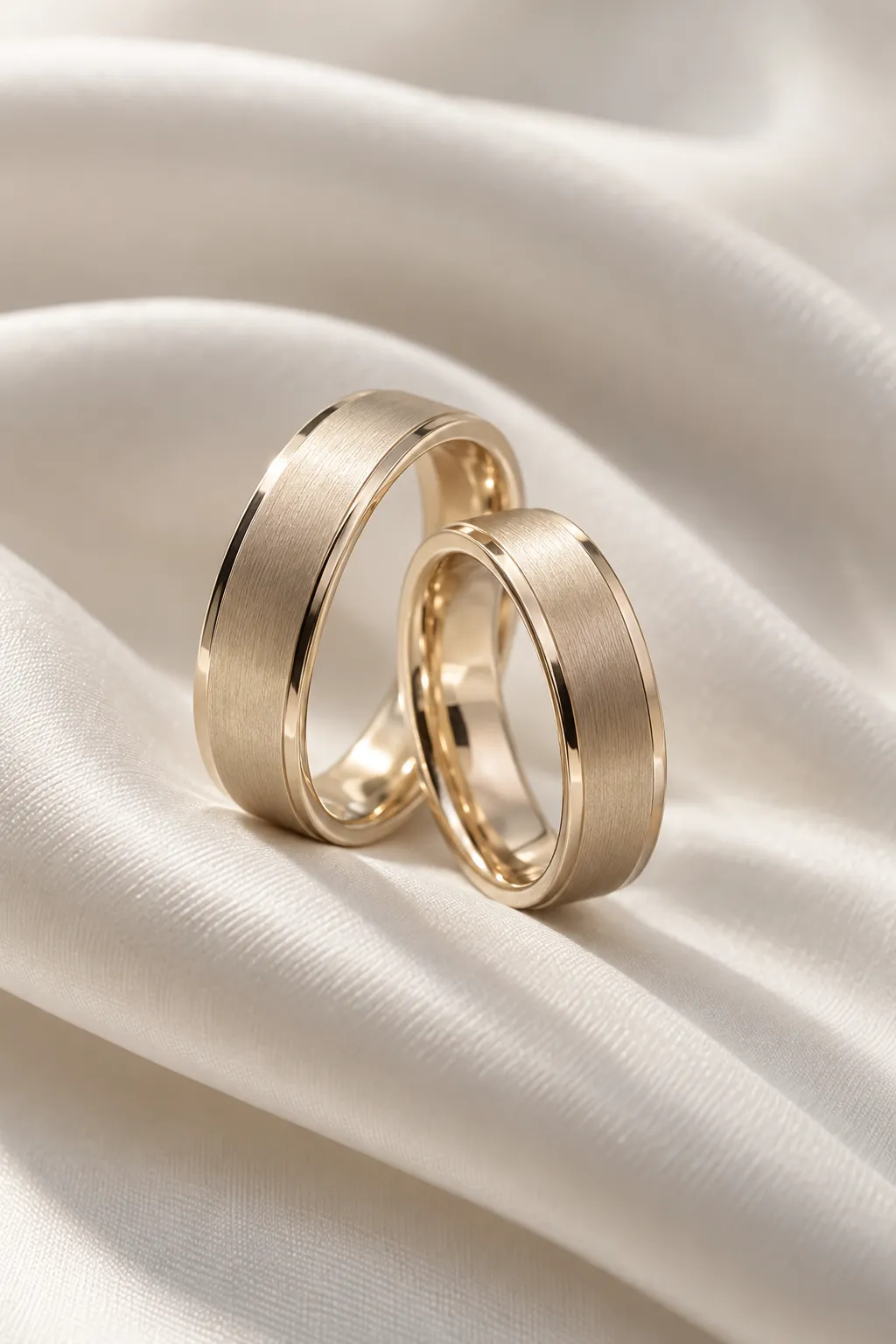
Many couples later choose their wedding rings in the same tone, so engagement ring and wedding band look calm together.
What a champagne gold engagement ring costs
Champagne gold is 18k gold, so it sits in the same price range as yellow or rose gold. Alloy, weight and stone set the exact price, and we show you the full calculation.
Price depends on alloy and weight
Price depends on the work involved. We calculate openly, no surprises.
Guide prices, as of 2026, incl. VAT. The exact price depends on stone, metal and work.
Frequently asked questions
Champagne gold is a gold alloy, in our case 18k gold with 75 percent fine gold. The remaining 25 percent is mainly silver and copper, balanced to produce a light, warm, slightly beige tone. Visually it sits between yellow gold and rose gold, only calmer and softer than both.
Not as a rule. The gold content of 18k gold is always the same, and the other metals make little difference to the price. What really drives it is weight, width, setting and above all the stone. We walk you through the price of your design openly, with no hidden surcharges.
No. The colour runs through the entire metal and is not a coating, so it cannot wear off. Like any gold, champagne gold picks up fine scratches and a softer patina over the years. A polish brings back the original shine, and it never needs rhodium plating like white gold.
Champagne gold is considered very versatile because it is neither strongly yellow nor pink. On fair skin it looks delicate and light, on olive and darker skin warm and refined. We still recommend trying it on, and our atelier has samples in every gold colour.
Yes, it's a popular choice. The band is champagne gold, while the prongs or the stone setting are white gold or platinum. That keeps a white diamond looking crisp while the ring as a whole stays warm. We'll show you how it looks for your design during the consultation.
Wash it now and then with lukewarm water, a drop of mild washing-up liquid and a soft toothbrush. Take it off for sport, the gym or gardening. Once a year a quick check of the prongs is worthwhile, so your stone stays securely in place.
Quick enquiry
Curious about champagne gold?
Tell us briefly what kind of ring you have in mind. We'll show you champagne gold next to yellow and rose gold, in our Zurich atelier or by video.