
2026-09-03 · 5 min.
Yellow, rose and white gold: alloys and care
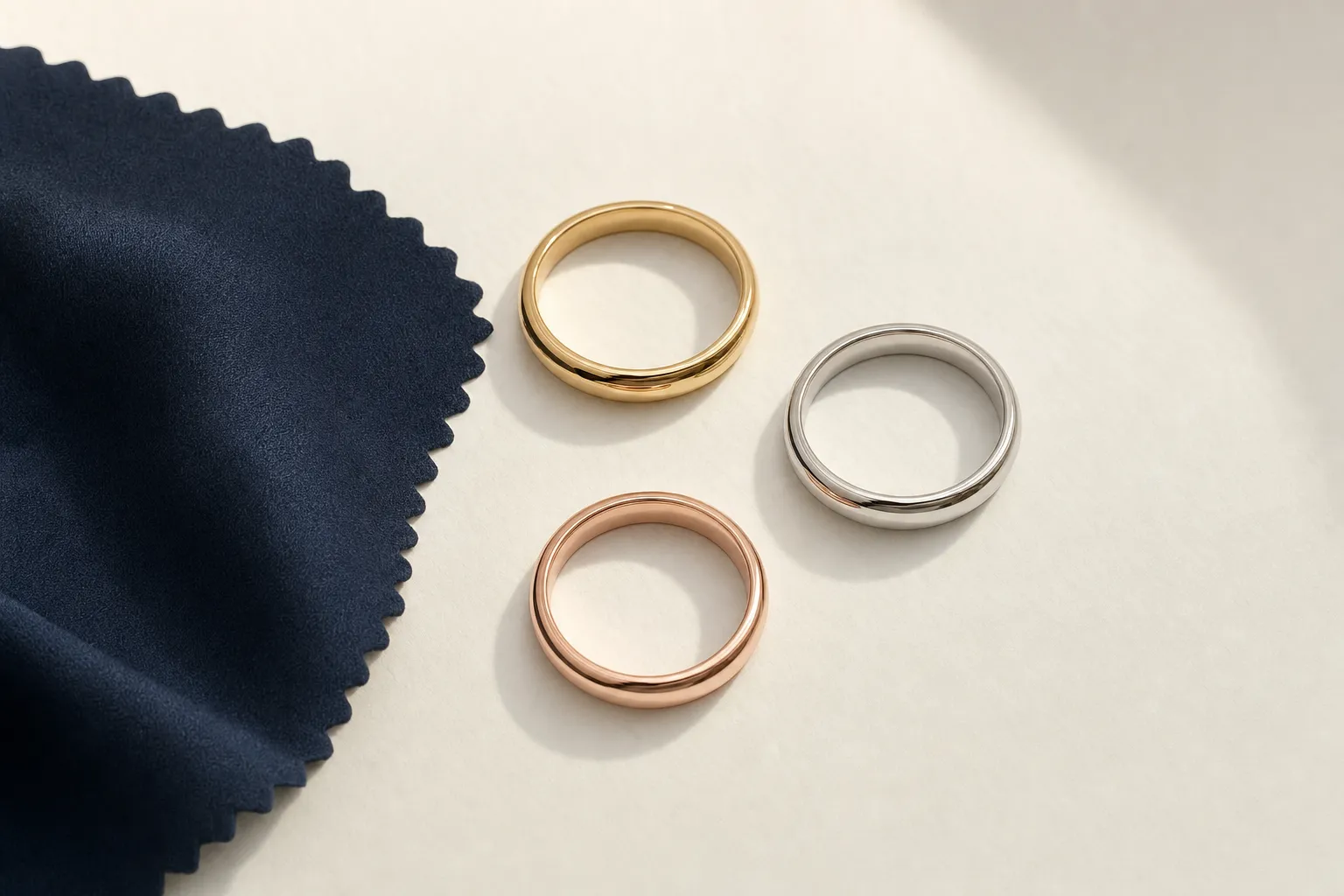
Yellow, rose and white gold can have the same fineness, 750 for example, and still look completely different. The reason is the alloy: which metal and how much copper, silver or palladium is mixed into the pure gold determines the colour. Here's what technically sets the three gold colours apart and how to best care for each one day to day.
Yellow gold: the classic, warmest variant
Yellow gold comes closest to the colour of pure gold, because the alloy usually consists of roughly equal parts silver and copper, with no additional lightening. The result is a warm, rich gold tone that barely fades over time, because the colour comes straight from the alloy rather than being applied afterwards. Yellow gold shows small scratches more visibly in daily wear than white gold, because its shiny surface strongly emphasises light reflections, though this is easily evened out with occasional polishing by a professional.
Rose gold: more copper for the pink tone
Rose gold is created by mixing noticeably more copper into the alloy than for yellow gold, often with slightly less silver in proportion. The higher the copper content, the more intense the pink to reddish tone, from a delicate rosé to a bold red gold. Because copper is a comparatively hard metal, rose gold is often considered more scratch-resistant than pure yellow gold, ideal for rings worn every day. Over time, fine surface oxidation can make the tone appear minimally warmer, which is normal and can be refreshed through cleaning and occasional polishing.
White gold: palladium instead of the yellow tone, plus rhodium plating
White gold is made by alloying gold mainly with palladium or, less commonly, nickel, both of which lighten the typical yellow colour. In Switzerland and the EU, we skip nickel for white gold and use palladium instead, because it's the more skin-friendly and honest choice. Even with a high palladium content, white gold naturally stays a slightly yellowish grey, the bright white tone you know from shop windows only comes from a wafer-thin rhodium layer, the rhodium plating. This layer wears down over the years, which is why white gold rings should occasionally be re-plated, a normal and straightforward care step, not a sign of poor quality.
- Yellow gold: alloy of gold, silver and copper in roughly equal parts, warm tone, colour doesn't fade.
- Rose gold: more copper than yellow gold, pink to reddish tone, comparatively scratch-resistant.
- White gold: gold alloyed with palladium, light but not pure white, needs rhodium plating for the bright tone.
- All three colours come in 585 and 750, fineness determines the gold content, not the colour.
Everyday care, for all three colours
Regardless of colour, the basic rule for gold is: mild soapy water and a soft brush are usually enough for cleaning at home, avoid harsh chemicals like chlorine, which can attack the alloy. It's best to take rings off before sport, cleaning work or applying hand cream, which protects both setting and surface. For a detailed, step-by-step guide, including what's better left to a professional, see our article on ring care.
Which colour suits which ring
In the end, choosing between yellow, rose and white gold is mainly a matter of taste, technically all three last a lifetime when well made. Yellow gold reads classic and warm, rose gold romantic and modern at once, white gold cool and understated, especially with colourless diamonds. On our pages for yellow gold engagement rings, white gold and rose gold, we show you models in each colour, so you can see directly which tone best suits your hand and your style.
In the end, what matters isn't which colour is objectively the best, but which one you love looking at on your hand every day. Come by our atelier in Zurich district 4 or talk to us by video, we'll lay all three colours side by side so you can see in real light which one suits you.
Founder of émin, jeweller in Zurich
Have questions about your ring? Talk to us directly.
Book an AppointmentRelated pages
Quick enquiry
Let's talk about your ring.
A free, no-obligation consultation at the atelier in Zurich or by video. Honest answers, no sales show.