
Setting: east-west
The east-west engagement ring
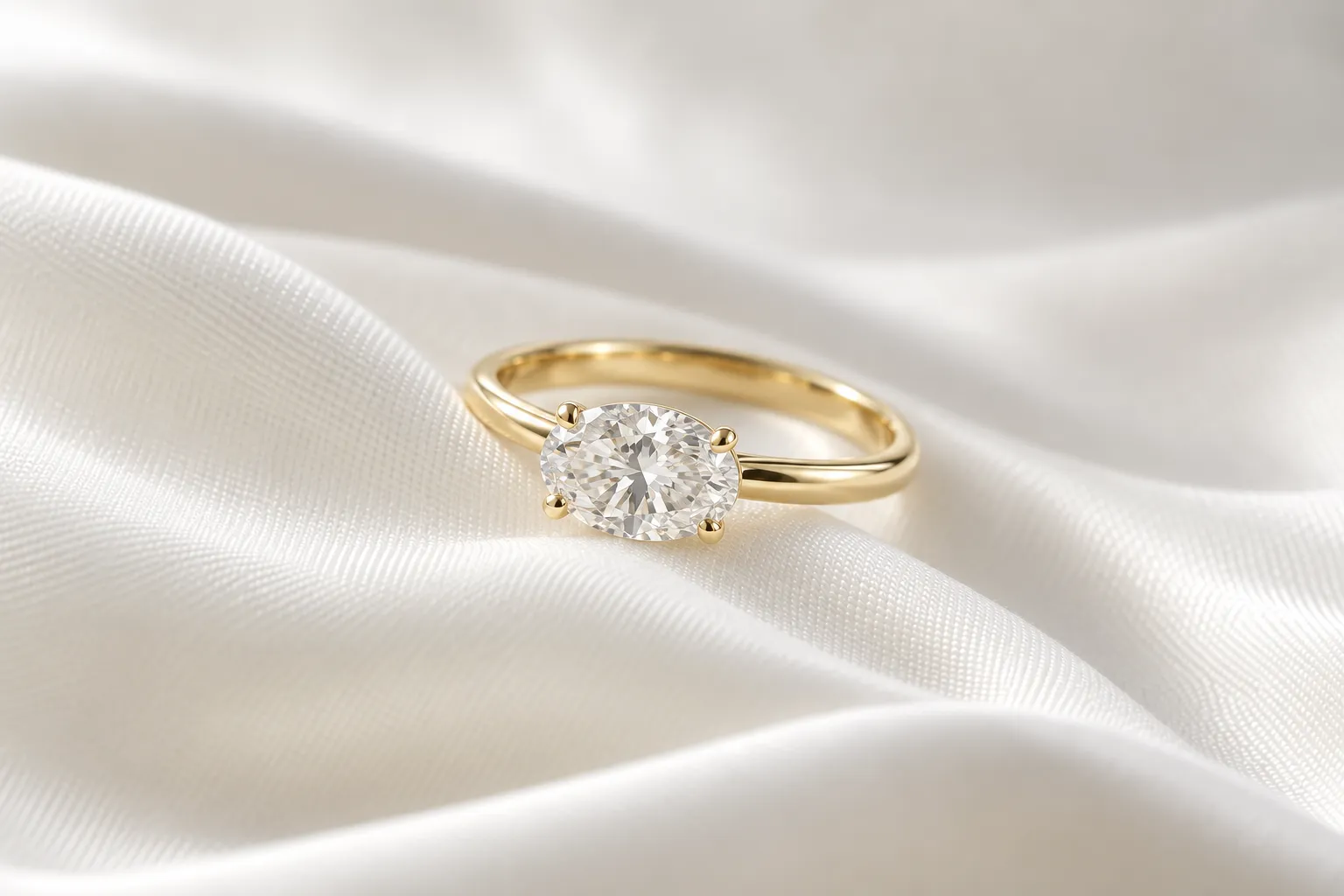
On an east-west engagement ring, an elongated stone is set sideways: its long side follows the band and lies across the finger instead of pointing towards the fingertip. An oval, emerald cut, marquise or pear takes on a whole new look this way, calm, modern and a little unexpected.
At émin you design your east-west ring with us in Zurich. We show you the same stone lengthwise and sideways on your hand, so you see the difference straight away. Every ring is made to measure, and every centre stone is certified.
Why east-west
Modern without being loud
Turning the stone by 90 degrees is a small decision with a big effect. The ring looks distinctive and contemporary while staying simple. Many people love exactly that mix.
Catches less
Set sideways, the stone usually sits a little lower and sticks out less over the fingers. In daily life, with gloves, pockets or hair, it catches less often.
A different look on the finger
Set lengthwise, an elongated stone lengthens the finger. Set sideways, it emphasises width and looks calmer. On long, slender fingers that's a lovely balance.
Beautiful with a wedding band
Because the stone lies flat along the band, it creates a continuous horizontal line. A plain wedding band beside it continues that line and looks like a planned set.
Which stones suit east-west
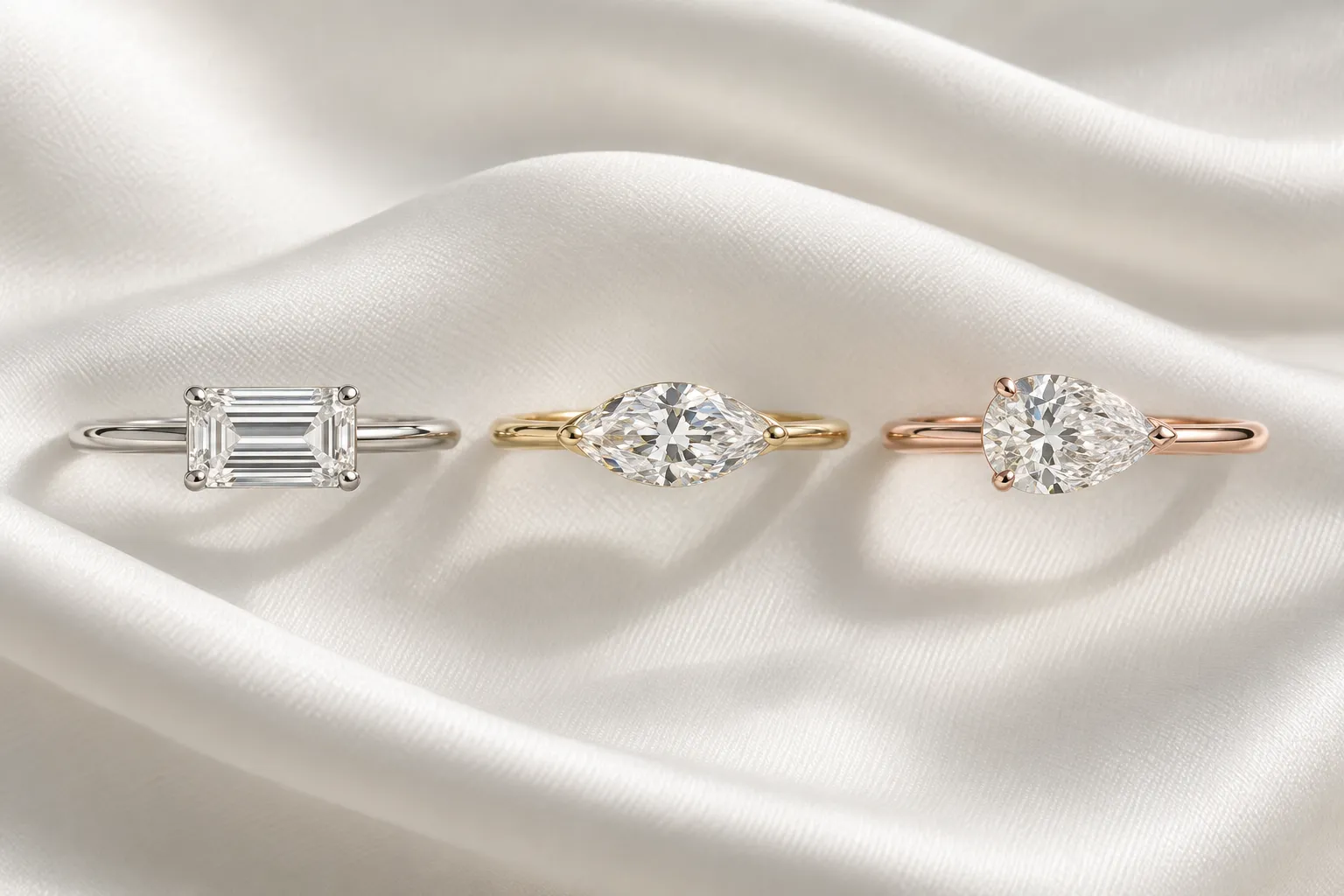
A sideways setting needs an elongated stone. Couples most often choose an oval because it looks soft and harmonious. An emerald cut with its step facets gives the ring a clean, almost architectural calm. A marquise looks especially graphic set sideways, and a pear lies with its point to the side, deliberately asymmetrical.
The length-to-width ratio matters. A stone that's too round barely looks different sideways, while a very narrow one can look too delicate. We show you several stones side by side and explain what the numbers on the certificate mean, clearly and without jargon.
How east-west looks on the finger
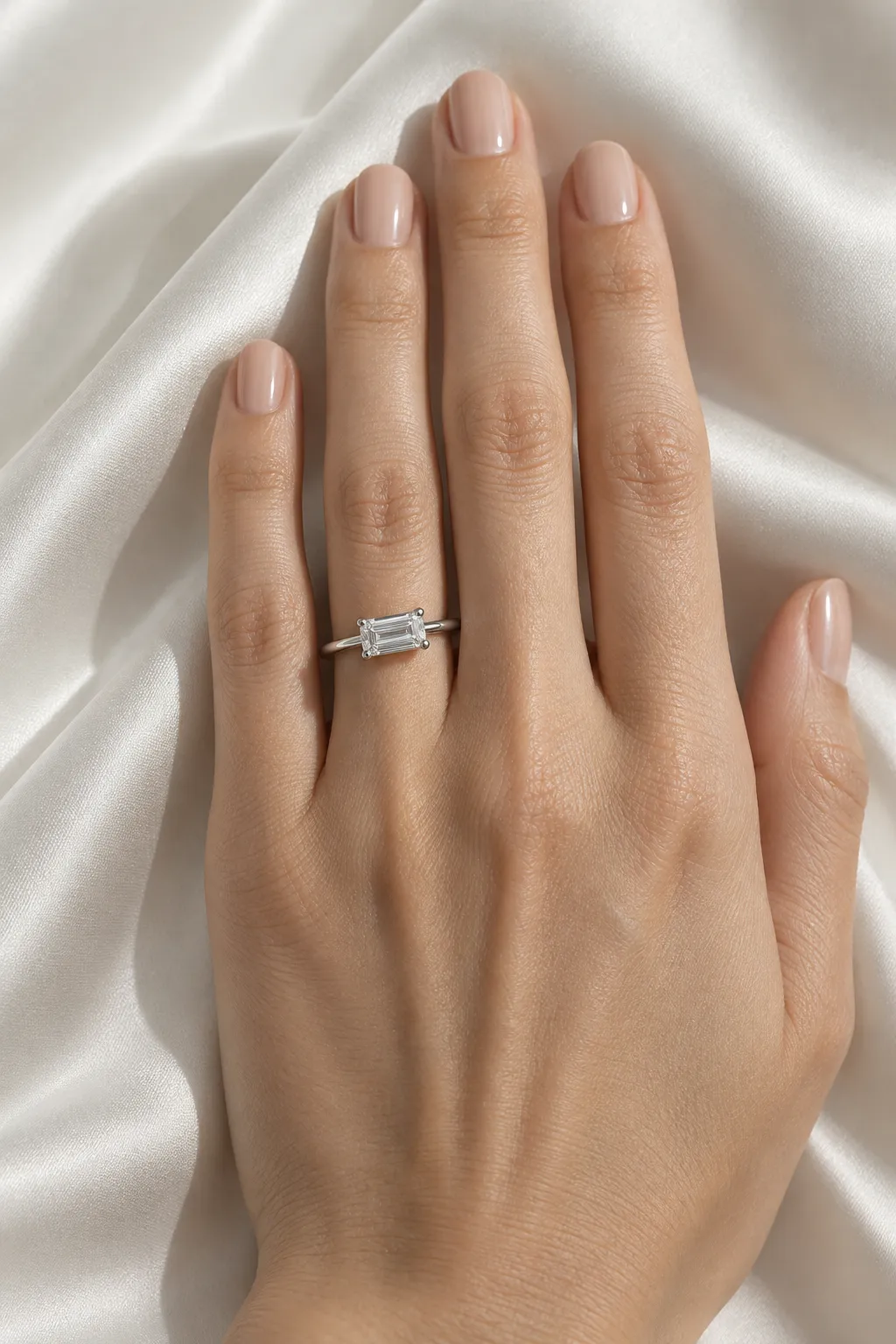
The biggest difference only shows on the hand. A lengthwise oval leads the eye to the fingertip, and the finger looks longer. Set sideways, the same stone lies across the finger like a small crossbar. That looks calmer, more modern and often makes the stone appear a little wider. If you have shorter fingers and want to lengthen them visually, the classic direction may suit you better. If you have long, slim fingers, east-west is often just the right balance.
The sideways position has practical advantages too. The stone can be set lower, the prongs are more protected and the ring sits flatter. For people who use their hands a lot, east-west is a particularly practical choice. With emerald and marquise cuts we also make sure corners and points are well protected.
Lengthwise or sideways: the comparison
The same stone, two directions. A first orientation.
| Feature | Classic lengthwise | East-west sideways |
|---|---|---|
| Look on the finger | lengthens the finger, elegant and long | emphasises width, calm and modern |
| Setting height | often a little higher | usually lower, flatter on the finger |
| Everyday wear | can catch more easily | catches less often |
| Especially suits | shorter fingers, classic style | long, slender fingers, modern style |
| With a wedding band | straight or contoured, depending on setting | continuous line, a plain band fits well |
It's best to try both directions at the atelier, the difference is visible straight away.
What an east-west engagement ring costs
The base is our Essential solitaire. Shape, stone choice and setting change the price, and we work it out openly with you.
Price depends on the work involved. We calculate openly, no surprises.
Guide prices, 2026, incl. VAT. You get the exact price after the design, in writing and without surprises.
Frequently asked questions
East-west describes the direction in which an elongated stone is set. Instead of running from the base of the finger to the fingertip, north to south, the stone lies across it, east to west. Its long side follows the band. The term comes from English jewellery language and is now widely used.
All elongated shapes: oval, emerald cut, marquise, pear, and also elongated radiant or cushion cuts. Round brilliants and square princess cuts look the same in both directions, so they don't work for east-west. We show you different shapes set sideways so you can see which you like best.
Often, yes. Set sideways, the stone usually sits lower and sticks out less over the fingers. It catches less often on gloves, jumpers or hair. For pointed shapes like marquise or pear we protect the points with suitable prongs, so they stay safe in everyday life.
Not smaller, just different. The stone shows the same surface from above, but rather than lengthening the finger it emphasises width. On slim fingers a sideways stone often looks even more present, because it almost fills the width of the finger. It's best to compare both directions on your hand.
Very well. Because the stone lies flat along the band and often sits low, a plain straight wedding band usually sits right beside it without a gap. The horizontal line of the stone continues in the wedding band. Wedding bands at émin start from CHF 2'400 per pair.
Our base is the Essential: a complete solitaire with a 1 carat lab-grown diamond in 18k gold or platinum, IGI certified, from CHF 1'900. The east-west setting, the choice of shape and a natural instead of a lab-grown diamond change the price. We set it out openly and in writing after the design.
Quick enquiry
Ready for your east-west ring?
Tell us which shape appeals to you and what budget you have in mind. We reply within one working day with a suggested appointment.