
Diamond shapes
The heart shaped engagement ring
A heart shaped engagement ring is the most direct way to say yes. Everyone understands the symbol without explanation. That's exactly why the stone has to be good: a lopsided heart is obvious at a glance, while a well-cut one looks calm, grown-up and anything but playful.
At émin we talk openly about what makes a good heart shaped diamond, from what size the shape is clearly visible on the finger, and how a simple setting carries the heart instead of decorating it. Consultations take place at our atelier in Zurich or by video.
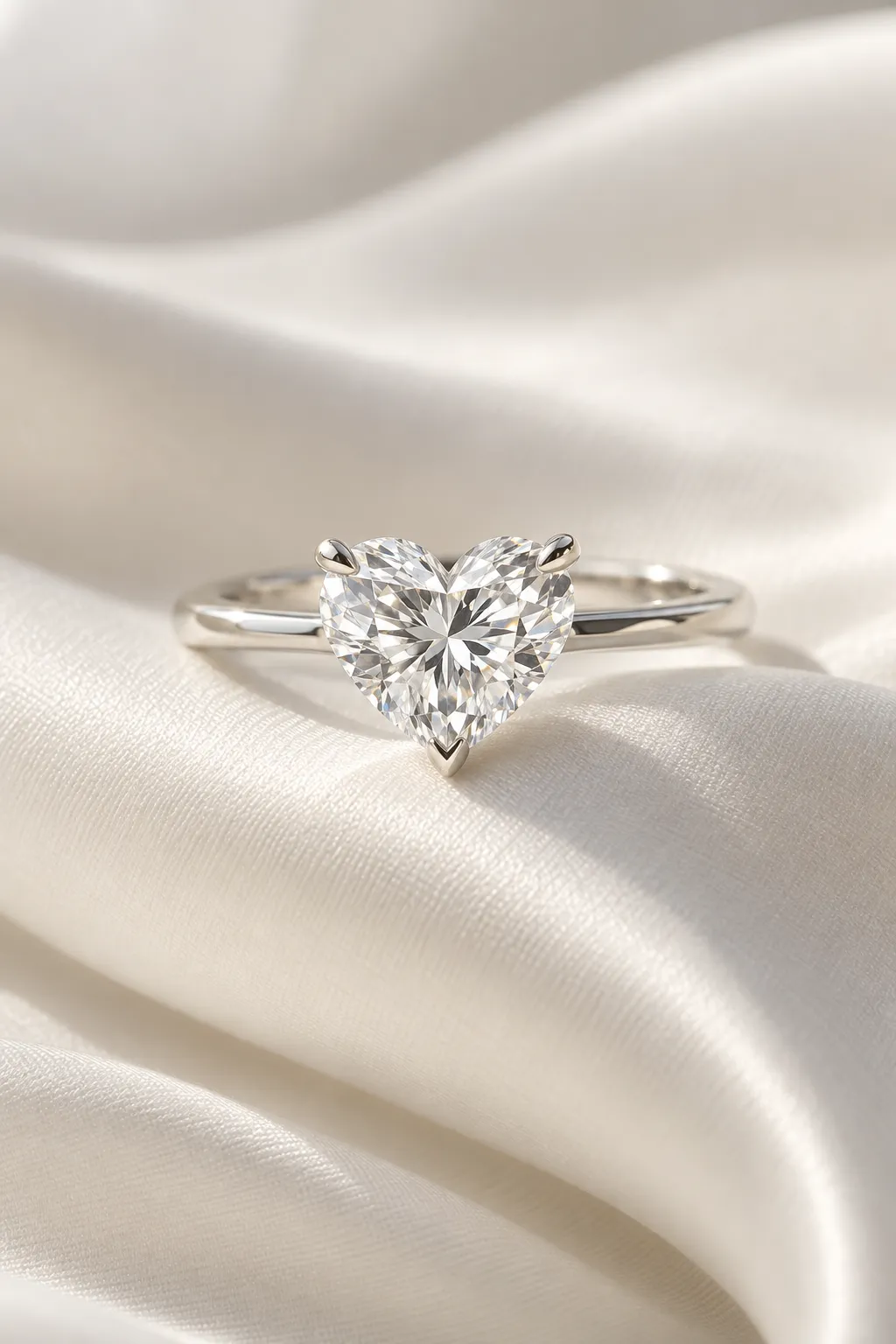
Why a heart, and why it has to stay true to its shape
A symbol without detours
No other cut says so directly what it's about. For many couples that's the point: the ring shouldn't just be beautiful, it should say something that needs no explanation.
Cut quality before carat
With a heart, symmetry decides. Both lobes the same size, a clear cleft, the point neatly centred. A smaller, perfectly cut stone looks better than a larger one with a crooked outline.
Grown-up, not cute
With a slim band and a restrained setting, a heart shaped diamond looks elegant and timeless. We deliberately leave out ornament so the heart can speak for itself.
How to recognise a good heart cut
A heart shaped diamond is essentially a brilliant with a heart outline, so a cut with many facets and plenty of sparkle. The shape is the tricky part: the cleft at the top must be deep enough to read as a heart, but not so deep that the stone looks torn. The two lobes should be equal and round, the sides gently curved and the point fine but not too thin.
A beautiful heart usually has a length-to-width ratio close to 1, roughly as long as it is wide. Noticeably longer looks narrow, noticeably wider looks squat. We lay several stones side by side so you see the differences with your own eyes instead of just comparing numbers on a certificate.
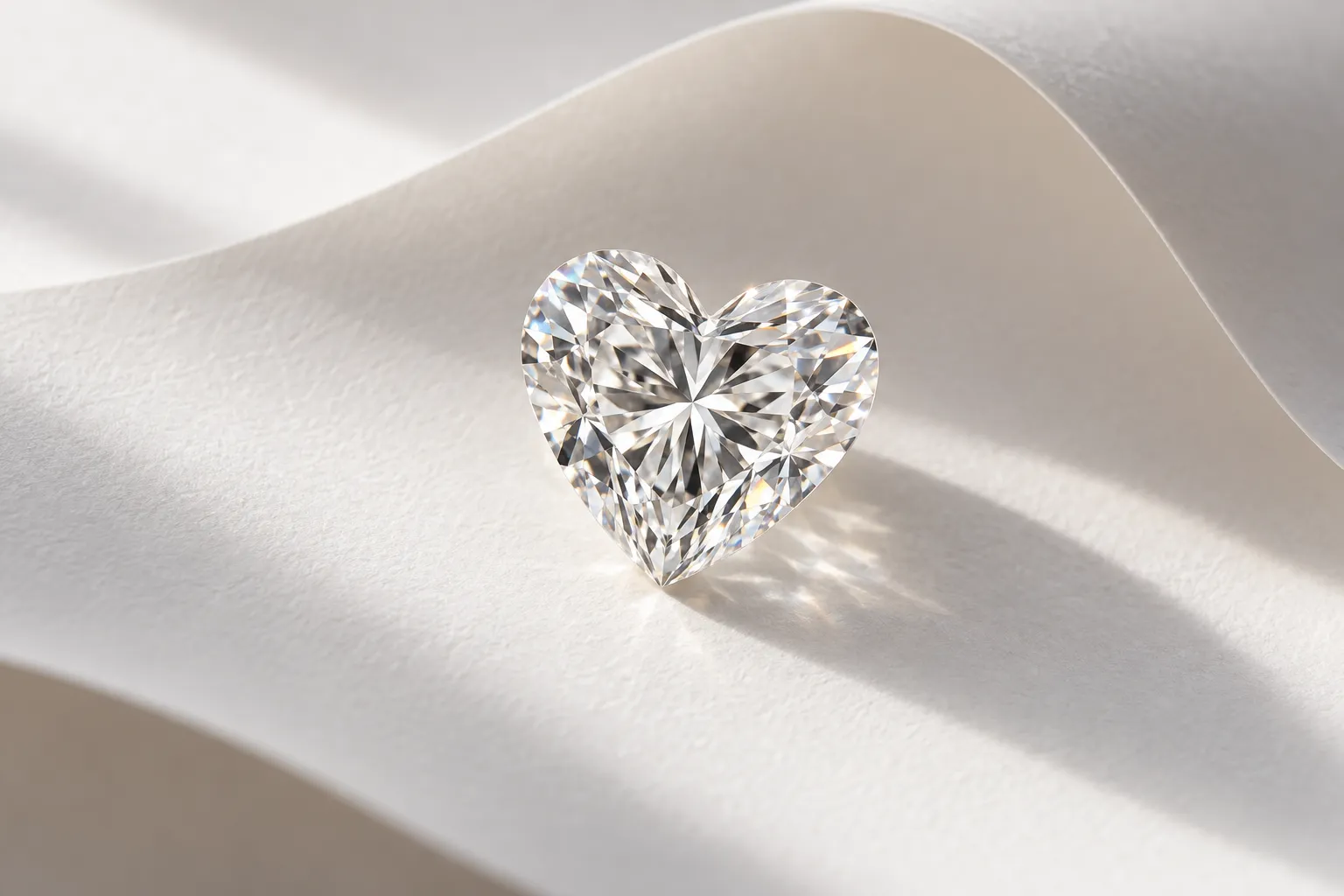
The heart cut at a glance
The key points before you decide on a heart shaped diamond.
| Topic | What matters | Why |
|---|---|---|
| Symmetry | Both lobes equal, point exactly centred | Even small deviations are visible at once |
| Size | Clearly visible from about 0.7 to 1 ct | Smaller, the heart shape blurs on the finger |
| Ratio | Length to width close to 1 | Looks balanced, neither narrow nor squat |
| Bow-tie | As faint as possible | A dark shadow across the centre is distracting |
| Setting | Prong at the point, two at the lobes | Protects the most delicate spot |
Size, setting and a simple presentation
Worth knowing: below about 0.7 carat the heart shape is often hard to make out on the finger, and the stone looks more like a slightly irregular brilliant. From around 1 carat the outline shows clearly, even from a normal distance. Our carat chart shows how different sizes look on the hand. On a tighter budget a lab-grown diamond can help you reach the size at which the heart really reads as a heart.
The point is the most delicate part of the stone. That's why a V-shaped prong or a fine prong sits right on the point, and two more prongs hold the lobes. We recommend a slim, smooth band without extra hearts or embellishments. The point usually faces the fingertip, but the other way round works just as well if you prefer it.
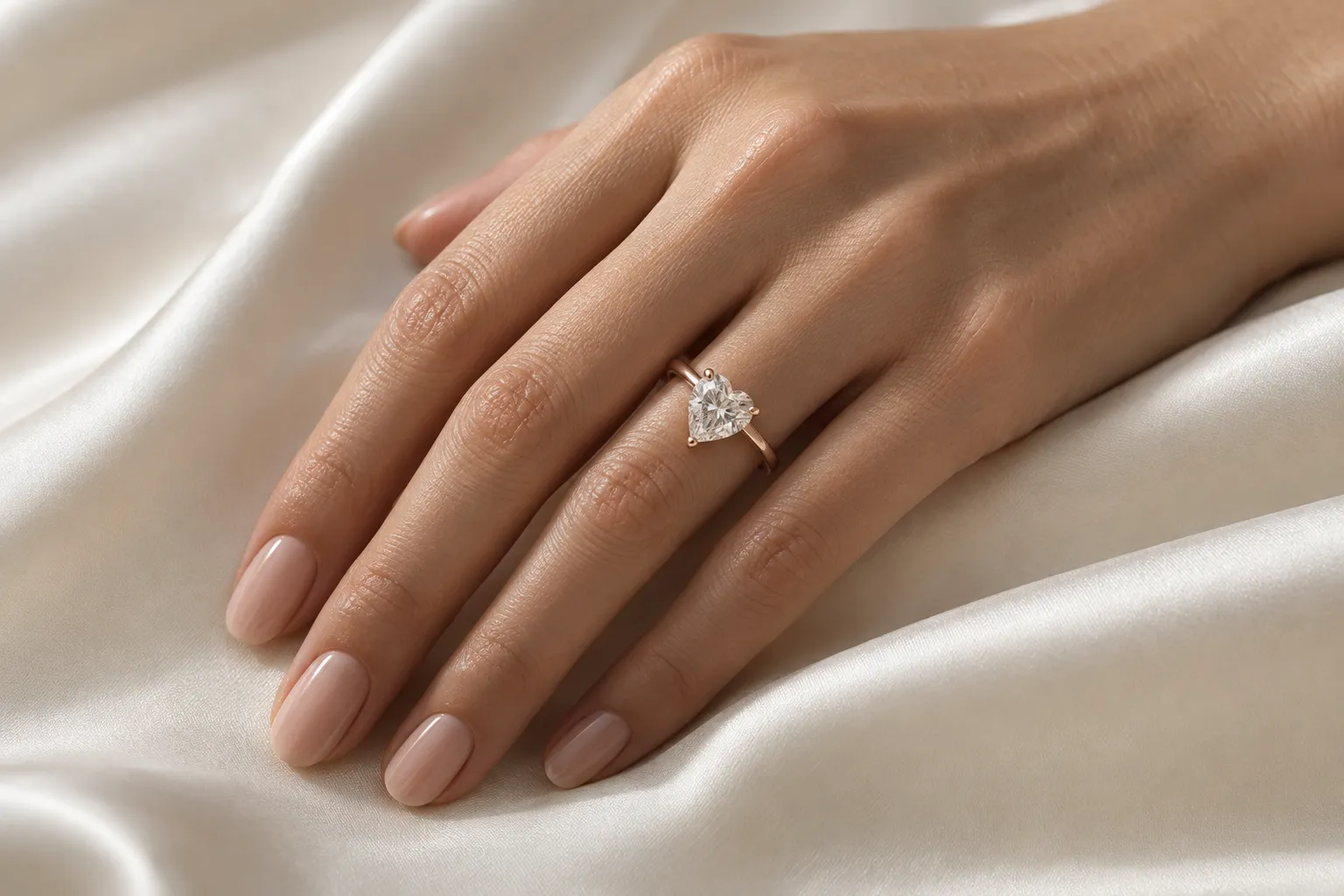
More shapes to compare
Many people looking for a heart also consider these cuts. At the atelier we're happy to lay them all side by side.
What a heart shaped engagement ring costs
A guide price like for the solitaire: from CHF 1'900 for a complete ring with a 1 ct lab-grown round brilliant. The heart cut can shift the price slightly, and we break down every stone openly.
Slightly different with a heart cut, depending on the stone
Price depends on the work involved. We calculate openly, no surprises.
Guide prices, as of 2026, incl. VAT. The exact price depends on stone, metal and work.
Frequently asked questions
That depends almost entirely on how it's presented. A well-cut heart on a slim, smooth band looks elegant and grown-up. It usually only becomes cheesy with extra hearts, playful engravings or an overloaded setting. We show you how understated a heart ring can look.
As a rule of thumb: from about 0.7 carat, and really clearly from around 1 carat. With smaller stones the cleft and lobes blur on the finger and the heart looks more like a round stone. If the heart shape matters to you, plan a little more carat and save a step on colour or clarity.
Look at symmetry first: both lobes should be the same size and the point should sit exactly below the cleft. Then at the bow-tie, a dark shadow across the centre that should be as faint as possible. And at the length-to-width ratio, which should be close to 1. We check all of this together under the loupe.
A V-prong that wraps around the point, or a fine prong right on the tip, has proven itself. Two more prongs hold the lobes. That way the most delicate spot is protected without the setting hiding the shape. A bezel setting is also possible and especially robust.
Yes. Lab-grown diamonds also come in the heart cut, with an IGI certificate and the same optical properties as a natural diamond. With a heart that's particularly interesting, because the same budget gets you closer to the size at which the shape becomes clearly visible. We explain both routes.
Traditionally the point faces the fingertip, with the lobes towards the wrist. That way the heart looks the right way up to you when you look at your hand. Some prefer it the other way round so it looks right to the person facing them. Both work, and we show you both options.
Quick enquiry
A heart that keeps its promise
Tell us what you have in mind. We'll look for heart shaped diamonds with good symmetry, show you simple settings and suggest an appointment, in Zurich or by video.