
2026-09-03 · 5 min.
How do you insure a diamond ring in Switzerland?

A diamond engagement ring is usually only covered by standard home contents insurance up to a fairly low flat limit, often just a few thousand francs for all the jewellery in a household combined. For the full value of your ring in Switzerland, you typically need a separate valuables extension, which you apply for with an appraisal and your diamond's certificate. Here is how that works in practice, kept general and without recommending any particular provider. Which policy fits you is something you settle directly with your own insurer or a broker you trust.
What home contents insurance usually covers
Home contents insurance generally covers all your movable property at home, from furniture to electronics to jewellery, against fire, water damage, burglary and, depending on the policy, simple theft while out and about. The problem with a valuable ring: most policies cap valuables such as jewellery, watches or art at a flat sum or a percentage of the total insured amount, often somewhere between ten and twenty percent. For an engagement ring worth several thousand francs, that limit is reached quickly, especially once a watch, earrings or a chain are added on top. Policies also often use a narrower definition of theft, covering only cases with visible signs of a break-in, not a ring lost while out or stolen without forced entry. Read the policy carefully before relying on the basic cover.
What a valuables extension adds
A valuables extension, sometimes called a specified items rider, lifts exactly this flat cap for individual valuable pieces. You insure the ring at its actual value, not a fraction of it, and usually with broader cover than the base policy: not only burglary, but often simple loss while travelling, during sport, on holiday, or if the stone slips down the drain while washing up. The premium is based on the insured value, typically a small percentage per year. Whether it is worth it for you depends on the value of your ring and your own sense of security. Ask your home contents insurer directly whether and how they offer such an extension for jewellery, since the terms differ noticeably between providers, for instance on the deductible, the maximum sum per item and exclusions.
Appraisal and certificate: your proof in case of a claim
For an insurer to recognise the full value of your ring, you need proof, and that is where the appraisal and the certificate come in. The certificate, usually from IGI or GIA, describes your diamond independently of the ring: carat, colour, clarity, cut, often with a laser-inscribed number on the stone itself. It says nothing, though, about the market value in francs. For that you also need an appraisal, which states the current replacement value of stone and setting together, usually issued by the jeweller or an independent expert. Keep both documents separate from the ring, ideally both digitally and on paper, together with photos of the ring from several angles and the original purchase receipt. In case of a claim, whether loss, theft or damage, exactly this combination is what makes the process with the insurer quick, instead of turning into a drawn-out discussion about value.
What to keep ready for a claim:
- Purchase receipt with date, price and description of the ring
- Diamond certificate (IGI or GIA), with the number noted
- Current appraisal with replacement value in francs
- Photos of the ring from several angles, including a close-up of the stone
- A copy of all documents kept in a second place, digital or with someone you trust
When to renew the appraisal
Values change, especially for gold, whose material value fluctuates, while a certified diamond usually stays more stable. Many insurers recommend renewing the appraisal every few years, and some even require it as a condition for full cover. It is also a good moment to have the ring checked at the same time: are the prongs still tight, does the stone show scratches, does the setting need retightening. Feel free to bring the ring in for such a check, a short review is usually simple and protects you in the long run just as much as the policy itself.
In the end, insurance is pure precaution, it changes nothing about how you wear and love your ring every day. If you buy your ring with us, you automatically get the certificate of the stone, and for the valuation and the right policy your own insurer is the right place to turn. What an IGI certificate actually looks like and what the number on it means, we show on our page about the IGI certificate.
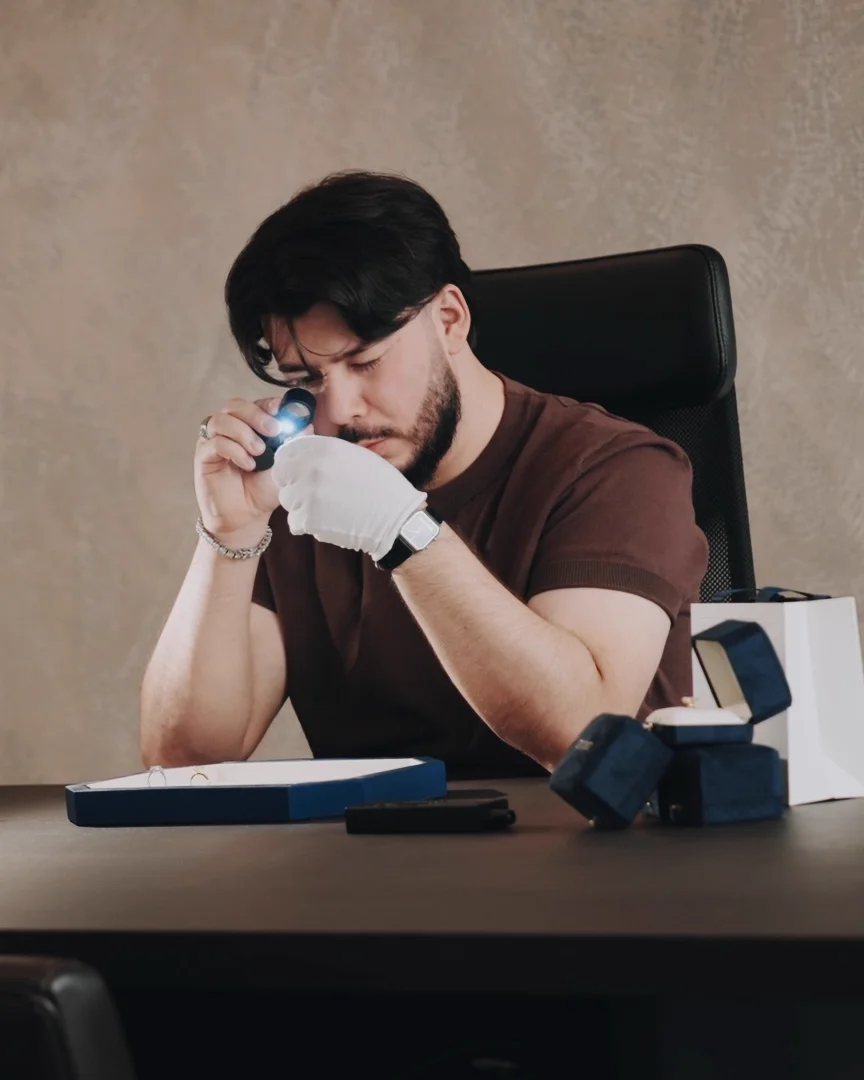
Founder of émin, jeweller in Zurich
Have questions about your ring? Talk to us directly.
Book an Appointment