
2026-09-03 · 5 min.
Wearing a wedding band and engagement ring together
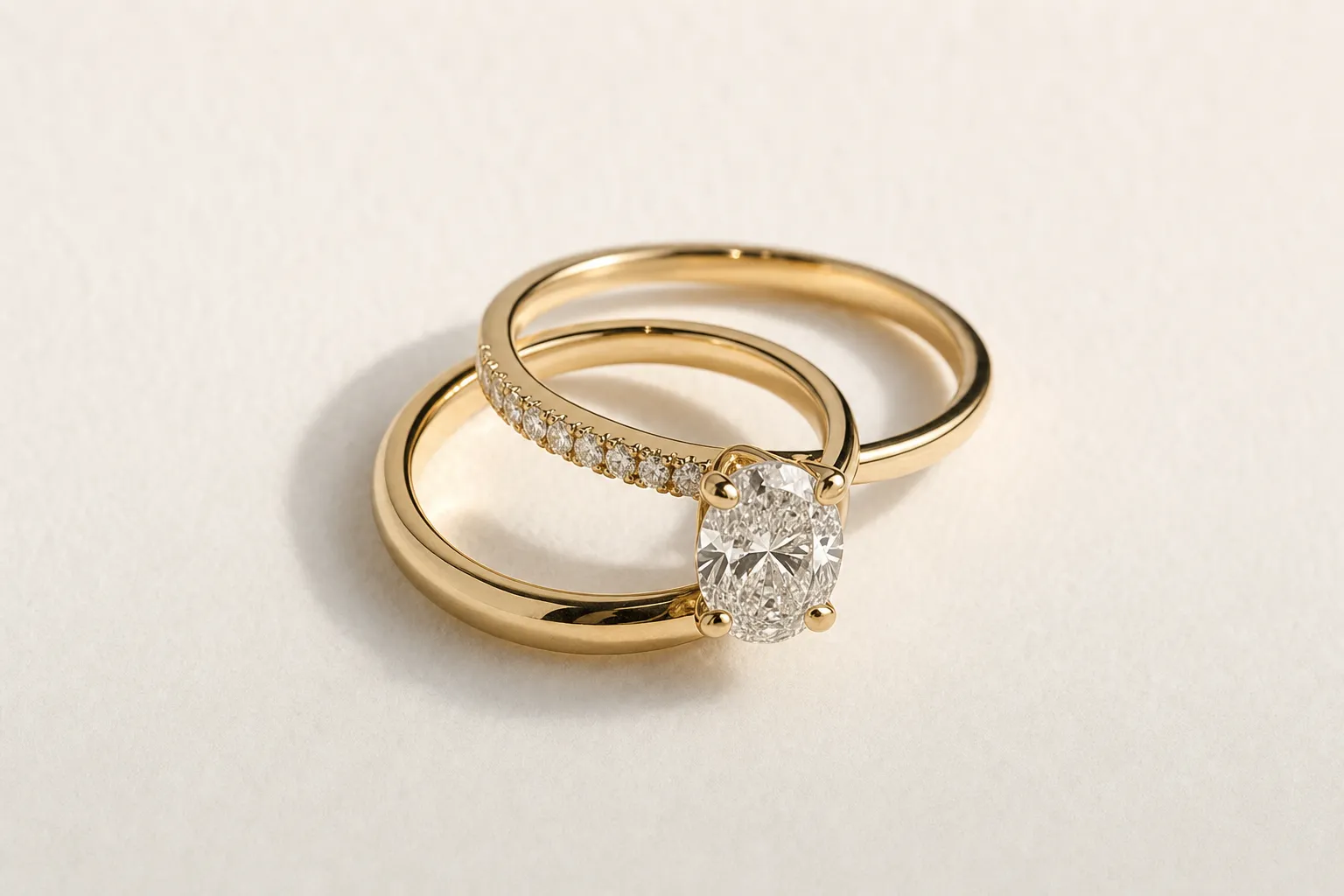
After the wedding, a practical question comes up for many couples that hardly anyone thinks about beforehand: how do you actually wear a wedding band and engagement ring together, without them getting in each other's way or looking awkward next to each other? The short answer: the wedding band usually sits lowest, closer to the heart, the engagement ring on top of it, and if the two shapes do not naturally align, there are solutions like a contour band or a deliberate choice of metal. Here is how it works, step by step.
The usual order on the finger
In Switzerland, as in most Western countries, the wedding band moves onto the left ring finger on the wedding day, the same finger that usually already holds the engagement ring. The common order is: the wedding band goes on the finger first, sitting closer to the back of the hand, so lowest, and the engagement ring is slipped on afterwards, sitting on top, closer to the fingertip. The symbolic idea behind it: the wedding band, the actual symbol of marriage, sits closer to the heart. In practice, though, this is mostly a habit, not a rule. Some couples wear the order reversed, others switch it in everyday life, when one ring is more in the way than the other, say during sport or in the kitchen.
When the shapes do not match: the contour band
An engagement ring with a tall setting, say a solitaire on prongs, or with a curved shape, often leaves a gap next to a straight wedding band, or the wedding band rubs against the stone. That is exactly what a contour band, sometimes called a curved band, is for: a wedding band whose shape follows the contour of the engagement ring, with a gentle notch or curve exactly where the setting sits. That way both rings sit tightly together, without metal rubbing on metal or a visible gap remaining. A contour band is ideally fitted to the exact engagement ring, so it is worth trying both rings on together before settling on a shape, either right when buying the engagement ring or at the latest when choosing the wedding rings. How you find the right size and shape for your wedding rings is therefore directly linked to the engagement ring you already wear.
Mixing metals: is that even possible?
Yes, and many couples do it deliberately. Yellow gold and white gold together, or rose gold next to platinum, is no longer a style mistake, but a conscious look, as long as the two rings match in colour and material quality. More important than an identical metal is usually that the fineness matches, for instance both rings in 18-carat gold, so they wear the same way in everyday life and do not age at different rates. Anyone who prefers a uniform look chooses the wedding band in the same metal as the engagement ring's setting, still the most common and most understated solution. Anyone who wants to experiment combines two metals on purpose as a statement, for example a plain white gold wedding band under an engagement ring with a rose gold setting.
What to consider when combining the rings:
- Order: wedding band usually lowest, engagement ring on top, but not a fixed rule
- Shape: a tall setting or curved design often calls for a contour band
- Metal: matching fineness gives even wear, even with mixed colours
- Width: a narrower wedding band often looks more balanced next to a bold engagement ring
- Fitting: try both rings on together where possible, not just individually
What if the rings are already made and do not fit
If you only notice after the wedding that the two rings clash, say the engagement ring scratches the wedding band or a gap appears, it is not a disaster. An existing wedding band can often be reshaped afterwards, or you decide to wear it together with the engagement ring only on special occasions, and separately day to day. What matters is that both rings feel good and that you enjoy wearing them, that in the end matters more than a perfect technical fit.
If you are still planning your wedding rings and want to know how they will combine with an existing or future engagement ring, bring both rings, or at least exact measurements, to your appointment. In our atelier in Zurich we show you which shapes work together, whether a contour band makes sense and which metal combination suits your style. We are also happy to talk through which hand you actually wear your engagement ring on, if that is still an open question.
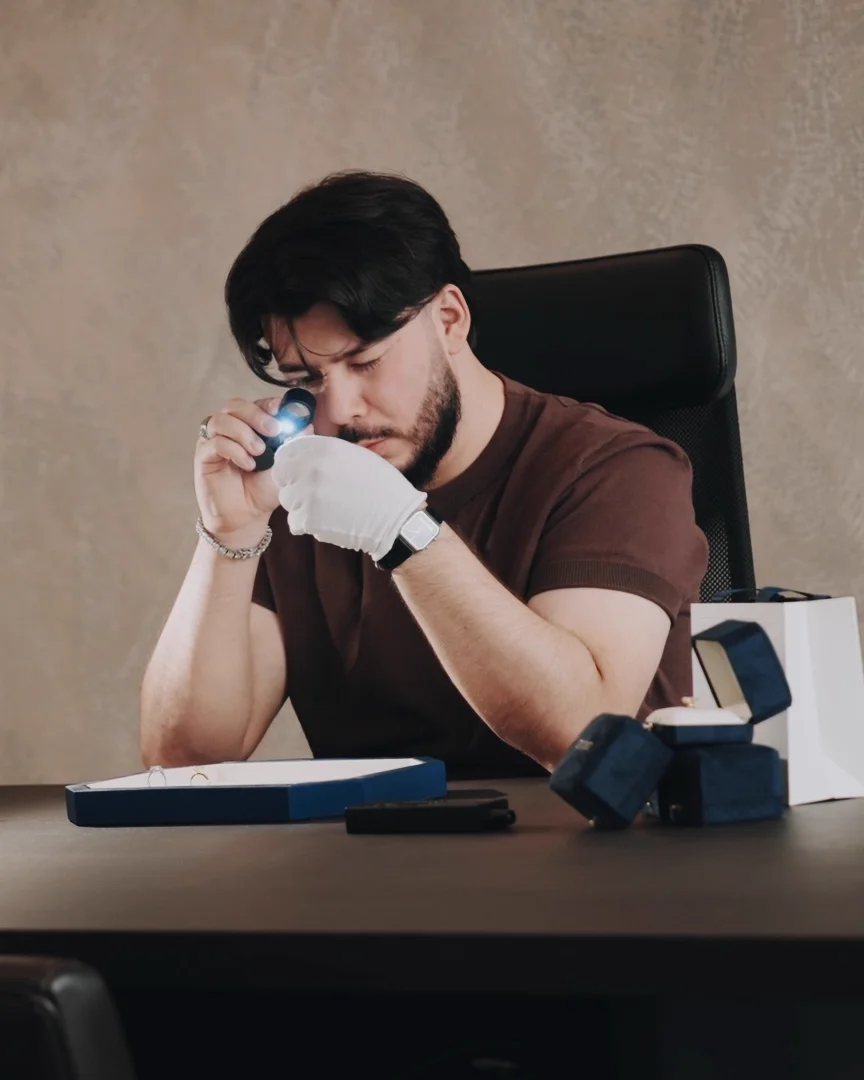
Founder of émin, jeweller in Zurich
Have questions about your ring? Talk to us directly.
Book an AppointmentQuick enquiry
Let's talk about your ring.
A free, no-obligation consultation at the atelier in Zurich or by video. Honest answers, no sales show.