
2026-09-03 · 5 min.
Cleaning jewellery at home: what actually works
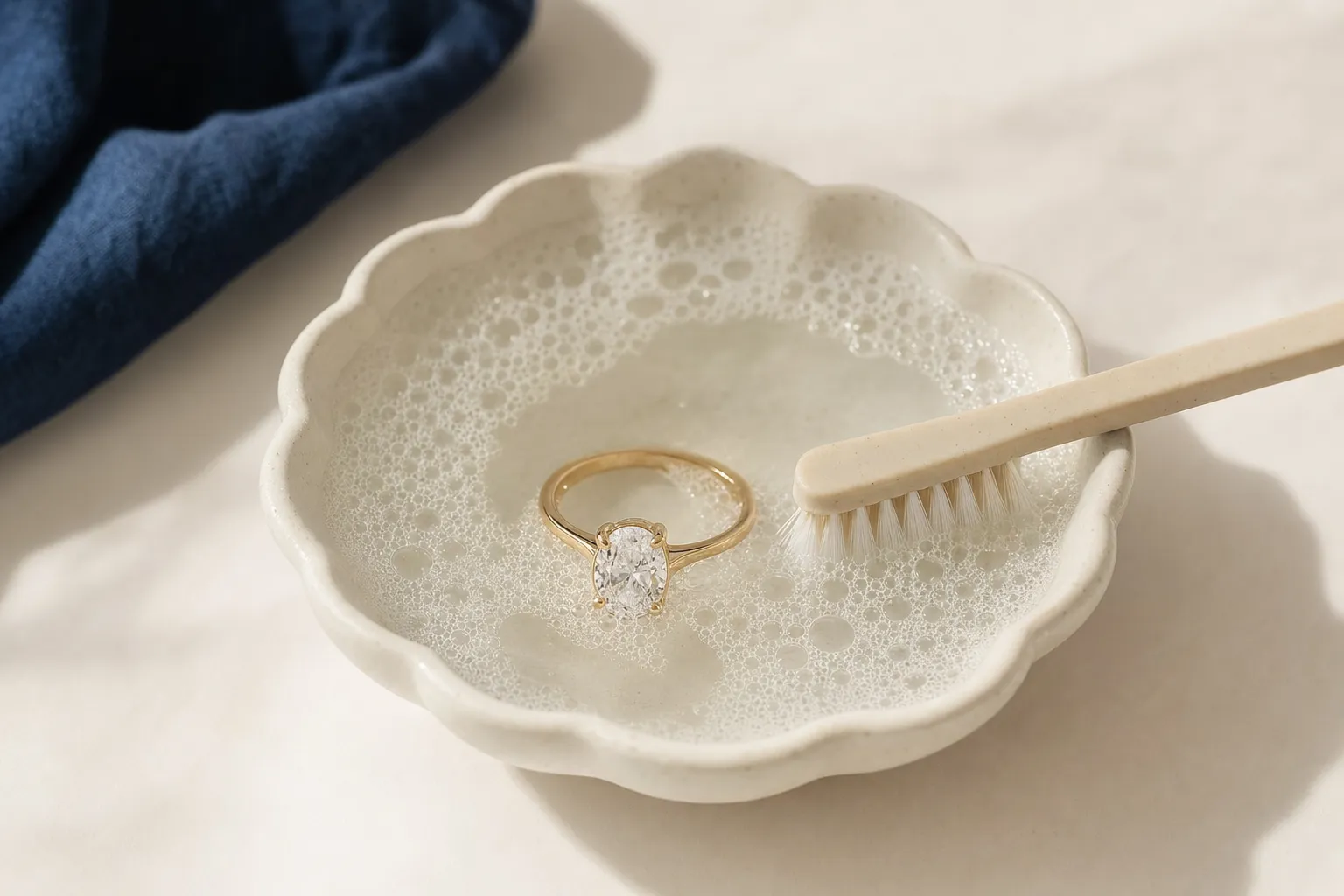
The safe basic rule for jewellery at home: lukewarm water, a splash of mild dish soap, a soft brush, an old toothbrush works fine, and then rinse thoroughly with clean water and pat dry. That is entirely enough for most rings, chains and earrings in gold or platinum with diamonds and common coloured stones, and you do not need an expensive special product for it. More important than the perfect product is what you avoid, more on that in a moment.
Step by step
Fill a small bowl with lukewarm, not hot, water and add a drop of mild dish soap, nothing with scrubbing particles or strong fragrance. Let the jewellery sit for five to ten minutes so skin oils, lotion residue and dust can loosen. Then take the soft brush and gently go over the setting and around the stone, that is where the most residue collects, especially underneath where the prongs hold the stone. Rinse the piece thoroughly afterwards under running, lukewarm water, ideally over a sieve or with the drain closed so a ring cannot slip away. Finally, dry the piece with a soft, lint-free cloth instead of letting it air dry, that avoids water spots.
What you should skip
Plenty of home remedies for jewellery circulate that sound practical at first but do more harm than good over time. Toothpaste, for instance, contains fine abrasive particles that are harmless for teeth but will microscopically scratch soft metal like gold or platinum over time if you use it regularly for polishing. Chlorine, whether in pool water or household cleaners, attacks many metal alloys and can cause damage, especially to white gold and certain solder joints, so take rings off before swimming or cleaning as a rule. Ultrasonic devices, offered by some jewellers and also as inexpensive home units, are thorough but not suitable for every stone. With emeralds, for example, the ultrasonic waves are risky, because many emeralds are treated with oil to fill fine fissures, and the vibration can wash out that oil or widen the fissures. Ultrasonic cleaning is also not a good idea for heavily included or already chipped stones, when in doubt, clean by hand instead.
In short, what to avoid:
- Toothpaste or other abrasives for polishing
- Chlorine, meaning pool water or strong household cleaners
- Ultrasonic cleaning for emeralds and other oil-treated or delicate stones
- Hot water, which puts extra strain on some stones and adhesives
- Coarse brushes or paper towels, which can leave fine scratches
How often to clean
If you wear a ring daily, a thorough clean following the pattern above every two to four weeks is usually enough, depending on how much hand cream, soap and everyday grime build up. Chains and earrings worn less often need cleaning correspondingly less frequently, but before putting them away it is worth a quick check that clasps or earring backs still move easily. If you notice a stone wobbling or the setting feeling different than usual, that is a sign to have the ring resized or checked instead of continuing to clean it at home and risking the problem.
How to protect your jewellery further in everyday life, so it looks as close to new as possible for as long as possible, which order makes sense when putting rings on and taking them off, and when a professional check is due, we explain in detail in our article on ring care. In our atelier in Zurich, we are also happy to professionally check and clean your jewellery, it usually only takes a few minutes and you see right away whether the setting and stones are still secure.
Founder of émin, jeweller in Zurich
Have questions about your ring? Talk to us directly.
Book an AppointmentRelated pages
Quick enquiry
Let's talk about your ring.
A free, no-obligation consultation at the atelier in Zurich or by video. Honest answers, no sales show.