2026-09-03 · 4 min.
Engagement ring price 2026: carat, colour, clarity
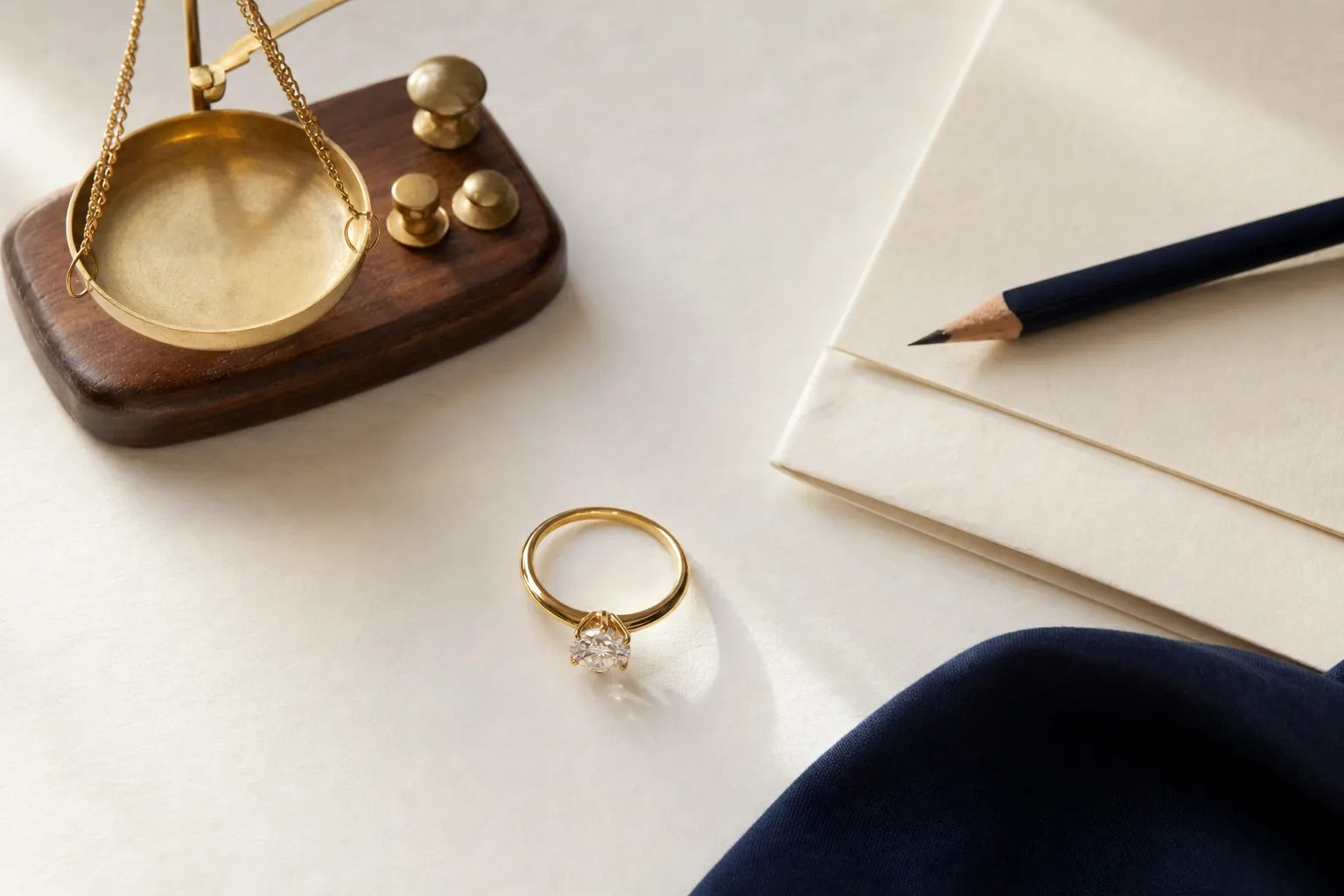
"What does an engagement ring actually cost" is the question that opens almost every conversation with us, and the honest answer is: it depends, but not arbitrarily. The price is made up of clearly identifiable factors, mainly carat, colour, clarity and metal. Here we show you how these factors interact, with real guide values where we can name them publicly, and with honest tendencies where there is no flat number.
What an engagement ring costs at minimum in Switzerland
At émin, our Essential line costs CHF 1,900, our fixed example: a complete solitaire with a 1-carat lab-grown diamond, classic prong setting, 18K gold or platinum, IGI-certified. Signature with a 2-carat lab-grown diamond and a hidden halo starts from CHF 2,500, Heritage with a natural diamond from 1 carat, GIA-certified and an individual setting, from CHF 6,500. Above that the scale is open: with natural diamonds the price runs many times higher, and if you want a natural stone over one carat, you're quickly in five-figure territory. These three tiers differ mainly in stone size, stone quality and the complexity of the setting, not in metal alone. A ring at CHF 1,900 is therefore not a "lesser" ring in the sense of being made worse, but a ring with a smaller stone and a more understated setting, other budgets and wishes like 14K gold we're happy to discuss on request.
Carat: the factor with the biggest leverage
Carat is usually the first price driver couples think of, and rightly so, but it does not scale in a straight line. Larger rough stones are rarer in nature, so the price per carat rises disproportionately with stone size. A stone with double the weight therefore costs noticeably more than double, not less. This is especially true at certain weight thresholds like 1 carat or 2 carat, where demand traditionally sits higher than just below them. How big individual carat figures actually feel on the finger, we show separately in our carat size chart.
Colour and clarity: the fine differences
The colour scale ranges from nearly colourless stones to slightly tinted ones, the clarity scale from stones practically free of inclusions to ones with visible inclusions. Both scales affect the price, but not always in proportion to the raw number on the certificate. A nearly colourless stone costs noticeably more than a slightly tinted one, even though the difference is often barely visible to the naked eye, especially in a setting that further brightens the stone. Something similar applies to clarity: stones with tiny inclusions visible only under magnification are considerably cheaper than practically flawless stones, yet usually look identical to the naked eye. This is exactly where many couples find the biggest room to manoeuvre, without the ring looking any worse.
- Colour: nearly colourless stones cost more than slightly tinted ones, the visual difference is often minimal.
- Clarity: flawless stones cost noticeably more than stones with small, invisible inclusions, without you seeing the difference.
- Cut: a very good cut quality costs more, but affects the sparkle the most, more than colour or clarity.
- Carat: the price per carat rises disproportionately with size, especially at round weight thresholds.
Lab-grown or natural: the biggest lever for your budget
The biggest price difference often lies not in carat, colour or clarity, but in the origin of the stone. A lab-grown diamond with the same carat, colour, clarity and cut costs only a fraction of a comparable natural diamond, because it is created under controlled conditions instead of over millions of years underground. Chemically, optically and on the certificate, a lab-grown diamond is no different from a natural one, only the origin, and therefore the price, differs. For many of our clients, this is the lever that lets them get a noticeably bigger or purer stone without blowing the budget. More on what lab-grown diamonds actually are and how they form is on our lab-grown diamonds page.
How to keep your budget under control
The most honest approach is to state a budget first and then work out together with us how carat, colour, clarity and stone origin best combine within that range, instead of first fixing a wish-list carat number and then getting a shock at the price. A more detailed breakdown of what else feeds into the price besides the stone, such as metal, setting and size, is in our article on what an engagement ring really costs. For a first rough estimate by budget, our engagement ring budget guide is the best place to start.
In the end, the price is no secret, just a calculation of understandable factors. We lay out that calculation openly at an appointment in our atelier in Zurich district 4 or by video, with real stones to compare, so you see what you are paying for before you decide.
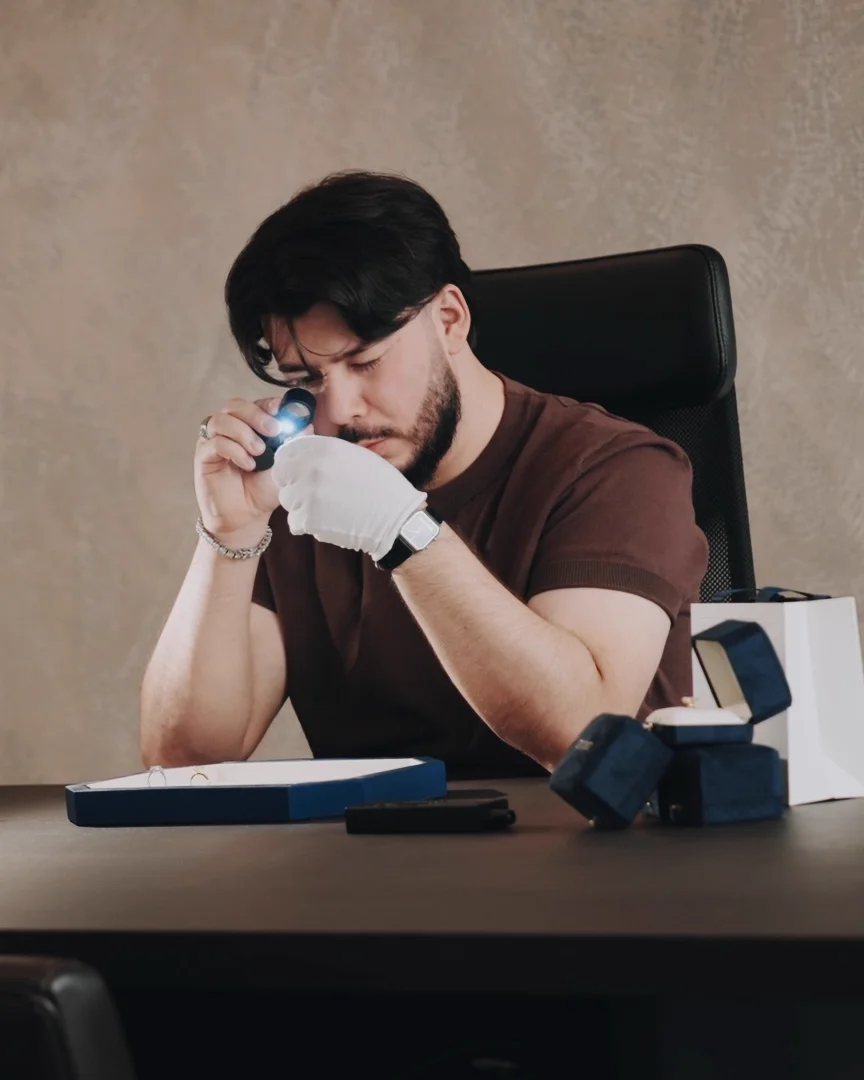
Founder of émin, jeweller in Zurich
Have questions about your ring? Talk to us directly.
Book an AppointmentQuick enquiry
Let's talk about your ring.
A free, no-obligation consultation at the atelier in Zurich or by video. Honest answers, no sales show.