
Coloured gemstones
Emerald engagement rings: deep green, clearly explained
An emerald engagement ring stands out without being loud. Its deep green feels lively and calm at the same time, and few stones carry so much character. Emerald engagement rings are for couples who consciously want something other than the classic diamond.
But an emerald is not a diamond, and we tell you so openly. It is softer, almost always has fine inclusions and needs a protective setting. Here you'll learn what matters so your emerald stays beautiful for many years.
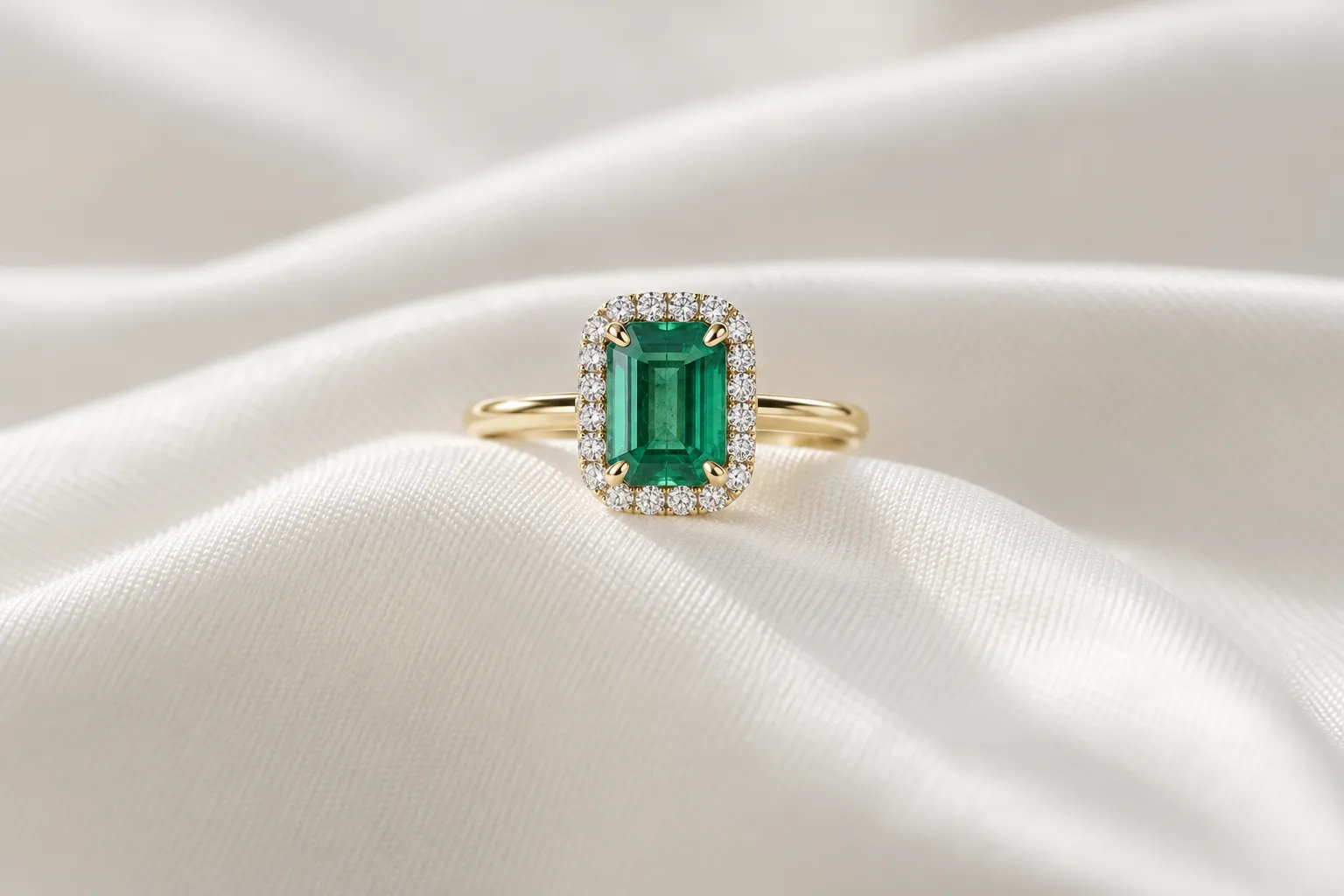
Why we take extra care with emeralds
Hardness stated openly
An emerald sits at 7.5 to 8 on the Mohs scale, a diamond at 10. It is also more brittle. We plan the setting so that edges and corners are protected.
Treatment always disclosed
Most natural emeralds are oiled to fill fine fissures. That is standard, but we always tell you whether and how strongly your stone has been treated.
Natural or lab-grown
We show you both: natural emeralds with their origin, and lab-grown emeralds, chemically identical but cleaner and more affordable.
Hardness, inclusions and oiling: what you should know
Emerald belongs to the beryl family and reaches 7.5 to 8 on the Mohs scale. That makes it scratch-resistant enough for daily life, but more sensitive to hard knocks than sapphire, ruby or diamond. A sharp blow against a door frame can chip a corner. That doesn't make emerald unsuitable, it just means the setting and how you wear it matter more.
Almost every natural emerald has fine inclusions known as "jardin", French for garden. They are not a flaw but a feature, a kind of fingerprint of the stone. To calm these fine fissures visually, most emeralds are treated with colourless oil or resin. Reputable labs such as Gübelin in Lucerne or SSEF in Basel grade this treatment from none to significant. The less treatment, the more valuable the stone.
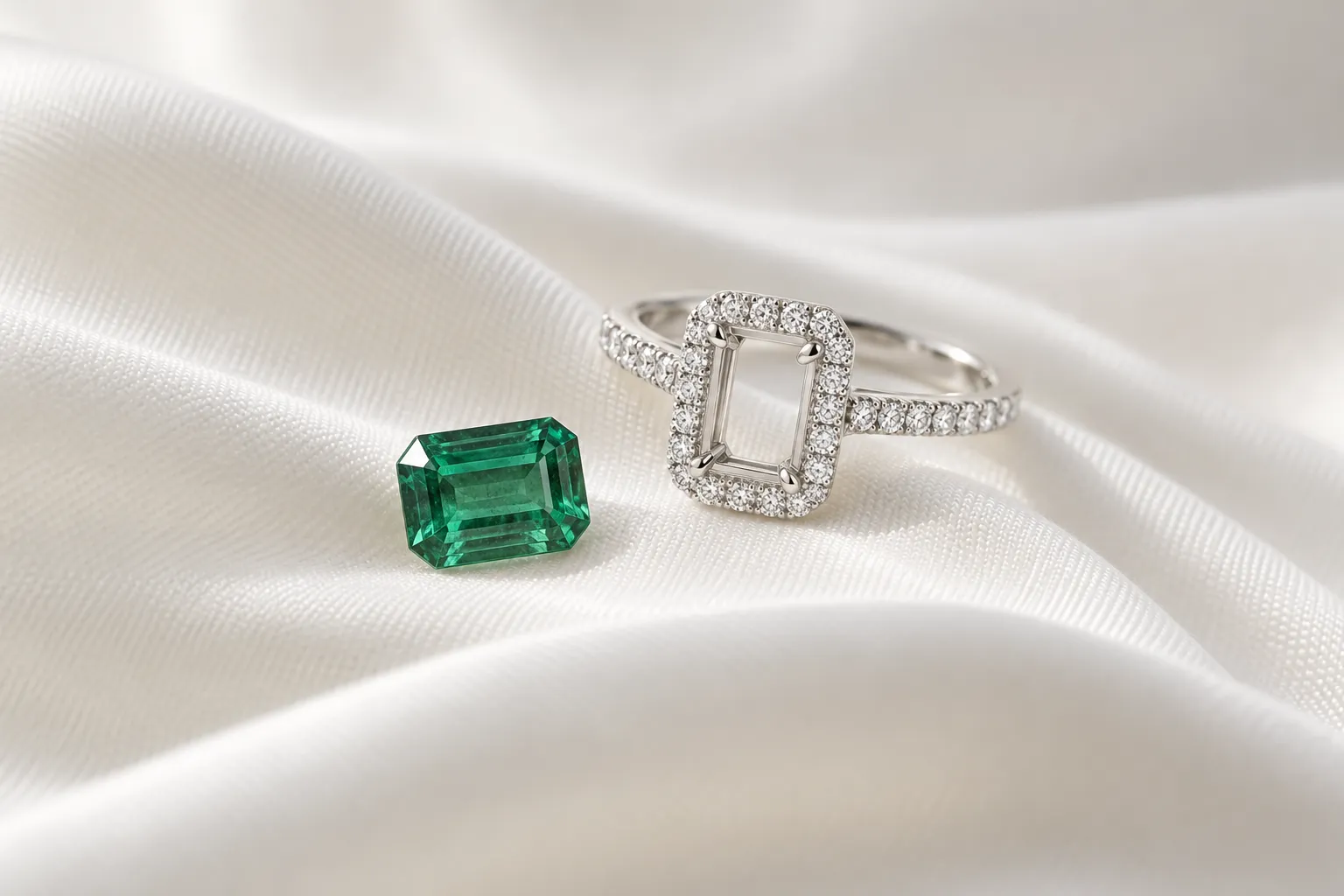
Natural emerald or lab-grown emerald?
Both are real emerald in the mineralogical sense. The difference lies in origin, clarity, treatment and price.
| Feature | Natural emerald | Lab-grown emerald |
|---|---|---|
| Origin | Formed over millions of years, e.g. in Colombia, Zambia or Brazil | Grown in a few months in a lab, same chemistry |
| Inclusions | Almost always visible jardin | Usually much cleaner |
| Treatment | Usually oiled, degree varies | Usually untreated |
| Price | High, strongly dependent on colour and origin | Much lower for the same size |
| Best for | Those who value origin and rarity | Those who want clear green at a fair price |
Lab-grown emeralds are always declared as such. We never sell a lab stone as natural, and you get the details in writing.
The right setting protects your emerald
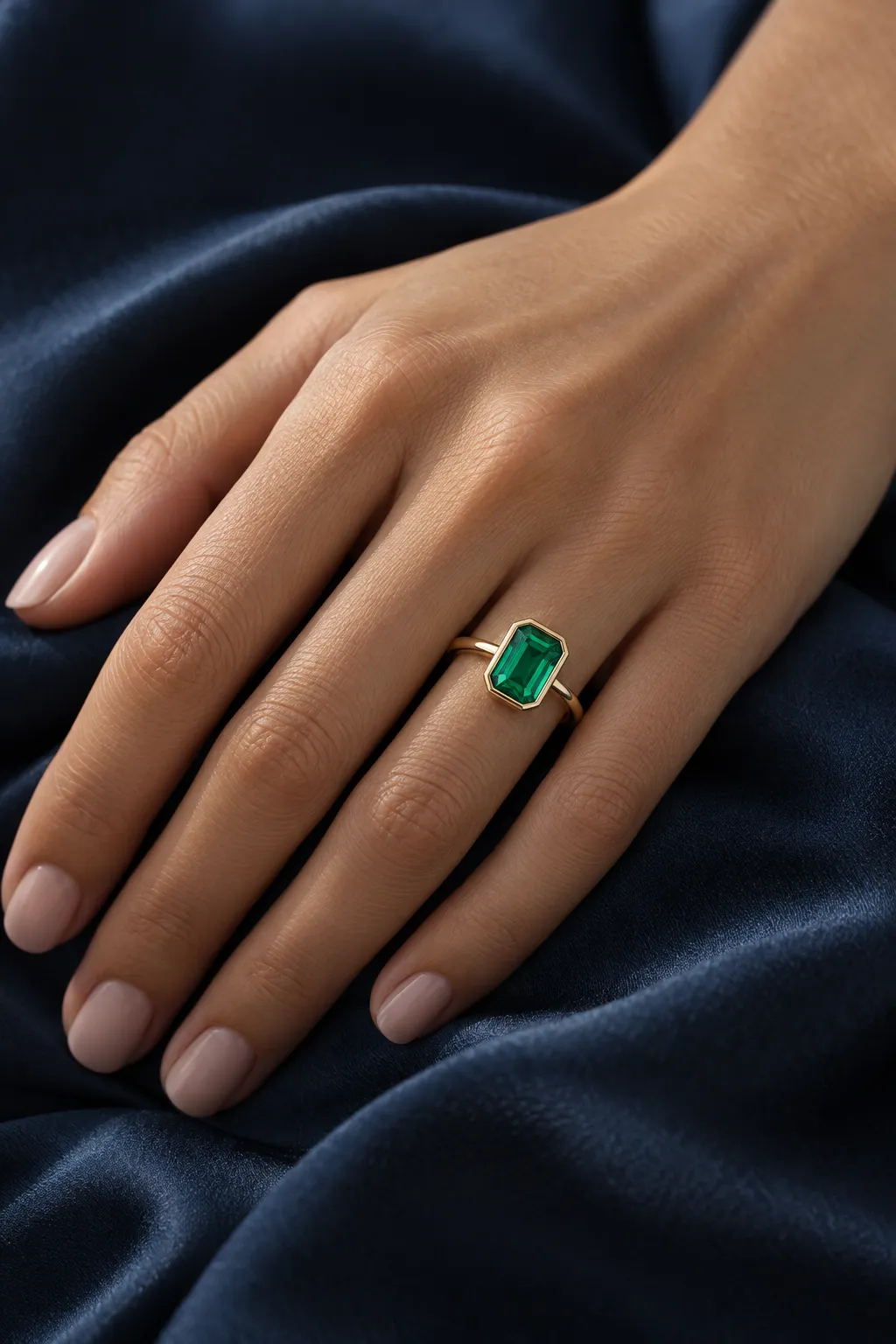
An emerald is best protected in a bezel setting: a slim metal rim surrounds the stone, keeping edges and corners safe in the gold. It looks modern and clean and is the most practical choice for everyday wear. If you want to show more of the stone, choose prongs, ideally double prongs at the corners, often combined with a halo of small diamonds that shields the edges.
The classic emerald cut, a rectangular step cut with bevelled corners, was developed for exactly this stone: cutting off the corners removes its most vulnerable points. In yellow gold the green looks especially warm, in white gold or platinum cooler and crisper. We show you both side by side.
Care: what an emerald doesn't like
No ultrasonic cleaner, no steam cleaner and no strong heat: they can draw out the oil and make fissures visible. Clean your emerald ring with lukewarm water, a little mild soap and a soft brush. Take it off for sport, gardening and housework with cleaning products. We're happy to check the setting once a year.
What an emerald engagement ring costs
With emeralds the price depends mainly on colour, clarity, treatment and origin. A fine Colombian emerald costs many times more than a lab-grown emerald of the same size. That's why we don't quote a flat figure but calculate your ring openly with you.
Price depends on the work involved. We calculate openly, no surprises.
For comparison: a complete solitaire with a 1 ct lab-grown diamond in 18k gold or platinum starts at CHF 1'900.
Frequently asked questions
Yes, with a little care. At 7.5 to 8 on the Mohs scale an emerald is scratch-resistant enough for daily life, but more sensitive to hard knocks. With a protective setting, such as a bezel or prongs with a halo, and by taking the ring off for sport, you can wear it every day without worry.
Jardin is French for garden and describes the fine, often moss-like inclusions inside an emerald. Almost every natural emerald has them, they belong to the stone like grain belongs to wood. A completely clean natural emerald is extremely rare, so a strikingly clear stone without papers should make you cautious.
Emeralds have been treated with colourless oil or resin for centuries so that fine fissures are less visible. It is standard in the trade and not a deception, as long as it is declared openly. A lightly treated stone is worth more than a heavily treated one. We always tell you how your stone has been treated.
Yes. A lab-grown emerald has the same chemical composition and crystal structure as a natural one, it simply forms under controlled conditions instead of in the earth. It is usually cleaner, generally untreated and much more affordable. It is always clearly declared as lab-grown, though, and doesn't have the rarity of a natural stone.
The safest is a bezel setting, where a metal rim protects the stone all around. Prongs are also very popular, ideally double prongs at the corners, combined with a halo of small diamonds. The halo adds light and protects the edges at the same time. We'll advise you on what suits your daily life.
Colour matters most: a rich, lively green, neither too dark nor too light, with a slightly bluish or yellowish undertone. Then come transparency, the type of inclusions and the degree of treatment. For larger stones we recommend a certificate from an independent lab documenting origin and treatment.
Use lukewarm water, a little mild soap and a soft brush, then dry it with a lint-free cloth. Avoid ultrasonic baths, steam cleaners and harsh cleaning products, as they can attack the oil treatment. Once a year we're happy to look over the setting and stone for you.
Quick enquiry
Your emerald ring starts with a conversation
Tell us whether you have a natural or lab-grown emerald in mind and which setting you like. We'll advise you, in our Zurich atelier or by video.