
Band style: split shank
The split shank engagement ring
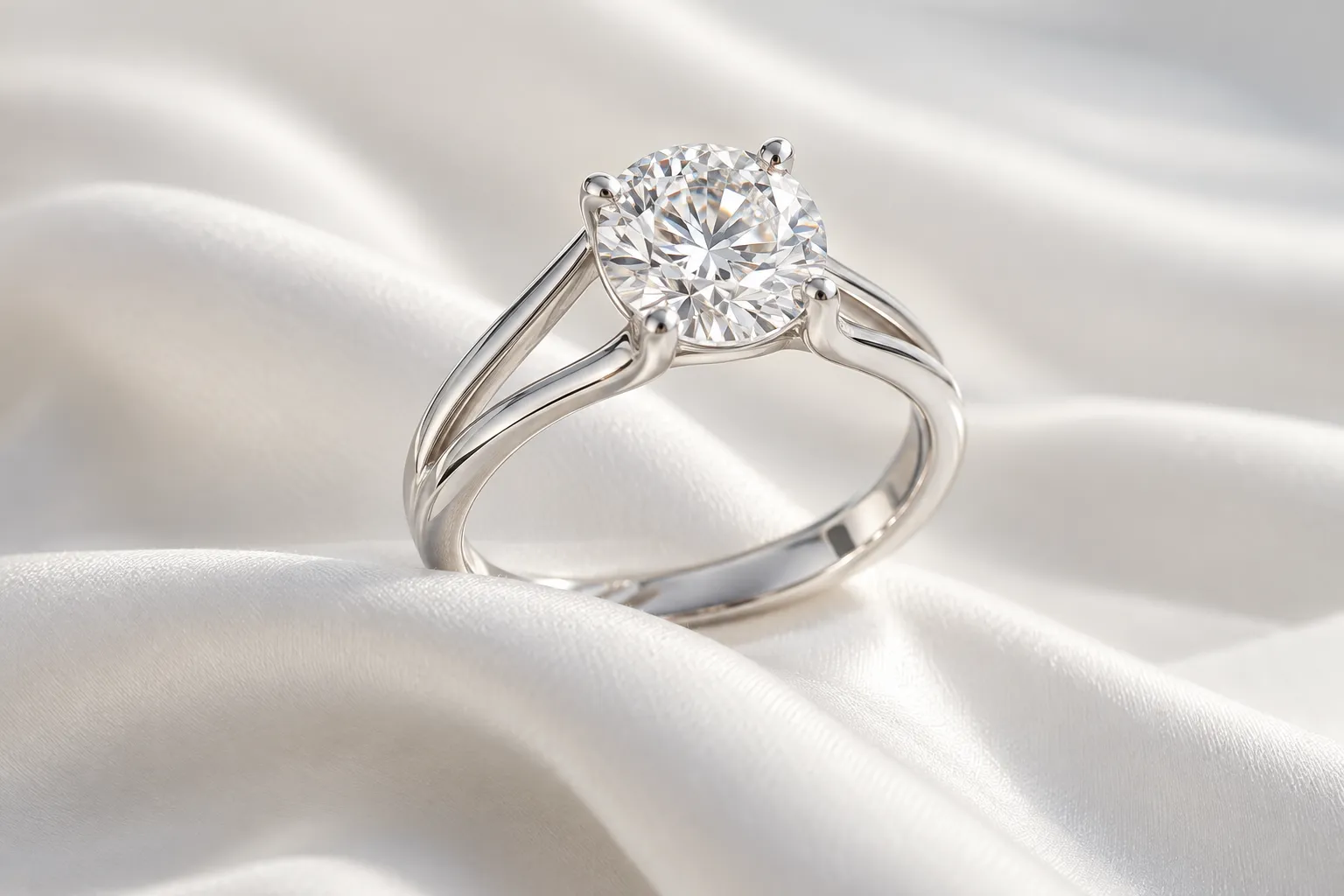
On a split shank engagement ring, the band divides into two slim arms on each side just before it reaches the stone. Underneath the finger it stays a single comfortable band. At the top it opens up and frames the stone. That gives the ring presence without making it heavy.
At émin you design the split shank with us in Zurich: how wide the arms open, how early the split begins and whether the arms stay plain or carry small diamonds. Every ring is made to measure, and every centre stone is certified.
Why a split shank
Support for larger stones
From around 1.5 carats a very fine band beside the stone can look too delicate. The two arms spread the weight and support the setting more widely, visually and in daily wear.
More presence, same comfort
At the top the ring looks wider and more generous, while underneath the band stays slim. Even a striking ring stays comfortable and doesn't press between your fingers.
The stone takes centre stage
The two arms run towards the stone like lines and guide the eye straight to it. This works with a round brilliant as well as with oval, cushion or emerald cut.
Plain or pavé
Polished arms look clean and modern. With small diamonds on one or both arms the ring gains extra sparkle, without needing a halo.
How wide the band opens
A split shank isn't an off-the-shelf part, it's a question of proportion. If the split starts early, around halfway up, the ring looks architectural and strong. If the band only divides just before the stone, it stays finer and the opening becomes a quiet detail. We sketch several versions and show you sample rings.
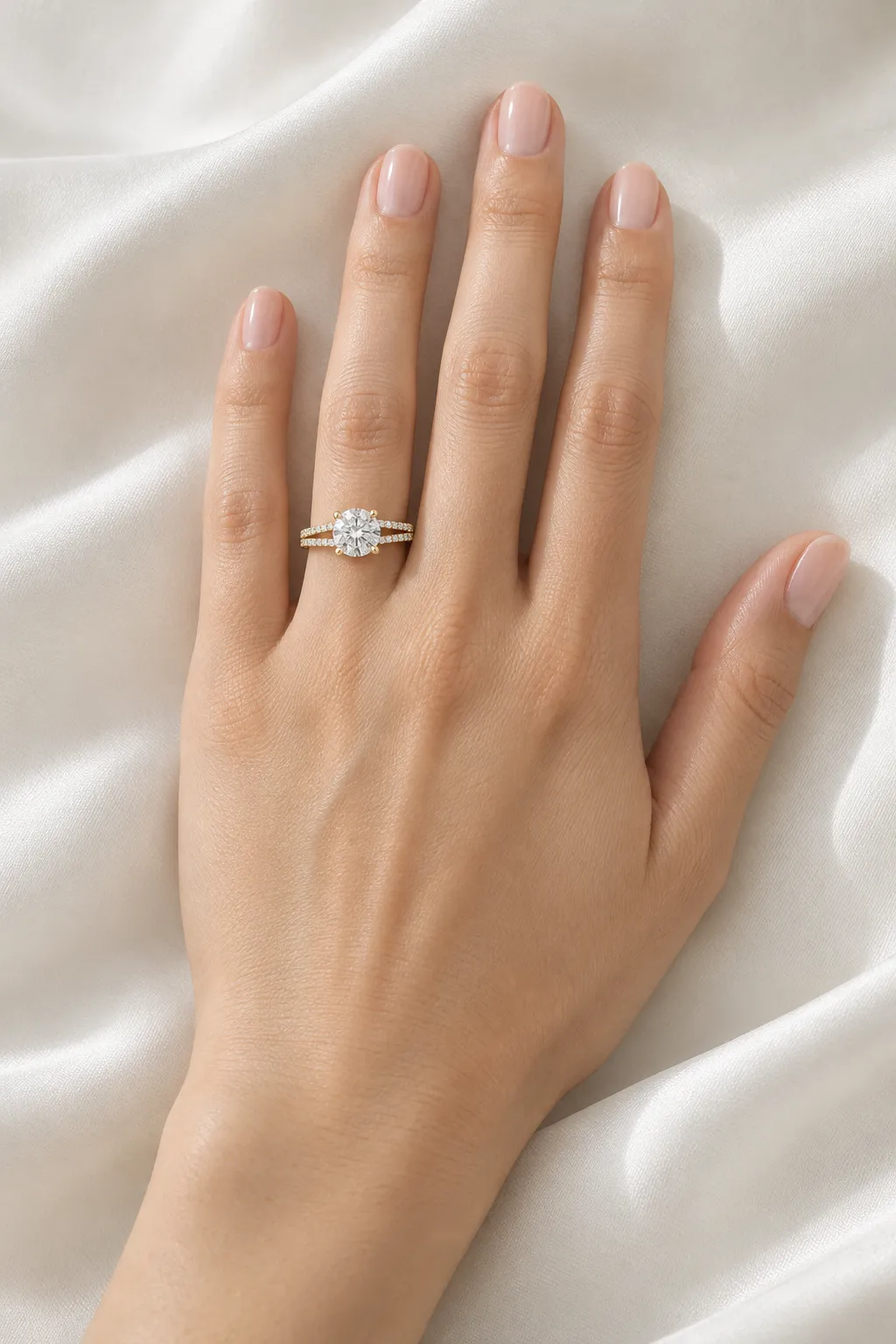
The gap between the arms matters too. A narrow gap looks elegant, a wide one lets more light under the stone and feels more generous. For larger stones we recommend a fairly early, calm split so setting and band work together. We're happy to show you how big a stone really looks on your own hand.
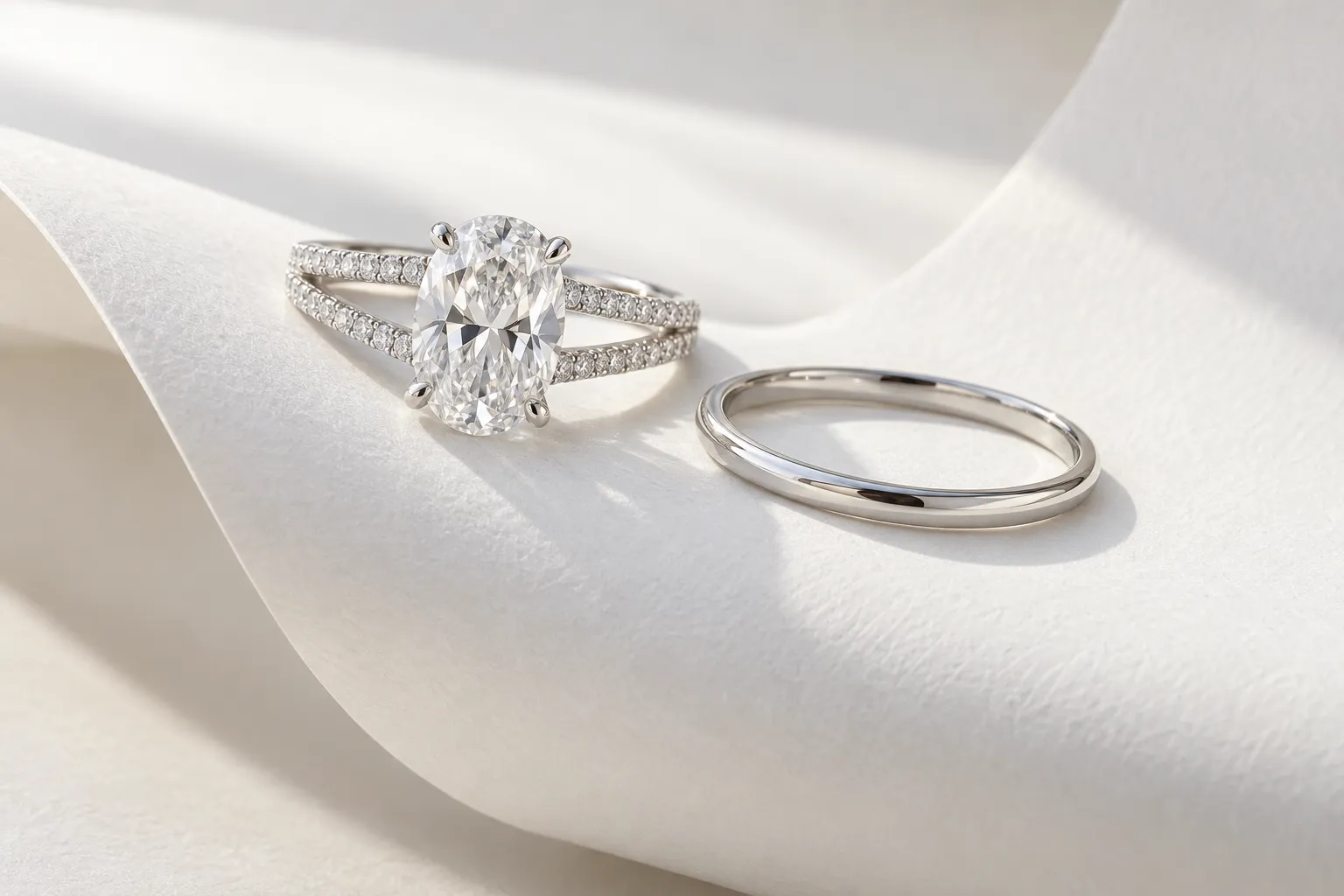
Pavé on the split shank, and the wedding band beside it
With pavé, many small diamonds set closely together, the split shank becomes a sparkling frame. Popular versions have both arms set, or one plain and one with stones. We make sure the stones sit low and secure, so the ring stays practical and doesn't catch on jumpers.
About the wedding band: underneath, a split shank is a normal band, so a straight wedding band usually sits well. Because the arms widen at the top, a small gap can appear depending on the setting. We plan for this with the engagement ring, either with a slightly higher setting or a contoured wedding band. Wedding bands at émin start from CHF 2'400 per pair.
Split shank, solitaire or halo?
Three ways to showcase a stone. A first orientation.
| Style | Look | Especially suits | Wedding band beside it |
|---|---|---|---|
| Split shank | strong, architectural, eye on the stone | stones from about 1.5 ct, wider fingers | usually fine, adjusted to the setting |
| Split shank with pavé | sparkling frame without a halo | anyone who loves shine but not a halo | a contoured band sits best |
| Classic solitaire | calm, timeless, the stone alone | slender fingers, 1 ct and up | almost any wedding band fits |
| Halo | stone looks noticeably larger | smaller stones with big impact | often needs a contoured band |
At the atelier we lay the styles side by side, then your hand decides.
What a split shank engagement ring costs
The base is our Essential solitaire. The split band and any pavé change the price, and we work it out openly with you.
Price depends on the work involved. We calculate openly, no surprises.
Guide prices, 2026, incl. VAT. You get the exact price after the design, in writing and without surprises.
Frequently asked questions
The shank is the band of the ring, and split means divided. On a split shank, the band divides into two arms on each side of the stone, running up to the setting. Underneath the finger the ring stays a single band. It's sometimes also called a divided or forked band.
The split band looks strongest with stones from around 1.5 carats, because it gives the stone a fitting counterweight. It works with a 1 carat stone too, in which case we usually choose a finer split just before the stone. We show you both proportions on your hand before you decide.
Yes, because underneath the finger the band stays a normal, slim ring. It only gets wider at the top where the stone sits. What matters is that the arms are nicely rounded and don't rub against neighbouring fingers. We take care of that in the design, and you try sample rings at the atelier.
Usually yes. Depending on how low the setting sits and how wide the arms open, a small gap may remain between the rings. If you want both to sit flush, we set the stone a little higher or design a contoured wedding band. It's best to plan this together with the engagement ring.
Yes, it's a very popular version. Small diamonds on one or both arms turn the split band into a sparkling frame. The small stones can be natural or lab-grown diamonds. Pavé needs a little more care, and we recommend a yearly check and clean at the atelier.
Our base is the Essential: a complete solitaire with a 1 carat lab-grown diamond in 18k gold or platinum, IGI certified, from CHF 1'900. With a 2 carat lab-grown diamond, Signature starts from CHF 2'500. The split band and any pavé are added depending on metal and work. We set it all out openly.
Related pages
Quick enquiry
Ready for your split shank?
Tell us the stone and budget you have in mind, a photo helps. We reply within one working day with a suggested appointment.