
2026-09-03 · 5 min.
Rhodium plating: what your white gold ring actually needs
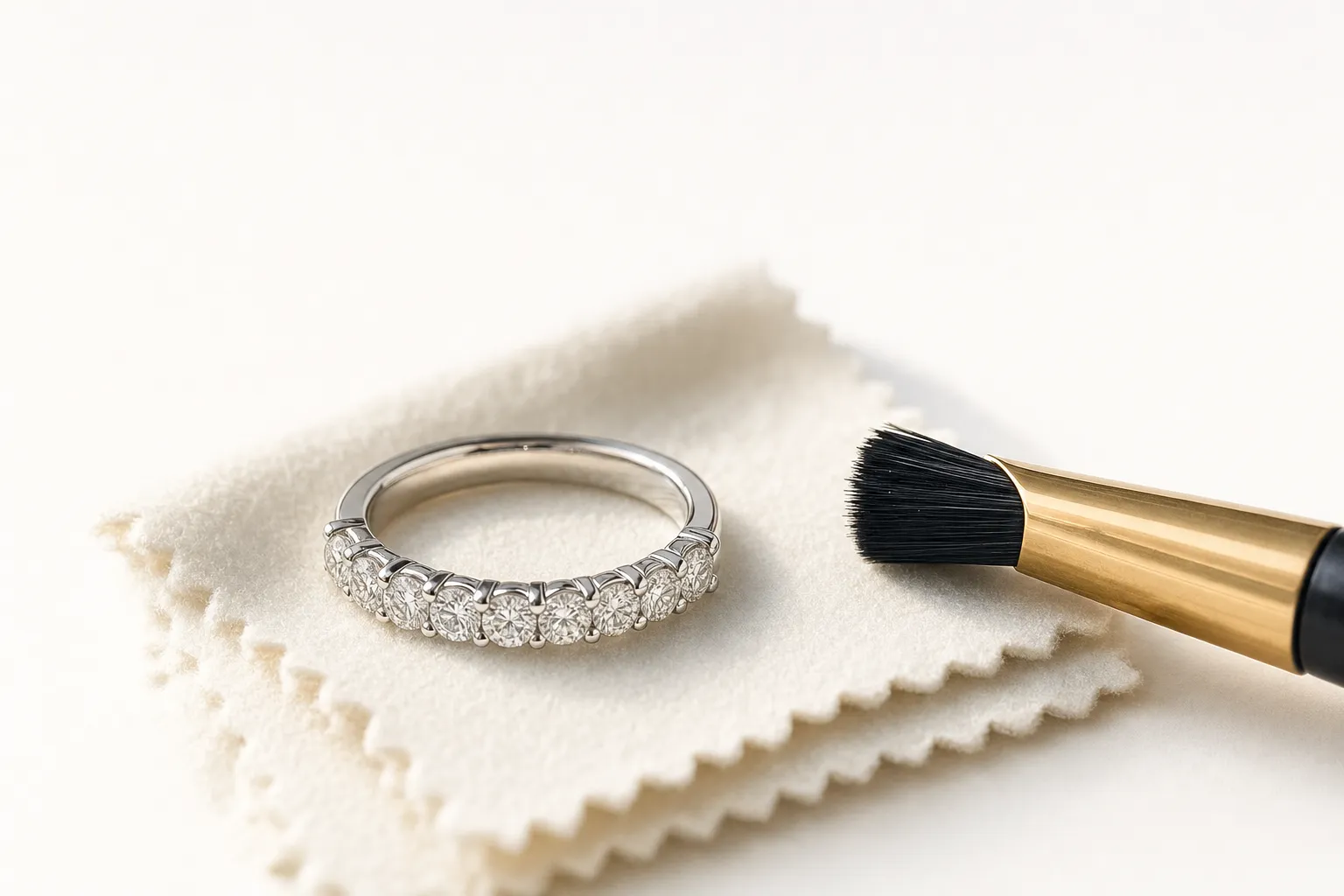
If your white gold ring suddenly looks a touch more yellow after a few years, that is not a fault or poor quality, it is completely normal. White gold is, at its core, yellow gold coated with a wafer-thin layer of rhodium, so it gets the bright white shine you know from the shop. That layer is not made to last forever, and that is exactly what this article covers: what rhodium plating is, how often it is needed, and what the process looks like at the atelier.
What rhodium plating actually is
Rhodium is an extremely hard, rare metal from the platinum group. In an electrochemical process, a micrometre-thin layer of it is applied to the ring, similar to chrome plating, just with a more precious metal. This layer gives the cool, mirror-like white shine, it also makes the surface harder and more scratch-resistant, and it is the reason a new white gold ring looks practically identical to platinum in the shop, even though the base metal is completely different.
Every one to three years: how often you should refresh it
How fast the rhodium layer wears down depends heavily on daily life. If you wear rings doing housework, sport, or in hands-on trades, you will notice the effect sooner, because mechanical abrasion attacks the layer directly. With normal everyday wear, a refresh every one to three years is common. Bands that rub against each other, such as an engagement ring and wedding band worn together, or rings on your dominant hand, usually wear down faster than white gold earrings or pendants, which take less friction.
- Signs it is time for a refresh: the ring looks slightly yellowish or matte grey in places instead of evenly white.
- The shine fades even though the ring is freshly cleaned.
- The difference is most noticeable next to a freshly plated piece or next to platinum.
- Purely cosmetic, nothing to worry about: the diamond or coloured stone itself does not change.
Not just white: what rhodium does beyond looks
Rhodium is not just a cosmetic layer, it also has a practical benefit. Because the metal is extremely hard, it makes the surface more resistant to scratches as long as the layer is still intact, so a freshly plated ring stays flawless a little longer than an uncoated metal would. Rhodium is also considered very skin-friendly, which can be an extra advantage for sensitive skin, even though the actual tolerance depends mainly on the gold alloy underneath, not the coating alone. At émin we usually alloy white gold with palladium instead of nickel, precisely because some of our clients tend to react to jewellery, and that is a conversation we have before choosing the alloy, not after. The rhodium layer itself plays a smaller role than the base metal, but it is an extra buffer while it is fresh, and one more reason not to put off a refresh for too long.
How rhodium plating works at the atelier
The ring is first thoroughly cleaned and polished, so the new layer bonds to a truly smooth surface. Small scratches are usually removed in the process. Then the ring is placed in a rhodium bath, a weak electrical current deposits the new, micrometre-thin layer evenly over the whole surface. Finally it is polished and checked to make sure the setting and any stones are undamaged. For most rings the service is done within a few days, you just cannot wear the ring during that time, that is the only real effort on your part.
What the service costs
Compared to the ring itself, rhodium plating is a small, predictable amount, noticeably cheaper than a new ring and usually more manageable than many expect. The exact price depends on the ring size, the number of stones that need protecting during polishing, and whether a small repair is also needed, for example a loose prong. We always tell you the amount upfront, before we take the ring in, no surprise on the bill. We explain step by step how to protect your ring between refreshes, for example during sport or housework, in our article on ring care.
Platinum as an alternative, if you don't want refreshing
If regular refreshing feels like too much upkeep, platinum is often the obvious alternative: it is naturally white and needs no rhodium layer, but it costs more to buy and develops a slightly matte patina over time instead of a high shine. So both metals come with a price, either paid upfront or over the years through maintenance. How platinum and white gold differ in detail, including weight and everyday practicality, we show you in our white gold overview and in the comparison for wedding bands on our white gold wedding rings page.
So rhodium plating is not a sign that something is broken on your ring, it is a normal, predictable part of maintenance, like an oil change. Bring your ring by for an appointment at our atelier in Zurich district 4, we check for free whether a refresh is due, and tell you honestly whether it is worth it now or can still wait.
Founder of émin, jeweller in Zurich
Have questions about your ring? Talk to us directly.
Book an AppointmentQuick enquiry
Let's talk about your ring.
A free, no-obligation consultation at the atelier in Zurich or by video. Honest answers, no sales show.