
2026-09-03 · 4 min.
Inverted setting: when the diamond stands on its head
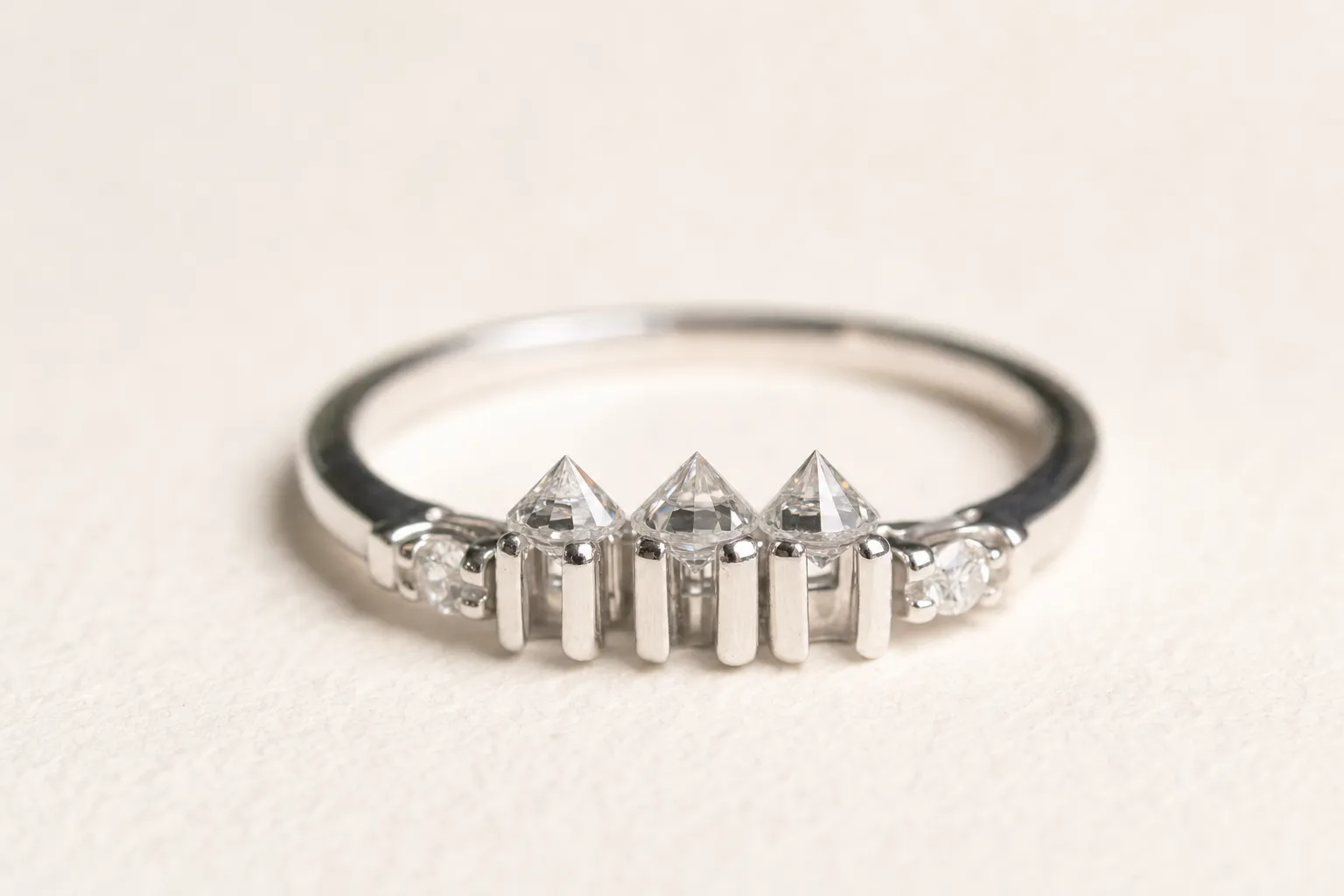
A diamond usually sits in its setting with the large, flat table facing up, the way you know it from almost every ring. In an inverted setting, sometimes called an "upside down diamond", the stone is set the exact opposite way: the point faces up, the table faces down. That sounds like a gimmick at first, but it is a deliberate, technically sound setting style with its own distinct character, which we show you here.
How the inverted setting works
A classically cut diamond, such as a round brilliant, has a flat top surface, the table, and a pointed underside beneath it, called the pavilion. Normally the table sits on top, so that as much light as possible enters unobstructed and the stone shows its full sparkle. In an inverted setting, this logic is flipped: the pointed pavilion faces up, the flat table sits down in the setting. As a result the stone looks less like a clear, brilliant point and more like a faceted, almost crystalline formation, with a rougher, more textured shine instead of the usual clear sparkle.
- Look: edgy, textured, less classically smooth than a standard setting.
- Light behaviour: more muted but more varied, light breaks across more visible facets.
- Effect: distinctive and unusual, a deliberate statement rather than a classic solitaire.
- Suited for: rings, pendants and iced-out pieces meant to deliberately look different from the standard.
Who the inverted setting suits
This setting is not a substitute for a classic solitaire ring, it is a deliberate choice for anyone who wants a piece that stands out immediately and does not look like a thousand other rings. We see it often on pendants, custom-designed rings and iced-out jewellery, where the raw, crystalline look fits particularly well with the rest of the aesthetic. If you are looking for the maximum, classic sparkle of a diamond, a classic prong setting usually serves you better. We explain in detail which diamond shape suits which look in our article on finding the right diamond shape.
Security and care
Technically, an inverted setting is just as secure as other setting styles, as long as it is cleanly made, the pavilion sits more protected in the setting than the exposed point of a classic prong setting. Because the table sits at the bottom and is therefore less visible, it is worth paying particular attention during cleaning to make sure dirt does not build up there, otherwise the stone looks dull sooner. We recommend regular professional checks, as with any more elaborate setting.
Which stones suit the inverted setting
Not every diamond suits this setting equally well. It looks most striking with stones that have a clean, symmetrical pavilion, because that exact surface now sits at the centre of attention instead of being hidden. Small irregularities that would disappear under the crown in a classic setting become visible here, so it is worth taking a close look at the stone under magnification beforehand. Besides classically cut brilliants, rose cuts and other flat, facet-rich cuts also work particularly well in an inverted setting, because their geometry already resembles a texture more than a clear point by nature.
The inverted setting in combination
The inverted setting looks especially distinctive when combined with a darker or matte metal, such as blackened white gold or matte yellow gold, because the contrast between the rough stone surface and the metal stands out more strongly. In polished yellow gold, the same stone looks warmer and softer, in shiny white gold cooler and more modern. At émin we always discuss this combination on the actual piece, because light and effect change noticeably depending on the setting, daylight or room light. If you are planning a piece with an inverted setting, it is worth setting aside time for a real try-on under different lighting, not just a glance at a photo.
The inverted setting compared to other techniques
The inverted setting is one of several techniques used to showcase a stone in an unusual way, alongside mosaic settings, where calibrated stones sit next to each other with no visible metal, or honeycomb settings, where round stones sit in hexagonal cells. For a full overview of all setting styles, from classic to unconventional, see our page on settings explained.
If the look of the inverted setting appeals to you, we are happy to show you real examples at an appointment in our atelier in Zurich district 4 or by video, so you can see how light and stone interact in this setting before you decide.

Founder of émin, jeweller in Zurich
Have questions about your ring? Talk to us directly.
Book an AppointmentQuick enquiry
Let's talk about your ring.
A free, no-obligation consultation at the atelier in Zurich or by video. Honest answers, no sales show.