
Settings in detail
Inverted setting: when the pavilion faces up
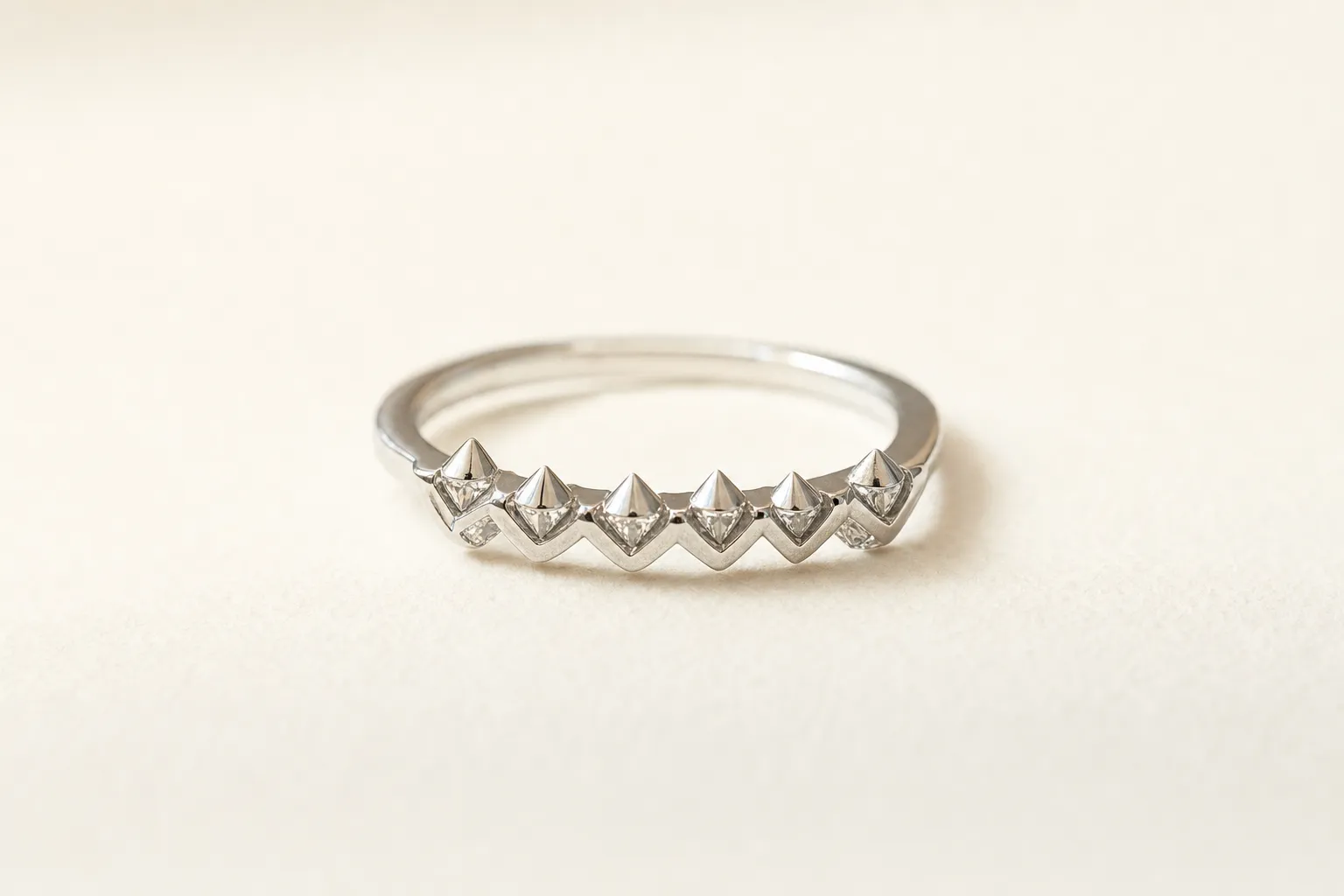
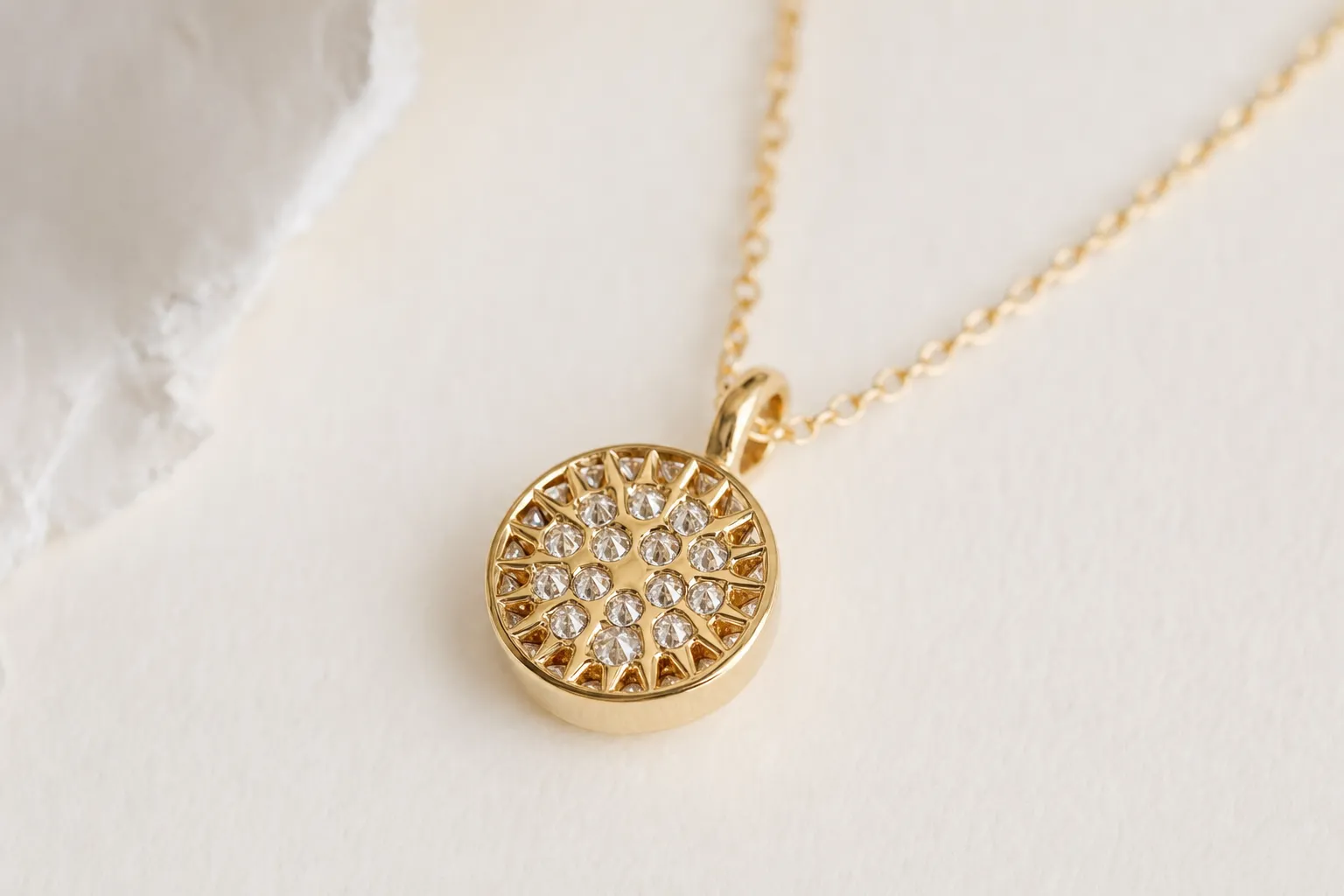
In an inverted setting the diamond sits the other way round in its prongs: the pointed underside, the pavilion, faces up, and the flat table faces down. Instead of the usual smooth surface you see a cluster of small facets and points that break light in many directions. The result is an angular, almost raw look that stands well apart from a classic setting.
We advise you at our atelier in Zurich District 4 or by video on whether an inverted setting suits your piece. It is not a replacement for a classic solitaire but a deliberate statement, usually for rings, pendants or iced-out jewellery where exactly that unusual angle is what you want.
Why clients choose the inverted setting
A look of its own
Instead of the usual flat table you see facets and points. Not an off-the-shelf ring, but a piece people notice on a second glance.
Works on many pieces
The setting suits rings, pendants and iced-out pieces alike, often combined with classically set stones alongside it.
Honest advice on wearability
We tell you before the order where the pointed facets can catch on daily life, like fine clothing, instead of letting you find out yourself.
Wearability, honestly
As striking as the look is, we are just as honest about daily wear with an inverted setting. The upward-facing points are noticeable under your fingers and against seams, and on fine fabrics like silk or knitwear they can, in the worst case, catch a thread. If you plan to wear the piece daily during manual work, weigh that up first, a pendant or an occasion ring is often the more relaxed choice.
Care barely differs from other settings with many small contact points: clean it regularly, have the prongs checked at the atelier, and if you wear it a lot, come in a little more often than you would for a smooth bezel setting. That keeps the stone secure, and you know exactly what to watch for.
Inverted setting compared
A first orientation, it does not replace the conversation at the atelier.
| Setting | Light | Safety | Upkeep | Price level |
|---|---|---|---|---|
| Inverted setting | high, unusual angle | medium | check regularly | medium |
| Pavé | high | medium | check regularly | medium |
| Prong setting | very high | good | low | low to medium |
Price level relative to a classic prong setting, we discuss the exact surcharge in person.
How your inverted-setting piece comes together
From the first conversation to handover, we guide you step by step.
Idea
You tell us what look you're after, and we show you references of the inverted setting at the atelier or by video.
3D design
We build your piece as a 3D model, so you can see how the points sit before any work starts.
Stone selection
Together we choose diamonds suited to an inverted setting, and show you alternatives along the way.
Sign-off
Only once you're happy with the design, the stones and the price do we release the order.
Handover
At handover we check every setting together with you and explain what to watch for in daily life.
What an inverted setting costs
Guide prices so you can get your bearings in advance.
Price depends on the work involved. We calculate openly, no surprises.
We always discuss the exact surcharge with you in person, depending on stone count and piece.
Frequently asked questions
In an inverted setting the diamond is mounted so its pointed underside, the pavilion, faces up rather than the flat table. Instead of a smooth surface you see a cluster of small facets and points, which gives an angular, unusual look that stands clearly apart from a classic setting.
That depends on the piece. On a ring worn every day you feel the points under your fingers and against fine clothing more than with a smooth setting. On pendants or occasion rings this matters less. We give you honest advice before you decide.
We use it most often on rings, pendants and iced-out pieces, frequently combined with classically set stones alongside it. For an engagement ring's main stone we recommend it less often, a classic setting usually takes the lead there, showing the diamond off to best effect.
It needs about as much attention as other settings with many small contact points. Cleaning it regularly and having the prongs checked at the atelier is usually enough. If you wear it intensively every day, it's worth coming in a bit more often, so a loose prong is caught early.
The surcharge depends on the number of stones, the metal and the piece you commission. We deliberately don't publish figures here, because every piece differs. At the atelier or by video we work out the exact amount with you openly before you decide.
In some cases yes, we check that directly on the piece at the atelier. Whether a conversion is worthwhile depends on the shank, the stone size and the effect you want. We tell you honestly if a new piece would end up being the better solution.
Quick enquiry
Interested in an inverted setting?
Tell us which piece you're imagining with an inverted setting, or send us a photo as a reference. We'll tell you honestly whether it fits your daily life.