
Settings in detail
Mosaic setting: a surface like one continuous sheet
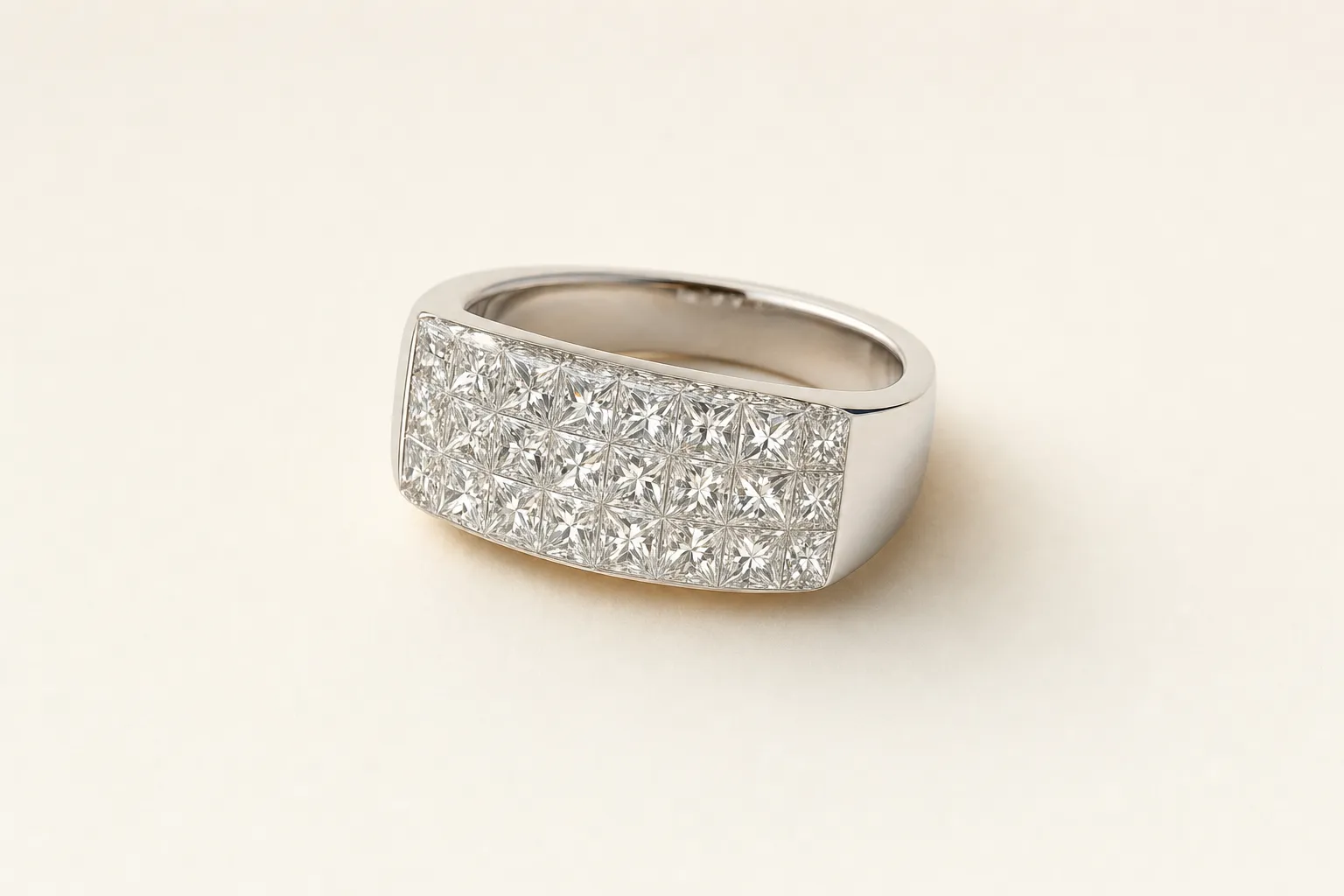
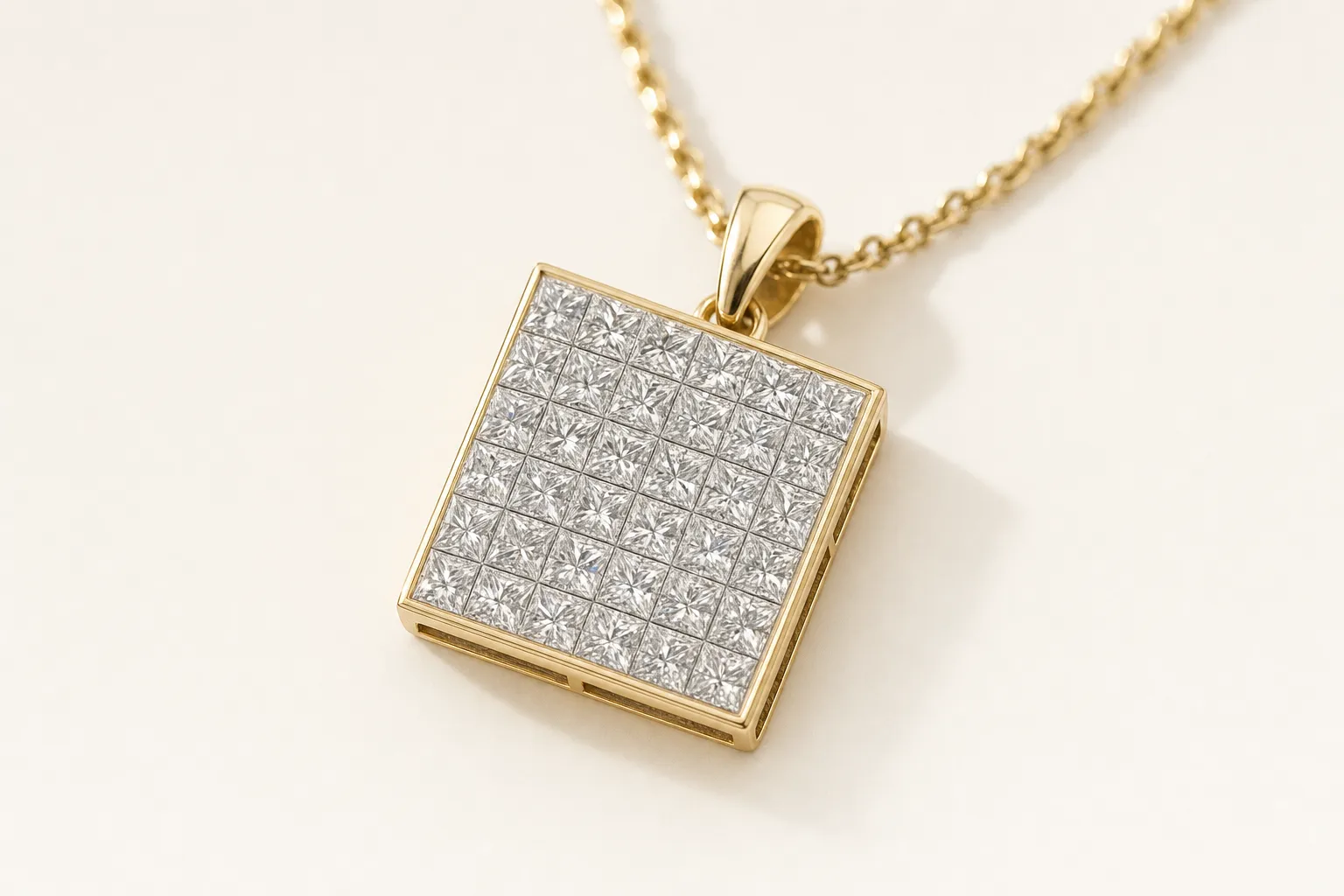
In a mosaic setting, also called invisible setting, calibrated stones, usually princess or baguette cut, sit so tightly side by side in fine grooves that no metal shows between them. Instead of individual prongs, a hidden rail system holds every stone in place. The result looks like a closed surface of pure light, almost like a single continuous sheet.
We advise you at our atelier in Zurich District 4 or by video on whether a mosaic setting suits your piece. The technique demands precisely calibrated stones and a lot of precision in the work, so we use it deliberately, wherever maximum effect on a small surface is what's called for, like a band or a pendant.
Why the mosaic setting reads so strikingly
A surface of pure light
With no visible metal between the stones, the surface reads as one sparkling piece instead of individual diamonds side by side.
Precise craftsmanship
Every stone is calibrated exactly and set to fit its groove. That precision is what separates a good mosaic setting from a mediocre one.
Honest advice on the risk
We explain before the order where this setting is sturdy and where it needs more attention than a classic prong setting.
Care: what a mosaic setting needs
We'll tell you honestly: a mosaic setting is striking, but more delicate than a classic setting. Because no continuous metal rim protects the stones, only a fine rail system, there is a real risk that a stone can loosen over time, especially under heavy mechanical strain or a hard knock. That's not a reason to skip the look, but a reason to choose it deliberately.
At the atelier we show you the best way to care for your piece: have it cleaned professionally rather than scrubbing it yourself, and let us check the setting for free at every visit. That way a loose spot shows up before a stone actually gets lost.
Mosaic setting compared
A first orientation, it does not replace the conversation at the atelier.
| Setting | Light | Safety | Upkeep | Price level |
|---|---|---|---|---|
| Mosaic / invisible | very high | limited, stone loss possible | careful, professional cleaning | high |
| Pavé | high | medium | check regularly | medium |
| Prong setting | very high | good | low | low to medium |
Price level relative to a classic prong setting, we discuss the exact surcharge in person.
How your mosaic-setting piece comes together
From the first conversation to handover, we guide you step by step.
Idea
You tell us which surface should sparkle, and we show you examples of the mosaic setting at the atelier or by video.
3D design
We build your piece as a 3D model, so you see the closed surface before any work starts.
Stone selection
We calibrate the diamonds for the mosaic setting and show you how precisely they need to fit together.
Sign-off
Only once you're happy with the design, the stones and the price do we release the order.
Handover
At handover we show you the best way to care for the setting and when to have it checked.
What a mosaic setting costs
Guide prices so you can get your bearings in advance.
Price depends on the work involved. We calculate openly, no surprises.
We always discuss the exact surcharge with you in person, depending on surface and stone count.
Frequently asked questions
Both terms describe the same technique: calibrated stones sit so tightly in fine grooves that no metal shows between them. Invisible setting emphasises the hidden holding system, mosaic setting the closed surface it creates. We use both terms for the same type of setting.
We usually use princess or baguette cut diamonds, because their straight edges fit together precisely. The stones need to be calibrated exactly, otherwise visible gaps appear. That precision is what makes the technique more demanding than a classic prong setting.
Less safe than a bezel or prong setting, because no continuous rim protects the stones. Under heavy mechanical strain or a knock, a stone can loosen. That's not a reason to worry in ordinary daily life, but a point we explain honestly before the order.
We recommend a check at least once a year, more often if you wear it intensively every day. At the atelier we check the setting for free at every visit, so a loose spot is caught before a stone actually gets lost.
It's best to have it cleaned professionally rather than scrubbing it yourself, because the fine rails between the stones are delicate. At the atelier we clean your piece gently at every visit and check the setting at the same time.
The surcharge depends on the surface, stone count and calibration effort, and sits noticeably above a classic prong setting because the work takes considerably more time. We deliberately don't publish figures here, at the atelier or by video we work out the exact amount with you openly.
Quick enquiry
Interested in a mosaic setting?
Tell us which surface you're imagining with a mosaic setting, or send us a photo as a reference. We'll give you honest advice on effect and care.