
Band style: twist
The twisted engagement ring
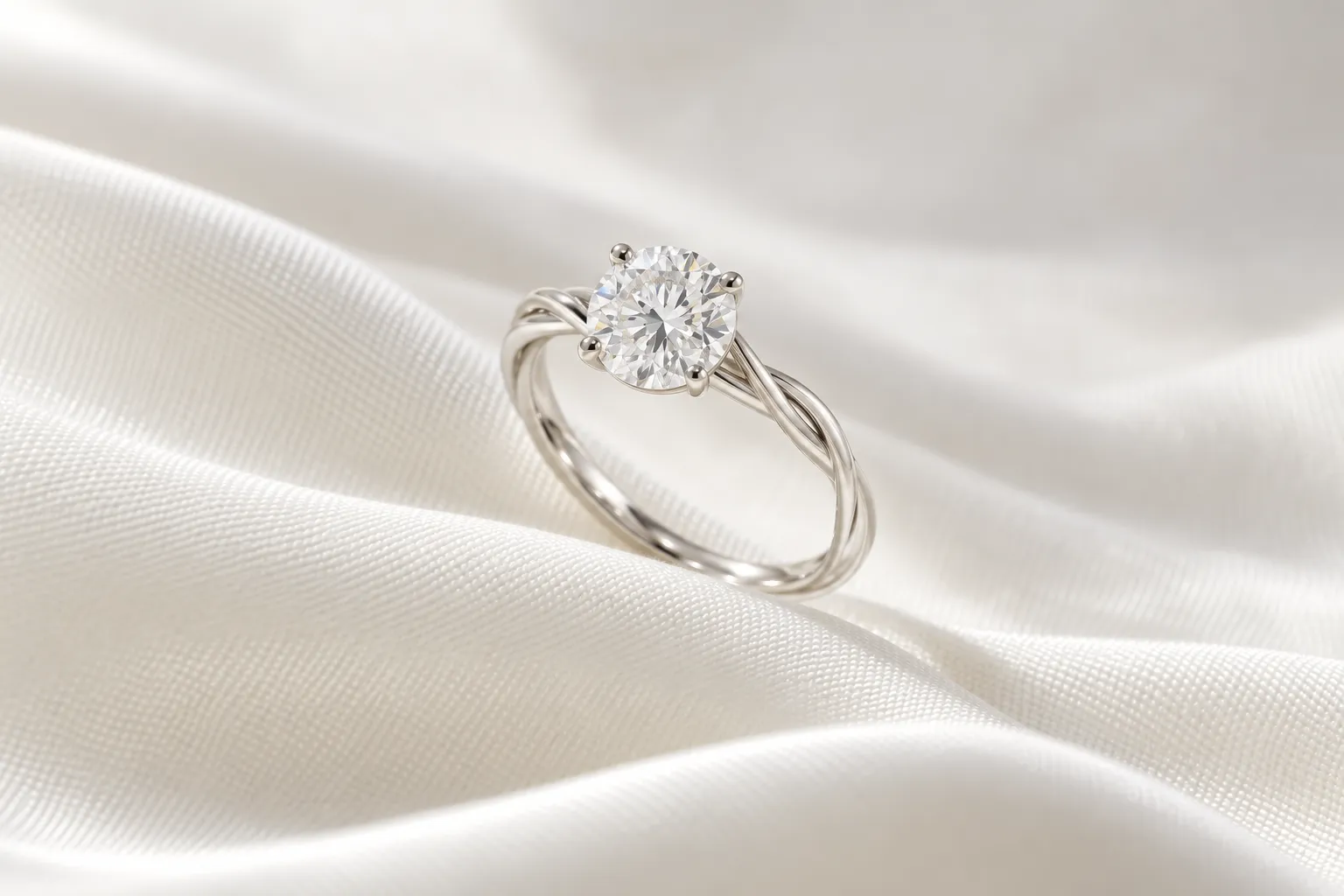
On a twisted engagement ring, two slim strands wind around each other and meet beneath the stone. The style is also called a twist or infinity band. It gives the band a sense of movement without being loud, something a smooth band simply doesn't have.
At émin you design the twist with us in Zurich: how strong the turn is, whether both strands stay plain or one is set with small diamonds, and how your wedding band will sit next to it later. Every ring is made to measure, and the centre stone is certified.
What makes the twist special
Movement in the band
The twist catches light in many small curves. Even without extra stones, the band shines more vividly than a smooth round shank.
Two coming together
Two strands winding around each other and meeting under the stone: many couples like this image for their partnership. It stays a quiet gesture, not symbolic jewellery.
Plain or with pavé
Both strands in polished gold, one strand with small diamonds, or both set. You decide how much sparkle the ring gets beside the centre stone.
Works with many cuts
A round brilliant is the classic. An oval or cushion looks especially soft on a twist, while an emerald cut gives it a cleaner, more modern feel.
The twist: fine, medium or bold
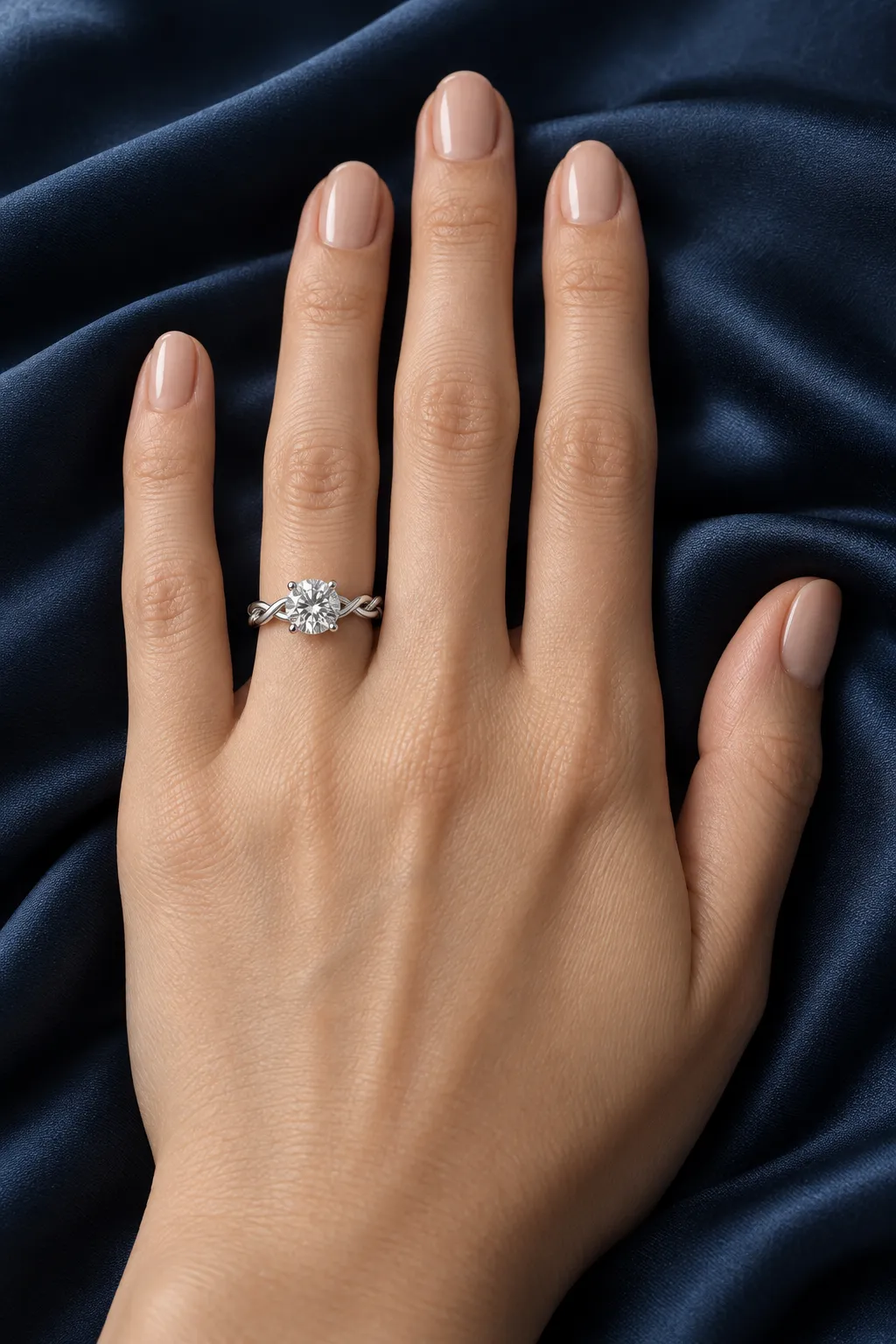
Not every twist is the same. With a fine twist the band stays narrow and calm, the strands lie close together. A bold twist with visible gaps looks more playful and wider on the finger. We sketch both versions and show you sample rings, so you see the effect on your own hand rather than in a photo.
Width matters: two strands need a little more room than a single band. We make sure the ring stays sturdy, doesn't press against the neighbouring fingers and holds the stone securely in its prongs. For everyday wear we recommend 18k gold or platinum, both keep the fine edges of the twist in shape for a long time.
Twist and wedding band: making them fit
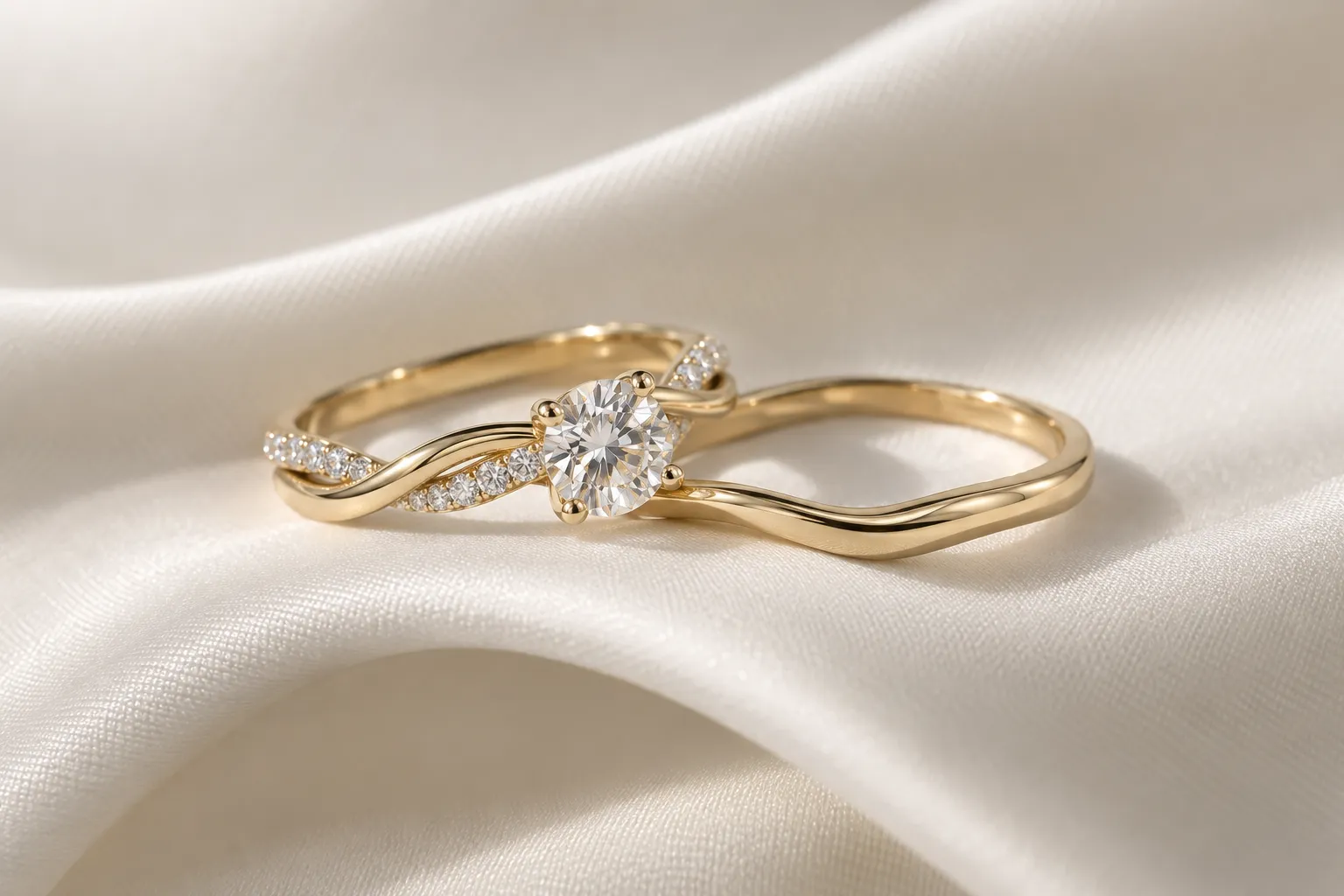
The most common question about twisted engagement rings: will a wedding band fit next to it? Yes, but it pays to plan for it from the start. Depending on the setting, the stone can sit low enough that a straight band doesn't lie flush and a small gap remains. Some people love that, others want both rings to sit snugly together.
For a flush fit there are two options: we set the stone slightly higher so a straight wedding band fits underneath, or we design a contoured wedding band that follows the curve of the twist. We discuss both when designing the engagement ring, so you won't have to compromise later. Wedding bands at émin start from CHF 2'400 per pair.
The twist compared
A first orientation to how the versions differ in everyday life.
| Version | Look | Care | Wedding band beside it |
|---|---|---|---|
| Twist, both strands plain | calm, elegant, lots of metal shine | easy, smooth surfaces | straight band with a gap or contoured band |
| Twist, one pavé strand | shine and sparkle alternate | a little more, small gaps | a contoured band sits best |
| Twist, both strands pavé | very sparkly, festive | more effort, yearly check | a plain band as a calm contrast |
| Smooth band (solitaire) | classic, the stone stands alone | easiest | almost any wedding band fits |
We lay the versions side by side at the atelier, which says more than any table.
What a twisted engagement ring costs
The base is our Essential solitaire. The twist and any pavé change the price, and we work it out openly with you.
Price depends on the work involved. We calculate openly, no surprises.
Guide prices, 2026, incl. VAT. You get the exact price after the design, in writing and without surprises.
Frequently asked questions
The terms are often used interchangeably. Twist usually describes two strands turning evenly around each other. Infinity tends to mean a band whose strands cross towards the stone, hinting at a sideways figure eight. We show you both shapes during the consultation, and you'll quickly feel which one suits you.
Yes, if it is properly proportioned. We make sure both strands have enough metal and that they touch and support each other at several points. In 18k gold or platinum a twist is an everyday ring. If you work a lot with your hands, a fine, tight twist is the better choice.
Usually yes, but a small gap often remains between the two rings because the stone's setting sits a little low. If that bothers you, we set the stone higher or design a contoured wedding band that follows the twist. It's best to plan this together with the engagement ring.
Yes, it's actually one of the most popular versions. One strand stays polished, the other gets small diamonds in a pavé setting. Shine and sparkle then alternate along the band, and the ring looks delicate rather than overdone. The small stones can be natural or lab-grown diamonds.
A round brilliant is the safe choice because its round shape echoes the curves of the twist. Ovals and cushions look very harmonious too. Angular shapes like emerald or princess give the twist a deliberate contrast. We show you stones in several shapes directly on the sample band.
Our base is the Essential: a complete solitaire with a 1 carat lab-grown diamond in 18k gold or platinum, IGI certified, from CHF 1'900. The twisted band and any pavé are added on top, depending on width, metal and number of stones. We set it all out openly and in writing after the design.
Quick enquiry
Fancy a twisted ring?
Tell us what twist and stone you have in mind, a photo helps. We reply within one working day with a suggested appointment.